Help us improve Litsee

With your permission, Google Analytics measures visits and Microsoft Clarity records clicks, scrolling and page interactions, with form inputs and page text masked. We use no advertising cookies.

Change it any time with Cookie settings. Privacy policy · Google privacy · Microsoft privacy

FREE INTERACTIVE STORY · AGES 5–8

Make your own story: a free mini adventure where your child is the hero

Your child picks a hero and a painted world, then decides what happens twice, and a short illustrated story unfolds with them in charge. There are six worlds with four ways through each, it can be read aloud, and the finished story prints on one page. No account, nothing saved.

Make your own story

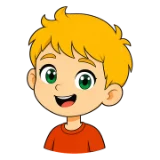
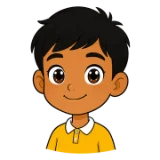
Choose your hero
Choose your world

Your story will start here

Pick a hero and a world.

Three pages, two choices, four ways through. A few minutes to read.

Written in advance by Litsee, not by AI. Nothing your child picks is saved or sent anywhere.

Six worlds, four ways through each

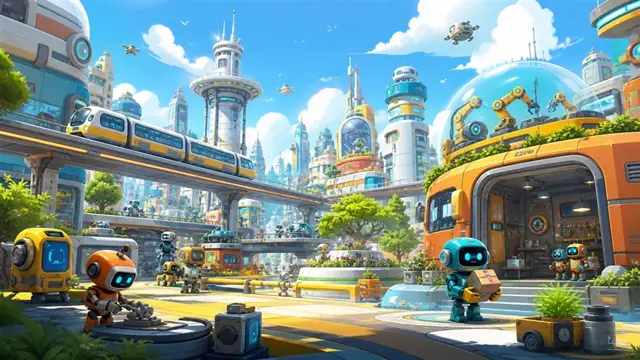
  • Robot City: Your hero and the Runaway Robot

    In Robot City, the trains hum, the lamp posts say good morning, and every robot has a job. Every robot except Bolt. Bolt is small and round, and this morning Bolt has rolled away without a word. The Mayor of Robot City looks worried. “your hero, will you help us find Bolt before sunset?”

    First choice: follow the tiny wheel tracks or ask the robot at the station.
  • Underwater Library: Your hero and the Book That Swam Away

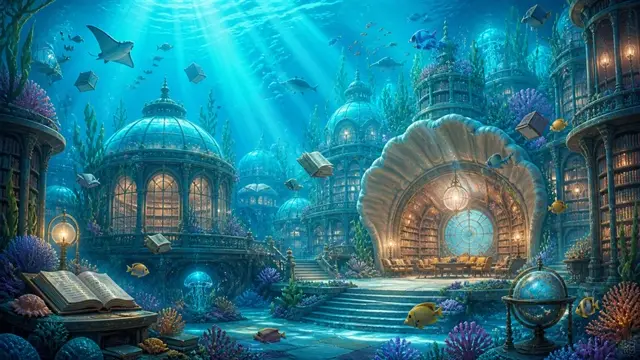
    Deep under the sea, inside a giant shell, there is a library where the books can swim. The librarian, a kind old turtle called Mrs Kettle, has a problem. “The most important book has swum away,” she sighs. “It’s the book of bedtime stories, and the baby fish can’t sleep without it.” your hero pulls on a shiny bubble helmet. “Leave it to me.”

    First choice: swim down into the deep blue or swim up towards the bright coral.
  • Wizard Village: Your hero and the Spell That Went Pop

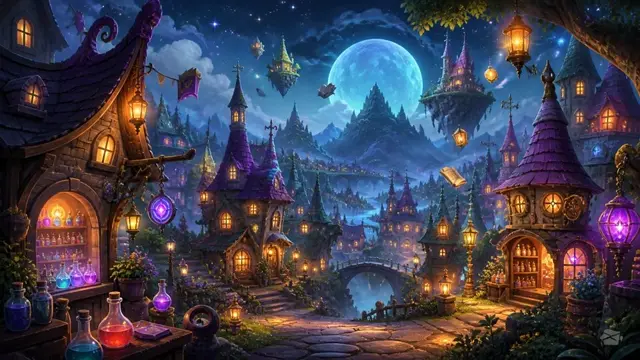
    In Wizard Village, the chimneys puff purple smoke and the brooms sweep all by themselves. Today is the Great Spell Fair, but something has gone wrong. Old Wizard Wimble sneezed in the middle of a spell, and now everything is shrinking: the houses, the trees and even the pumpkins. “Quick,” squeaks Wimble, now as small as a teacup. “your hero, only you can fix it!”

    First choice: open the giant spell book or ask the village cat.

  • Dinosaur Valley: Your hero and the Lost Dinosaur Egg

    In Dinosaur Valley, the ferns are as tall as houses and the ground goes thump, thump, thump. A mother dinosaur called Petal is looking everywhere. “My egg rolled away in the night,” she says, blinking her big kind eyes. “It’s speckled green, and it’s going to hatch today!” your hero grabs a backpack. “Don’t worry, Petal. We’ll find it.”

    First choice: search by the bubbling river or climb the rocky hill.

  • Moon Base: Your hero and the Moon Garden

    On the Moon Base, everything floats a little: pencils, sandwiches and sometimes the astronauts. Commander Nova has a special mission. “We’re growing the first garden on the Moon,” she says, “but the seeds won’t sprout. Can you find out why, your hero?” your hero zips up a silver space suit and bounces out to the greenhouse.

    First choice: look at the seeds or look round the greenhouse.
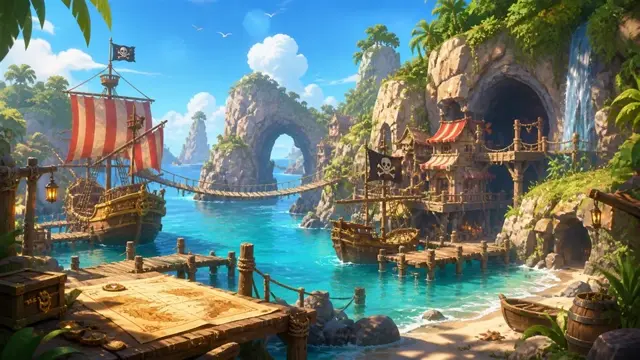
  • Pirate Lagoon: Your hero and the Map with No X

    In Pirate Lagoon, the ships have patchwork sails and the parrots tell jokes. Captain Pebble, the kindest pirate on the sea, waves a crumpled map. “It’s a treasure map,” she says, “but it has no X! Will you sail with us, your hero, and help us find the treasure?” your hero jumps aboard the captain’s ship, the Saucy Sardine.

    First choice: hold it up to the sun or ask the parrot.

How to use it at home or in class

Children who say they don’t like reading often like stories very much. What they don’t like is a story that happens to someone else while they sit still. A choose-your-path story turns that round. The child picks who the story is about, picks where it happens, and then decides what the hero does next. They are not just the reader; they are steering, and that small amount of control is often enough to keep a reluctant reader turning the page.

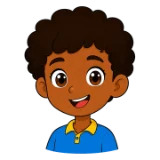
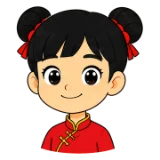
Choosing the hero matters more than it looks. Children spend real care picking a face, and once they have chosen, the story belongs to them: it is their hero who finds the egg or fixes the spell. Let them change heroes as often as they like. Some children pick the same one every time, and some like to see how a different hero feels in the same world.

The stories are short on purpose. Each one is three pages: an opening that sets up a problem, a middle that follows the first choice, and an ending that follows the second. That makes a whole story a few minutes long read aloud, which fits a bedtime, a car journey or the gap before tea. Because every world has four different paths, there is always a reason to go back and choose differently, which is how children start to notice that a writer makes choices too.

Read it aloud together for younger children. In Reception and Year 1 most children will need a grown-up to read the words, and the “Read it to me” button uses your device’s own voice if you would rather listen together. Pause at each choice and ask, “What do you think will happen if we pick this one?” Predicting what might happen is part of the reading curriculum from Year 1, and a choice turns it into a game rather than a question.

Let confident readers read it to you. From about Year 2, many children can read the pages themselves. The sentences are short and the words are everyday, with the odd fun word such as “enormous” or “whiskers” to talk about. When they reach the end, ask them to tell you the story back in their own words, then choose the other way and spot what changed.

Talk about the other ending. Once your child has finished, ask what would have happened if the hero had made the other choice, then play it again to find out. Children quickly see that one decision changes everything that follows. That is the idea behind a story plan, and it gives them something to borrow when they write their own.

Turn it into writing. Press “Print my story” for a one-page copy with your child’s hero, the world and the path they chose, and a box at the bottom for a new ending. Older children can write a third choice for the hero, or a whole new world for the same character. The story starters and the story mountain template on this site are good next steps.

In class, put the story on the whiteboard and let the class vote at each choice with a show of hands. Read the page aloud, take the vote, and press the winning choice. It makes a calm five-minute start to an English lesson or a treat at the end of the day, and it models how a story builds from a problem to an ending.

Nothing about your child is saved or sent. The heroes are Litsee’s own characters, so nobody types a name, and the story runs in your browser from words written in advance by Litsee, not by AI. The full Litsee app goes further: your child picks a hero and gives them a name, the story is written at their reading level, every page is illustrated and can be read aloud, and the choices keep coming, chapter after chapter.

In the National Curriculum

  • “predicting what might happen on the basis of what has been read so far”

    Year 1, Reading – comprehension (statutory)

  • “discussing the sequence of events in books and how items of information are related”

    Year 2, Reading – comprehension (statutory)

  • “predicting what might happen from details stated and implied”

    Years 3 and 4, Reading – comprehension (statutory)

About this page

How it works · Sources

Sources

The quotations in “In the National Curriculum” are copied word for word from this document, with the year and section each applies to. The stories and advice are Litsee’s own.

How it works

Written by Litsee for children aged 5 to 11, with every story, choice and ending read through before it went on this page. The heroes and painted worlds are the Litsee app’s own artwork. Ideas or corrections? Email info@litsee.com.

The story runs in your browser from words written in advance. Nothing your child picks is saved, stored or sent.

Last updated: .

Questions parents and teachers ask

What age is this story for?

Ages 5 to 8 are the sweet spot. Younger children enjoy it read aloud, and confident readers in Years 2 and 3 can read it themselves. Older children often enjoy writing a third choice or a new ending for the hero.

Does it use AI?

No. Every story, choice and ending on this page was written in advance by Litsee, so you always know what your child will see. The hero’s name is the only thing that changes, and it comes from Litsee’s own list of characters.

Can my child put their own name in the story?

Not on this free page: to keep it private, children pick one of Litsee’s 15 heroes instead of typing a name. In the Litsee app, your child picks a hero and gives them a name of their own.

Is anything saved or sent?

No. The choices stay on this page while it is open and are never saved, stored or sent. Print the story if you want to keep it.

In Litsee, the story keeps going: your child’s hero, a new chapter every night.

In Litsee, your child creates the hero, picks the world and chooses what happens next in an illustrated story that is read aloud.

Start your free trial

7 days free. A card is needed to start, and nothing is charged if you cancel before the trial ends.

See plans and pricing · How Litsee works

Try it in LitseeYour child creates the hero, picks the world and chooses what happens next, in an illustrated story that is read aloud.Start your free trialUse it in classRead an illustrated, narrated story together on the whiteboard, and let the class choose what happens next.Start a free classroom trialSee Litsee for schools