
Reading log for kids (free, printable)
- Read
- Grow
- Keep
Did you read today?
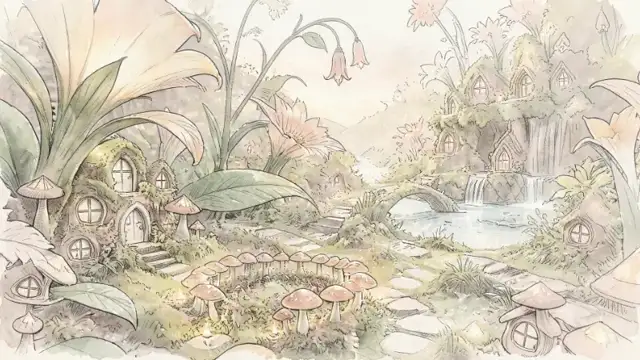
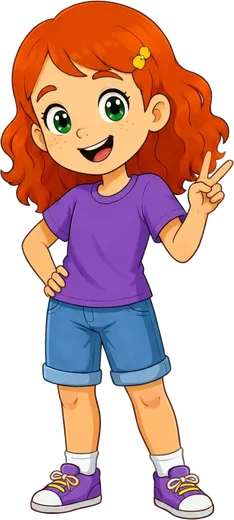
 Grow a flower for every read
Make your own hero and they walk your garden path, one step for every read.
For grown-ups: printable logs, reviews, the curriculum and questions
What your child practises: reading often, for pleasure and for facts, and saying what they read and how it felt. National Curriculum, Key stages 1 and 2, Aims: “develop the habit of reading widely and often, for both pleasure and information”.
Choose a weekly reading log or a list of books read, fill it in on screen or print it blank, and get a clean A4 sheet for KS1 or KS2. The weekly log adds up the minutes for you, and nothing you type is saved or sent anywhere.
Reviewed by Joshua Younger, Education Lead, on .
Print a reading log for home or class
Fill in your reading log, then print it
Your log is not saved. Nothing you type or tick here is stored or sent anywhere. It stays on this page only until you close or refresh it, so print it when you have finished.
One row a day, Monday to Sunday, with the minutes added up.
Total this week: 0 minutes
Prints one A4 page with the weekly reading log. To keep a copy, choose “Save as PDF” in your browser’s print window.
Book reviews, reading bingo and record comments
Book review template for KS1
Stars, a box to draw the best part and sentence starters for Years 1 and 2.
Book review template for KS2
A no-spoiler summary, characters, evidence, a balanced view and a recommendation for Years 3 to 6.
Reading challenge bingo card
Nine squares for KS1 or sixteen for KS2, to try new kinds of books.
Reading record comment builder
Three taps for a short, specific comment for tonight’s reading record. Nothing to write from scratch.
Christmas reading challenge
Twelve festive things to read over the holidays, from cracker jokes to a story on Christmas Eve, and a Christmas-break log to print.
New Year reading resolutions card
Fifteen reading resolutions in words for ages 5 to 7 or 8 to 11. Pick three or write your own, then print a card to draw on and tick.
Worked example: a week of reading
A week’s log written by Litsee for this page, the way a Year 3 reader might fill it in. It mixes a chapter book, a story read aloud, a comic and some non-fiction, which is exactly what a log should hold.
| Day | What I read | Pages or chapter | Minutes | How it felt |
|---|---|---|---|---|
| Monday | The Secret Garden | Chapter 4 | 15 | Liked it |
| Tuesday | The Secret Garden | Chapters 5 and 6 | 20 | Loved it |
| Wednesday | A library book about volcanoes | Pages 1 to 12 | 10 | Loved it |
| Thursday | Comic annual (read to my brother) | Two stories | 15 | Liked it |
| Friday | Aesop’s fables, read to me by Grandad | Three fables | 10 | It was OK |
| Saturday | The Whispering Woods (on litsee.com) | Chapters 1 and 2 | 10 | Loved it |
| Sunday | The Secret Garden | Chapter 7 | 20 | Loved it |
| Total minutes | 100 | |||
Reading for pleasure in the National Curriculum
“develop the habit of reading widely and often, for both pleasure and information”
Key stages 1 and 2, Aims (statutory)
“develop pleasure in reading, motivation to read, vocabulary and understanding”
Years 1 and 2, Reading – comprehension (statutory)
“continuing to read and discuss an increasingly wide range of fiction, poetry, plays, non-fiction and reference books or textbooks”
Years 5 and 6, Reading – comprehension (statutory)
How to use it at home or in class
A reading log is a simple record of what a child reads: the title, how much, and how it felt. At its best it is something a child is proud of, a page that fills up with stories they chose, not a form a grown-up nags about. The National Curriculum in England wants children to develop the habit of reading widely and often, for both pleasure and information, and a log is one of the easiest ways to make that habit visible to the child as well as to you.
Pick the layout that suits your child. The weekly log has a row for each day, Monday to Sunday, with the minutes added up at the bottom. It suits KS1 children and anyone building a routine, because a short entry every day is easy to keep going. The books list has a row for each book, with stars and a line to remember it by. It suits confident KS2 readers whose books take more than a week to finish, when a daily row would say the same title seven times. If your child’s school asks a grown-up to sign each entry, switch on the column for a grown-up’s initials.
Count everything. Picture books, comics, poems, joke books, non-fiction about sharks, a recipe followed together and a story read aloud at bedtime all belong in the log. In Litsee’s view, being read to counts too, especially in KS1, because listening to stories that are harder than a child can read alone builds the vocabulary they will need later. A log that only accepts reading-scheme books tells a child that the reading they choose for themselves does not matter, which is the opposite of what you want.
Keep it light. Let your child write the entries, even if the spelling wanders, and keep each one to a few words: the title, the pages or chapter, a face or a word for how it felt. If the minutes column turns into a race, hide it under a blank strip when you print, or use the books list instead. If filling in the log has become a battle, cut it down to one line a day for a week and see whether the reading itself feels better. The reading matters far more than the record.
Using the log above is simple. Choose a layout, type in what your child read, and press “Print my log” for an A4 sheet with your entries on it. To print an empty log to keep by the bed or in a book bag, press “Print a blank log”. Nothing you type is saved, stored or sent anywhere, so print the sheet, or choose “Save as PDF” in your browser’s print window, before you close the page.
In class, print blank weekly logs for book bags at the start of each half term, or stick a blank books list inside the back cover of each child’s reading record. At the end of a half term, ask children to choose one book from their log to recommend to a friend, and use the book review templates for KS1 or KS2 to write it up. The reading challenge bingo card works well alongside the log when you want children to try books they would not usually pick.
What to write in a reading record
Many families are asked to write a short comment in a reading record when a child reads at home. These are Litsee’s suggestions, not a school’s requirements: change them to suit your child, and keep them honest and specific. A teacher learns more from one real detail than from “read well”.
1·2·3Build tonight’s comment in three tapsWho read, how it went, one thing to mention. Copy and done.KS1 (Years 1 and 2)
- Read the whole book to me tonight and sounded out “thundering” on her own.
- Needed help with some longer words, but used the pictures to guess what happened next.
- We read it together; he did the voices for the troll and laughed at the ending.
- Tired tonight, so we shared the reading, a page each.
- Re-read a favourite. Much smoother than last week, with fewer stops.
KS2 (Years 3 to 6)
- Read two chapters on her own and told me why she thinks the main character is hiding something.
- Found this book hard going and stopped at chapter three. We agreed to choose a different one.
- Read aloud to me with good expression; we talked about what “reluctantly” means.
- Read for 20 minutes before bed and could explain what happened in the chapter without looking back.
- Chose a non-fiction book about volcanoes and told me three new facts at breakfast.
About this page
Reviewed by Joshua Younger · How it works · Sources
Sources
The quotations in “In the National Curriculum” are copied word for word from this document, with the year and section each applies to. The templates, examples, challenges and advice are Litsee’s guidance.
How it works
Reviewed by Joshua Younger, Education Lead, on .
The log, review templates and bingo card run in your browser, and nothing is sent anywhere. Nothing your child types is saved: it clears when you close or refresh the page. Only a few things are kept, on this device, until you choose to forget them: the reading garden's dates and minutes, the bingo squares stamped with “I did it!”, and a review’s stars and choices (never a book title) if your child presses “Keep it on my shelf”.
Questions parents and teachers ask
What should a reading log include?
The title of what was read, how much (pages, a chapter or minutes), the date or day, and a quick word, face or star rating for how it felt. A comment line and a box for a grown-up’s initials are useful if your child’s school asks for them. Keep it short so that filling it in takes a minute, not the whole evening.
What is the difference between a reading log, a reading journal and a book review?
A reading log is a quick record of what and how much a child reads. A reading journal goes deeper into one book, with thoughts, questions and predictions as the child reads it. A book review is written at the end, to tell someone else whether the book is worth reading. Many families use a log every day and a review now and then.
How many minutes should my child read each day?
The National Curriculum does not set a number of minutes. Your child’s school may ask for a particular amount; if not, in Litsee’s view a short read most days does more than a long read once a week. The bedtime story calculator on this site shows what 10 or 20 minutes means in words at each age from 5 to 11.
What should I write in my child’s reading record?
One honest, specific detail: a word they worked out, a moment they enjoyed, what they found hard or what they told you about the story. The examples on this page show the kind of comment that helps a teacher, for KS1 and for KS2.
Is anything I type into the reading log saved?
No. The log runs in your browser and does not save, store or send anything you type. It disappears when you close or refresh the page, so print it, or use your browser’s print window to save it as a PDF.
From reader to author: let your child steer a story of their own.
In Litsee, your child creates the hero, picks the world and chooses what happens next in an illustrated story that is read aloud.
Start your free trial7 days free. A card is needed to start, and nothing is charged if you cancel before the trial ends.