
Help us improve Litsee

With your permission, Google Analytics measures visits and Microsoft Clarity records clicks, scrolling and page interactions, with form inputs and page text masked. We use no advertising cookies.

Change it any time with Cookie settings. Privacy policy · Google privacy · Microsoft privacy

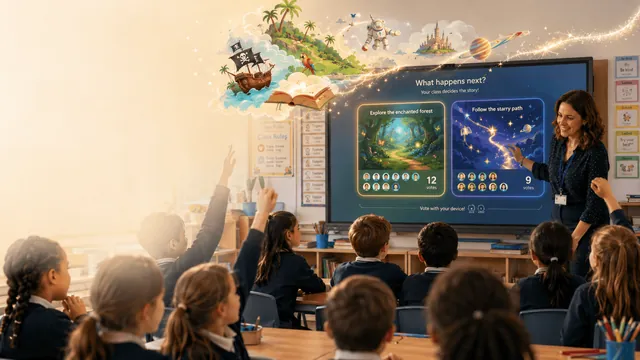
An illustration of a class reading a Litsee story on the whiteboard and voting on what happens next.

FREE TEACHER STORY UNIT · KS1

Minibeasts story lesson for KS1

A tiny garden adventure for the minibeasts and habitats topic, from Reception to Year 2. Our hero shrinks to minibeast size and helps Dot the ladybird get home, visiting a snail under a log, bees by the flowers and a worm in the soil. Children write about a minibeast and why its habitat suits it.

When to use it
Any time, and best in spring and summer when minibeasts are easy to find outside.
Story world
Bramble Garden
Subject focus
Science · Living things and their habitats
Suggested story settings
Genre: Animal Story · Length: 2 chapters · Time: 10–15 minutes

Story feel: Wonder & discovery. Story shape: Quest / journey.

About this unit

This unit takes children into the garden at minibeast size. Each creature Dot and our hero meet shows what a habitat gives the animals that live there: shelter, food, the right amount of damp or sun. That is exactly what the Year 2 science statement on habitats asks children to describe.

The repeated line gives younger children a way to join in, and the story is a natural lead into a minibeast hunt in the school grounds.

KS1 (Reception to Year 2): Ladybird’s Long Way Home

Learning objective

Name minibeasts and describe how their habitats give them what they need.

Talk questions

  1. Why did the snail like living under the log?
  2. Which minibeasts might live near our school? Where would we look?

Writing task

Draw a minibeast in its habitat. Write one sentence: 'A ___ lives ___ because ___.'

Suggested story settings: Genre: Animal Story · Length: 2 chapters · Time: 10–15 minutes

The story brief

What the class story is asked to do. “Our hero” is the character your class chooses.

A garden adventure for young readers. Our hero shrinks to the size of a minibeast and meets Dot, a little ladybird who has blown far from her nettle patch. They travel home together through the garden’s habitats: under a damp log where a snail is sheltering, past the flowers where bees are drinking nectar, and into the soil where a worm is busy. Each creature shows our hero why its home suits it. Use simple, repeated phrases children can join in with, such as 'Under, over, through we go!' End with Dot home on her nettle leaf and our hero growing back to full size.

Word bank

minibeast
a very small animal, like a snail or a beetle
habitat
the natural home of an animal or plant
shelter
a place that keeps you safe and dry
antennae
feelers on an insect's head
nectar
a sweet juice inside flowers

Text-type features: information report

Purpose: to tell the reader facts about a subject. Plan it with the free information report plan template.

Reception to Year 2

  • A title
  • Facts, not a story
  • Headings
  • Labelled pictures

National Curriculum statements

  • “drawing on what they already know or on background information and vocabulary provided by the teacher”

    Year 1, Reading – comprehension (statutory)

  • “writing about real events”

    Year 2, Writing – composition (statutory)

  • “give well-structured descriptions, explanations and narratives for different purposes, including for expressing feelings”

    Years 1 to 6, Spoken language (statutory)

  • “identify that most living things live in habitats to which they are suited and describe how different habitats provide for the basic needs of different kinds of animals and plants, and how they depend on each other”

    Year 2, Science (statutory)

Sample opening · KS1

A sample written for this page to show the brief in action. It is not the story Litsee writes for your class.

One minute our hero was kneeling in the garden. The next minute, whoosh, the grass was as tall as trees!

A little red ladybird with black spots landed on a leaf. “Hello,” she said. “I’m Dot. The wind blew me away from my nettle patch. Can you help me get home?”

“Yes!” said our hero. “Under, over, through we go!”

First they crawled under a log. It was dark and damp. A snail peeped out of its shell.

“I like it here,” said the snail. “It keeps me cool and wet. If I go in the hot sun, I dry up.”

Dot waved her antennae. “Come on,” she said. “Next stop, the flowers!”

Model text (WAGOLL)

A model answer to the writing task, pitched at Year 2, written for this page. Read it with the class and find where it meets each success criterion.

A snail lives under a log because it is cool and damp there.

The log keeps it safe from hungry birds and from the hot sun.

A bee lives near flowers because it drinks the sweet nectar inside them.

What makes it good

  • A snail lives under a log because it is cool and damp there. Finishes the sentence starter and explains why with “because”.
  • safe from hungry birds and from the hot sun Two reasons joined with “and”.

By year group

Reception

Grammar focus: Capital letters and full stops

One minute our hero was kneeling in the garden.

Year 1

Grammar focus: Capital letters and full stops

A little red ladybird with black spots landed on a leaf.

Year 2

Grammar focus: Expanded noun phrases

A little red ladybird with black spots landed on a leaf.

A week of lessons

  1. Lesson 1

    Hook

    • Put a magnifying glass and a toy ladybird on the carpet. Ask: if you were as small as a ladybird, what would the garden look like? Then shrink down with our hero.
    • Talk: Why did the snail like living under the log?
  2. Lesson 2

    Plan

    • Talk: Which minibeasts might live near our school? Where would we look?
    • Words: minibeast, habitat, shelter, antennae, nectar.
  3. Lesson 3

    Draft

    • Write: Draw a minibeast in its habitat. Write one sentence: 'A ___ lives ___ because ___.'
  4. Lesson 4

    Edit

    • Grammar focus. Capital letters and full stops: “A little red ladybird with black spots landed on a leaf.”
  5. Lesson 5

    Publish

    • Make a class “habitat garden” display, with each child’s minibeast placed in the right habitat: log, flowers, soil or leaves.
The printed plan adds the planning frame and the full steps for each lesson.

Support, core and stretch sheets

Support

Draw a minibeast in its home. Copy and finish: “A ___ lives ___.”

Core

Draw a minibeast in its habitat. Write one sentence: 'A ___ lives ___ because ___.'

Stretch

Write about two minibeasts and say why each habitat suits it, using “because”.

Vocabulary mat

One A4 page for every table: the word bank with its meanings, sentence stems, useful words and grammar words.

Teaching notes

Go on a minibeast hunt after the first chapter. Look under logs and stones, in leaf litter and on flowers, and put everything back where you found it. Children who have seen a snail under a log write about habitats with real understanding.

Make a class table with three columns: the minibeast, where it lives, and what its home gives it. Fill it in from the story and from the hunt, and use it for the writing task.

For Reception children, focus on naming and describing: “The snail is slimy. It lives under the log.” Year 2 children can add “because” to explain why the habitat suits the animal.

Printable lesson sheet

One A4 page, ready for your planning folder: the story title, objective, story settings, talk questions, writing task, word bank with meanings, success criteria, curriculum statements and the sample opening to read aloud. Printing this page prints only that sheet.

About this page

How it works · Sources

About this page

Built from Litsee’s curriculum data. The topic words and their meanings, the year groups and the history, geography and science statements come from the topic data in the Litsee app, quoted word for word from the Department for Education’s documents; the text-type features and English quotations come from the app’s curriculum data. The story briefs, objectives, questions, tasks, sample openings, model texts and teaching notes were written for this page. Ideas or corrections? Email info@litsee.com.

Last updated: .

Questions parents and teachers ask

Which year groups is the minibeasts unit for?

Reception to Year 2. It supports the Year 2 science statement on habitats and works as a nature story for younger children.

When is the best time to teach minibeasts?

Spring and summer, when minibeasts are easy to find outside. The story works at any time of year.

Is there a minibeasts word bank?

Yes. The minibeasts word bank has the topic words with child-friendly meanings, more nouns, verbs and adjectives, and a printable word mat.

Run this as a live class story in Litsee

In Litsee, a seasonal brief like this becomes an illustrated, narrated class story. You preview the first chapter before reading it with your class, and the class chooses what happens next together.

Minibeasts story unit · KS1 (Reception to Year 2)

Ladybird’s Long Way Home

Learning objective: Name minibeasts and describe how their habitats give them what they need.

Suggested story settings: Genre: Animal Story · Length: 2 chapters · Time: 10–15 minutes · Story world: Bramble Garden

Talk questions

  1. Why did the snail like living under the log?
  2. Which minibeasts might live near our school? Where would we look?

Writing task

Draw a minibeast in its habitat. Write one sentence: 'A ___ lives ___ because ___.'

Word bank

minibeast
a very small animal, like a snail or a beetle
habitat
the natural home of an animal or plant
shelter
a place that keeps you safe and dry
antennae
feelers on an insect's head
nectar
a sweet juice inside flowers

Success criteria (information report)

Reception to Year 2: I can write facts. I can use a heading. I can label a picture.

National Curriculum statements

  • “drawing on what they already know or on background information and vocabulary provided by the teacher” (Year 1, Reading – comprehension (statutory))
  • “writing about real events” (Year 2, Writing – composition (statutory))
  • “give well-structured descriptions, explanations and narratives for different purposes, including for expressing feelings” (Years 1 to 6, Spoken language (statutory))
  • “identify that most living things live in habitats to which they are suited and describe how different habitats provide for the basic needs of different kinds of animals and plants, and how they depend on each other” (Year 2, Science (statutory))

Sample opening (written for litsee.com, to read aloud)

One minute our hero was kneeling in the garden. The next minute, whoosh, the grass was as tall as trees!

A little red ladybird with black spots landed on a leaf. “Hello,” she said. “I’m Dot. The wind blew me away from my nettle patch. Can you help me get home?”

“Yes!” said our hero. “Under, over, through we go!”

First they crawled under a log. It was dark and damp. A snail peeped out of its shell.

“I like it here,” said the snail. “It keeps me cool and wet. If I go in the hot sun, I dry up.”

Dot waved her antennae. “Come on,” she said. “Next stop, the flowers!”

Notes

Free from litsee.com/teachers/story-units/minibeasts

Try it in LitseeYour child creates the hero, picks the world and chooses what happens next, in an illustrated story that is read aloud.Start your free trialUse it in classRead an illustrated, narrated story together on the whiteboard, and let the class choose what happens next.Start a free classroom trialSee Litsee for schools