
Help us improve Litsee

With your permission, Google Analytics measures visits and Microsoft Clarity records clicks, scrolling and page interactions, with form inputs and page text masked. We use no advertising cookies.

Change it any time with Cookie settings. Privacy policy · Google privacy · Microsoft privacy

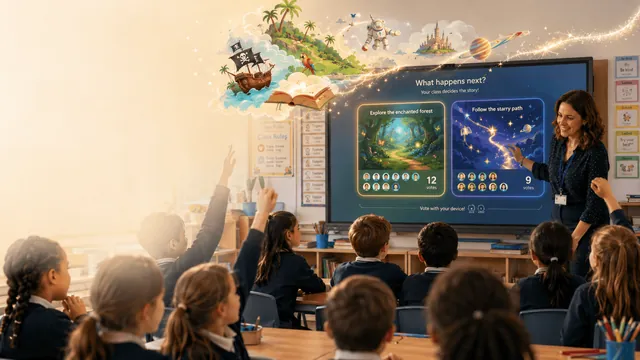
An illustration of a class reading a Litsee story on the whiteboard and voting on what happens next.

FREE TEACHER STORY UNIT · KS1

Great Fire of London story lesson for KS1

A gentle class story for the Great Fire of London topic in Years 1 and 2. Our hero arrives in September 1666, just after the fire, helps Kit find her lost cat among the busy streets, meets a diary writer and watches London begin to rebuild. Nothing is frightening, and nobody is hurt.

When to use it
Any time during your Great Fire of London topic, often taught in the autumn term of Year 2.
Story world
Old London Lanes
Subject focus
History · Events beyond living memory
Suggested story settings
Genre: Historical · Length: 2 chapters · Time: 10–15 minutes

Story feel: Calm & cosy. Story shape: Quest / journey.

About this unit

The Great Fire of London is the KS1 history curriculum’s own example of an event beyond living memory. This unit tells it gently, from just after the fire: the streets are full of people carrying their things home, blackened timber and plans for new houses. Children learn what happened through what the characters notice, and how we know about it from people who wrote it down at the time.

The story stays with helping and rebuilding. Kit’s cat, Pudding, has wandered off, and the search takes our hero past the bakery on Pudding Lane where the fire began, and up to a man writing in his diary. It ends with Pudding asleep in a bread basket and the first new brick houses going up.

KS1 (Years 1 to 2): The Cat of Pudding Lane

Learning objective

Retell events from the Great Fire of London in order, and say how we know about them.

Talk questions

  1. What clues showed our hero that there had been a fire?
  2. How do we know about things that happened a very long time ago?

Writing task

Draw a picture of London being rebuilt. Write two sentences in order: 'First the fire ___. Then people ___.'

Suggested story settings: Genre: Historical · Length: 2 chapters · Time: 10–15 minutes

The story brief

What the class story is asked to do. “Our hero” is the character your class chooses.

A gentle time-travel story for young readers. Our hero steps into London in September 1666, just after the Great Fire has gone out. A girl called Kit has lost her family’s cat, Pudding, in the busy, muddled streets. Our hero helps Kit look for Pudding, past the bakery on Pudding Lane, past people carrying their things back home, and up to the hill where a kind man is writing in his diary. Show what happened through what the characters see now: blackened timber, new plans, people helping each other. Nobody is hurt and nothing is frightening. End with Pudding found asleep in a bread basket and the first new houses being built.

Word bank

bakery
a shop where bread is baked
diary
a book where someone writes what happens each day
timber
wood used to build houses
rebuild
to build again
cathedral
a very large, important church

Text-type features: diary entry

Purpose: to recount events and share feelings. Plan it with the free diary entry plan template.

Reception to Year 2

  • Written as 'I'
  • Says what happened in order
  • Says how I felt
  • Past tense

National Curriculum statements

  • “discussing the sequence of events in books and how items of information are related”

    Year 2, Reading – comprehension (statutory)

  • “sequencing sentences to form short narratives”

    Year 1, Writing – composition (statutory)

  • “writing about real events”

    Year 2, Writing – composition (statutory)

  • “events beyond living memory that are significant nationally or globally [for example, the Great Fire of London, the first aeroplane flight or events commemorated through festivals or anniversaries]”

    Key stage 1, History (statutory)

Sample opening · KS1

A sample written for this page to show the brief in action. It is not the story Litsee writes for your class.

Our hero blinked. The street was narrow and muddy, and the houses leaned towards each other like old friends.

A girl in a long apron ran past, then stopped. “Have you seen a cat?” she asked. “A ginger one. His name is Pudding.”

“I’ll help you look,” said our hero. “What’s your name?”

“Kit,” said the girl. “Pudding ran off when the fire started. Now it’s out, and everyone is coming home, but Pudding isn’t.”

They walked past a bakery with a black, smoky sign. People were carrying chairs and pots and baskets. Some were sweeping. Some were already drawing plans for new houses in the mud.

Model text (WAGOLL)

A model answer to the writing task, pitched at Year 2, written for this page. Read it with the class and find where it meets each success criterion.

First the fire started in a bakery on Pudding Lane.

Then it spread from house to house, because the houses were made of timber.

At last people built new houses out of brick and stone.

We know because a man called Samuel Pepys wrote about it in his diary.

What makes it good

  • First the fire started Starts with a time word to put events in order.
  • because the houses were made of timber Gives a reason with “because”, using a word from the word bank.
  • We know because Says how we know about the past.

By year group

Year 1

Grammar focus: Capital letters and full stops

Our hero blinked.

Year 2

Grammar focus: Past tense and the progressive form

The street was narrow and muddy, and the houses leaned towards each other like old friends.

A week of lessons

  1. Lesson 1

    Hook

    • Show a picture of a London street in 1666 and a picture of the same place today. Ask: what is the same? What is different? Then step back in time with our hero.
    • Talk: What clues showed our hero that there had been a fire?
  2. Lesson 2

    Plan

    • Talk: How do we know about things that happened a very long time ago?
    • Words: bakery, diary, timber, rebuild, cathedral.
  3. Lesson 3

    Draft

    • Write: Draw a picture of London being rebuilt. Write two sentences in order: 'First the fire ___. Then people ___.'
  4. Lesson 4

    Edit

    • Grammar focus. Capital letters and full stops: “Our hero blinked.”
  5. Lesson 5

    Publish

    • Build a class “before and after” timeline along the wall, with each child’s picture and sentences in the right place.
The printed plan adds the planning frame and the full steps for each lesson.

Support, core and stretch sheets

Support

Draw London being rebuilt. Copy and finish one sentence: “Then people ___.”

Core

Draw a picture of London being rebuilt. Write two sentences in order: 'First the fire ___. Then people ___.'

Stretch

Write three sentences in order with “first”, “then” and “at last”, and say how we know what happened.

Vocabulary mat

One A4 page for every table: the word bank with its meanings, sentence stems, useful words and grammar words.

Teaching notes

Use the story to teach the order of events, not the drama of the fire. Make a class timeline with four picture cards (the bakery, the fire, people leaving, people rebuilding) and let children peg them in order before they write.

The diary writer on the hill is a good way into how we know about the past. Show a short, child-friendly extract from Samuel Pepys’s diary about the fire, read aloud by you, and talk about why a diary helps us find out what happened.

Some children worry about fire. Keep the talk on how people helped each other and rebuilt London with brick and stone, and on the safety habits children know today. The story itself starts after the fire has gone out.

Printable lesson sheet

One A4 page, ready for your planning folder: the story title, objective, story settings, talk questions, writing task, word bank with meanings, success criteria, curriculum statements and the sample opening to read aloud. Printing this page prints only that sheet.

About this page

How it works · Sources

About this page

Built from Litsee’s curriculum data. The topic words and their meanings, the year groups and the history, geography and science statements come from the topic data in the Litsee app, quoted word for word from the Department for Education’s documents; the text-type features and English quotations come from the app’s curriculum data. The story briefs, objectives, questions, tasks, sample openings, model texts and teaching notes were written for this page. Ideas or corrections? Email info@litsee.com.

Last updated: .

Questions parents and teachers ask

Is the Great Fire of London story right for young children?

No. It starts just after the fire has gone out and is about finding a lost cat, helping people and rebuilding London. Nobody is hurt.

Which year group is this unit for?

Years 1 and 2. The Great Fire of London is the KS1 history curriculum’s example of an event beyond living memory, and many schools teach it in Year 2.

Is there a word bank for this topic?

Yes. The Great Fire of London word bank has the topic words with child-friendly meanings, more nouns, verbs and adjectives, and a printable word mat.

Run this as a live class story in Litsee

In Litsee, a seasonal brief like this becomes an illustrated, narrated class story. You preview the first chapter before reading it with your class, and the class chooses what happens next together.

Great Fire of London story unit · KS1 (Years 1 to 2)

The Cat of Pudding Lane

Learning objective: Retell events from the Great Fire of London in order, and say how we know about them.

Suggested story settings: Genre: Historical · Length: 2 chapters · Time: 10–15 minutes · Story world: Old London Lanes

Talk questions

  1. What clues showed our hero that there had been a fire?
  2. How do we know about things that happened a very long time ago?

Writing task

Draw a picture of London being rebuilt. Write two sentences in order: 'First the fire ___. Then people ___.'

Word bank

bakery
a shop where bread is baked
diary
a book where someone writes what happens each day
timber
wood used to build houses
rebuild
to build again
cathedral
a very large, important church

Success criteria (diary entry)

Reception to Year 2: I can write as 'I'. I can say what happened in order. I can say how I felt.

National Curriculum statements

  • “discussing the sequence of events in books and how items of information are related” (Year 2, Reading – comprehension (statutory))
  • “sequencing sentences to form short narratives” (Year 1, Writing – composition (statutory))
  • “writing about real events” (Year 2, Writing – composition (statutory))
  • “events beyond living memory that are significant nationally or globally [for example, the Great Fire of London, the first aeroplane flight or events commemorated through festivals or anniversaries]” (Key stage 1, History (statutory))

Sample opening (written for litsee.com, to read aloud)

Our hero blinked. The street was narrow and muddy, and the houses leaned towards each other like old friends.

A girl in a long apron ran past, then stopped. “Have you seen a cat?” she asked. “A ginger one. His name is Pudding.”

“I’ll help you look,” said our hero. “What’s your name?”

“Kit,” said the girl. “Pudding ran off when the fire started. Now it’s out, and everyone is coming home, but Pudding isn’t.”

They walked past a bakery with a black, smoky sign. People were carrying chairs and pots and baskets. Some were sweeping. Some were already drawing plans for new houses in the mud.

Notes

Free from litsee.com/teachers/story-units/great-fire-of-london

Try it in LitseeYour child creates the hero, picks the world and chooses what happens next, in an illustrated story that is read aloud.Start your free trialUse it in classRead an illustrated, narrated story together on the whiteboard, and let the class choose what happens next.Start a free classroom trialSee Litsee for schools