
Help us improve Litsee

With your permission, Google Analytics measures visits and Microsoft Clarity records clicks, scrolling and page interactions, with form inputs and page text masked. We use no advertising cookies.

Change it any time with Cookie settings. Privacy policy · Google privacy · Microsoft privacy

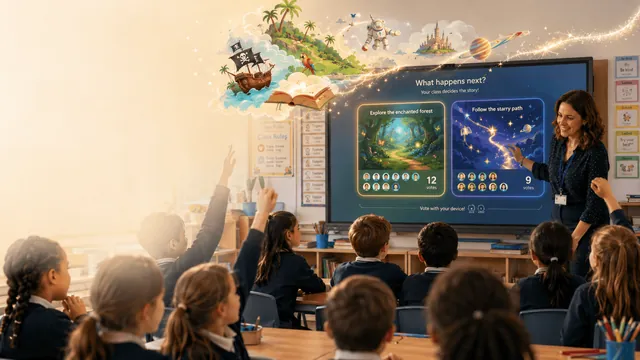
An illustration of a class reading a Litsee story on the whiteboard and voting on what happens next.

FREE TEACHER STORY UNIT · KS2

Romans story lesson for KS2

A calm class mystery for the Romans topic in Years 3 to 6. A tile with a dolphin on it carries our hero back to a Roman town, where they follow clues through the forum, the bathhouse and the aqueduct with Lucia, a young drummer, to the villa floor it came from. Children write a letter about the changes the Romans brought to Britain.

When to use it
Any time during your Romans topic in Years 3 to 6.
Story world
Roman Town
Subject focus
History · The Roman Empire and Britain
Suggested story settings
Genre: Mystery · Length: 2 chapters · Time: 10–15 minutes

Story feel: Wonder & discovery. Story shape: Problem to solve.

About this unit

The KS2 history curriculum asks about the Roman Empire and its impact on Britain. This unit looks at that impact through a town rather than a battlefield: straight roads, a forum, a bathhouse, an aqueduct, a villa with a mosaic floor, Latin on the walls and new foods at the market.

The mystery gives the story a shape, and the Celtic family who live nearby give children a second point of view: not everyone welcomed the Romans, and the second talk question asks children to think about why. Nothing in the story is about fighting.

KS2 (Years 3 to 6): The Lost Mosaic

Learning objective

Describe ways the Romans changed life in Britain, using evidence from the story and the topic.

Talk questions

  1. Which Roman changes did our hero see in the town? Which can we still see in Britain today?
  2. How might the Celtic family nearby have felt about the Romans? Why might different people feel differently?

Writing task

Write a letter from our hero to Lucia after getting home, describing three Roman things they saw and which change they think lasted longest.

Suggested story settings: Genre: Mystery · Length: 2 chapters · Time: 10–15 minutes

The story brief

What the class story is asked to do. “Our hero” is the character your class chooses.

A gentle mystery in Roman Britain for older primary readers. Our hero finds a small tile with a dolphin on it in the ruins of a villa, and the tile carries them back to the town when it was new. With Lucia, a young drummer who marches with the legion on parade days, our hero follows clues through the town: the forum, the bathhouse, the aqueduct and finally the villa, where a mosaic floor has one dolphin missing. Show how Roman life changed Britain (roads, towns, baths, Latin, new food) and include a Celtic family who live nearby. Keep it kind and calm: no battles.

Word bank

empire
many lands ruled by one leader or country
villa
a large Roman country house
mosaic
a picture made from many small coloured tiles
aqueduct
a bridge-like channel that carried water to a town
emperor
the ruler of an empire

Text-type features: letter to a character

Purpose: to tell someone about events and ask questions. Plan it with the free letter to a character plan template.

Years 3 to 6

  • Address and date
  • Greeting and sign-off
  • Paragraphs for each idea
  • Questions for the reader
  • A friendly voice

National Curriculum statements

  • “drawing inferences such as inferring characters’ feelings, thoughts and motives from their actions, and justifying inferences with evidence”

    Years 3 and 4, Reading – comprehension (statutory)

  • “in writing narratives, considering how authors have developed characters and settings in what pupils have read, listened to or seen performed”

    Years 5 and 6, Writing – composition (statutory)

  • “retrieve, record and present information from non-fiction”

    Years 5 and 6, Reading – comprehension (statutory)

  • “the Roman Empire and its impact on Britain”

    Key stage 2, History (statutory)

Sample opening · KS2

A sample written for this page to show the brief in action. It is not the story Litsee writes for your class.

The tile was no bigger than a biscuit, half buried in the grass beside the low stone walls of the old villa. On it, picked out in tiny blue and white squares, was a dolphin.

Our hero brushed the dust away with a thumb, and the world tilted.

When it settled, the villa wasn’t ruins any more. It had a red tiled roof and painted walls, and through a gate our hero could see a street of shops, a fountain and a long line of stone arches marching across the valley, carrying water to the town.

“You found it!” A girl with a drum slung over her shoulder came running up the road. “That’s the dolphin from the villa floor. It went missing last week, and the owner is offering a reward. I’m Lucia. Shall we take it back together?”

She glanced at the tile, then at the town. “But first,” she added, grinning, “you have to see the baths.”

Model text (WAGOLL)

A model answer to the writing task, pitched at Year 5, written for this page. Read it with the class and find where it meets each success criterion.

Dear Lucia,

I’m home again, and the dolphin tile is safely back in the villa floor (I still can’t believe the owner gave us a basket of figs as a reward).

I keep thinking about everything you showed me. First, the baths: I never knew there could be a hot room, a warm room and a cold pool all in one building. Next, the aqueduct, carrying fresh water across the whole valley on its tall stone arches. Finally, the straight road out of town, which you said runs all the way to the coast.

I think the roads lasted longest. Some of our roads today still follow the routes the Romans built, nearly two thousand years later.

Please say hello to the Celtic family by the river. I hope they are still selling those blue cloaks at the market.

Your friend from the future

What makes it good

  • First, the baths: Time words organise the three things into a clear order.
  • carrying fresh water across the whole valley on its tall stone arches Precise description that shows understanding of what an aqueduct did.
  • I think the roads lasted longest. Gives a clear opinion and then backs it up with evidence.

By year group

Year 3

Grammar focus: Conjunctions to join clauses

Year 4

Grammar focus: Conjunctions to join clauses

Year 5

Grammar focus: Expanded noun phrases

The tile was no bigger than a biscuit, half buried in the grass beside the low stone walls of the old villa.

Year 6

Grammar focus: Paragraphs and headings

A week of lessons

  1. Lesson 1

    Hook

    • Show a picture of a Roman mosaic with one tile missing (cover it with a sticky note). Ask: what might the missing piece be, and how could we find out?
    • Talk: Which Roman changes did our hero see in the town? Which can we still see in Britain today?
  2. Lesson 2

    Plan

    • Talk: How might the Celtic family nearby have felt about the Romans? Why might different people feel differently?
    • Words: empire, villa, mosaic, aqueduct, emperor.
  3. Lesson 3

    Draft

    • Write: Write a letter from our hero to Lucia after getting home, describing three Roman things they saw and which change they think lasted longest.
  4. Lesson 4

    Edit

    • Grammar focus. Conjunctions to join clauses: “The owl smiled because she knew the way.”
  5. Lesson 5

    Publish

    • Post the letters in a class “Roman post box” and read some aloud as if they had just arrived at the villa.
The printed plan adds the planning frame and the full steps for each lesson.

Support, core and stretch sheets

Support

Write a short letter to Lucia with three sentences, one for each Roman thing you saw.

Core

Write a letter from our hero to Lucia after getting home, describing three Roman things they saw and which change they think lasted longest.

Stretch

Write the letter so that it compares Roman Britain with today and argues which change lasted longest, with a reason.

Vocabulary mat

One A4 page for every table: the word bank with its meanings, sentence stems, useful words and grammar words.

Teaching notes

Follow the story’s route on a simple map of a Roman town: forum, bathhouse, aqueduct, villa. Children add one fact to each place as they learn it in their history lessons.

Use the Celtic family to look at the topic from more than one side. Ask children to list what changed for the better and what changed for the worse for the people who already lived in Britain, and to give reasons.

The letter task works best with real evidence. Show pictures of Roman mosaics, a Roman road or the baths at Bath, and ask children to use at least one real place in their letter.

Printable lesson sheet

One A4 page, ready for your planning folder: the story title, objective, story settings, talk questions, writing task, word bank with meanings, success criteria, curriculum statements and the sample opening to read aloud. Printing this page prints only that sheet.

About this page

How it works · Sources

About this page

Built from Litsee’s curriculum data. The topic words and their meanings, the year groups and the history, geography and science statements come from the topic data in the Litsee app, quoted word for word from the Department for Education’s documents; the text-type features and English quotations come from the app’s curriculum data. The story briefs, objectives, questions, tasks, sample openings, model texts and teaching notes were written for this page. Ideas or corrections? Email info@litsee.com.

Last updated: .

Questions parents and teachers ask

Why does the Romans story not include battles?

Because the curriculum asks about the Roman Empire’s impact on Britain, and a town shows that far better: roads, baths, villas and Latin. It is a calm mystery, and nothing in it is about fighting.

Which year groups is it for?

Years 3 to 6. The Roman Empire and its impact on Britain is a KS2 history topic, taught in different years by different schools.

Is there a Romans word bank?

Yes. The Romans word bank has the topic words with child-friendly meanings, more nouns, verbs and adjectives, and a printable word mat.

Run this as a live class story in Litsee

In Litsee, a seasonal brief like this becomes an illustrated, narrated class story. You preview the first chapter before reading it with your class, and the class chooses what happens next together.

Romans story unit · KS2 (Years 3 to 6)

The Lost Mosaic

Learning objective: Describe ways the Romans changed life in Britain, using evidence from the story and the topic.

Suggested story settings: Genre: Mystery · Length: 2 chapters · Time: 10–15 minutes · Story world: Roman Town

Talk questions

  1. Which Roman changes did our hero see in the town? Which can we still see in Britain today?
  2. How might the Celtic family nearby have felt about the Romans? Why might different people feel differently?

Writing task

Write a letter from our hero to Lucia after getting home, describing three Roman things they saw and which change they think lasted longest.

Word bank

empire
many lands ruled by one leader or country
villa
a large Roman country house
mosaic
a picture made from many small coloured tiles
aqueduct
a bridge-like channel that carried water to a town
emperor
the ruler of an empire

Success criteria (letter to a character)

Years 3 to 6: I can lay out a letter. I can use a paragraph for each idea. I can ask questions.

National Curriculum statements

  • “drawing inferences such as inferring characters’ feelings, thoughts and motives from their actions, and justifying inferences with evidence” (Years 3 and 4, Reading – comprehension (statutory))
  • “in writing narratives, considering how authors have developed characters and settings in what pupils have read, listened to or seen performed” (Years 5 and 6, Writing – composition (statutory))
  • “retrieve, record and present information from non-fiction” (Years 5 and 6, Reading – comprehension (statutory))
  • “the Roman Empire and its impact on Britain” (Key stage 2, History (statutory))

Sample opening (written for litsee.com, to read aloud)

The tile was no bigger than a biscuit, half buried in the grass beside the low stone walls of the old villa. On it, picked out in tiny blue and white squares, was a dolphin.

Our hero brushed the dust away with a thumb, and the world tilted.

When it settled, the villa wasn’t ruins any more. It had a red tiled roof and painted walls, and through a gate our hero could see a street of shops, a fountain and a long line of stone arches marching across the valley, carrying water to the town.

“You found it!” A girl with a drum slung over her shoulder came running up the road. “That’s the dolphin from the villa floor. It went missing last week, and the owner is offering a reward. I’m Lucia. Shall we take it back together?”

She glanced at the tile, then at the town. “But first,” she added, grinning, “you have to see the baths.”

Notes

Free from litsee.com/teachers/story-units/romans

Try it in LitseeYour child creates the hero, picks the world and chooses what happens next, in an illustrated story that is read aloud.Start your free trialUse it in classRead an illustrated, narrated story together on the whiteboard, and let the class choose what happens next.Start a free classroom trialSee Litsee for schools