The Turtle’s Lost Shell · KS1 (Reception to Year 2)
The class joins in: “Splish, splash, down we dive!”
Our hero was peering into a rock pool when a round, wrinkly head popped up out of the sea.
“Hello!” said a sea turtle. “I’m Shelby. Can you help me? The tide washed a special shell off the coral reef, and I need to take it back.”
“I need to ask Grandma first,” said our hero, and ran to the picnic rug.
Grandma looked at Shelby, and her eyes went very wide. Then she smiled. “Off you go,” she said. “I’ll be right here, watching.”
Shelby blew a big, shiny bubble. It popped right over our hero’s head, like a magic helmet. “Now you can breathe under the sea, just for today,” said Shelby. “Ready?”
“Yes!” said our hero, and pulled on some goggles. “Splish, splash, down we dive!”
Under the water, everything was blue and green and wobbly. A crab scuttled sideways across the sand. A shoal of silver fish flashed past, all turning at the same time.
Then our hero saw a plastic bag floating by. “That shouldn’t be here,” they said, and tucked it into their pocket.
“Thank you,” said Shelby. “Turtles can think a floating bag is a jellyfish to eat.”
The sea was very big, and the reef was far away. Our hero looked one way, then the other. “Which way is the coral reef?”
Three sea friends wanted to help.
Who should they follow to the reef?
Hands on heads: Follow the crab
“This way!” said the crab, and scuttled off sideways. So our hero and Shelby went sideways too, which made them giggle.
Sideways, sideways, past the rocks and over the sand… and there was the coral reef!
Hands on shoulders: Follow the silver fish
“Swim with us!” said the shoal of silver fish. They all turned at the same time: flash, flash, flash!
Our hero and Shelby rode a gentle current behind them, whoosh, all the way to the coral reef!
Hands on knees: Ask the starfish
The starfish was holding on to a rock. “I’m a slow mover,” it said. “But I know the way. Go past the tall seaweed, then turn at the big round rock.”
Our hero and Shelby followed the starfish’s directions… and there was the coral reef!
The coral reef was full of colour: pink and orange, purple and gold. Shelby put the special shell back in its place, and the whole reef seemed to sparkle.
Back on the beach, our hero gave Grandma a big hug. Then they put the plastic bag in the bin. The sea was clean and blue.
The Current Riders · KS2 (Years 3 to 6)
The class joins in: “Ride the current, find the way!”
The little satellite tag on the turtle’s shell blinked green on Dr Mensah’s screen.
“That’s her,” she said. “Number 47. She’s been feeding off the coast for three years, and now she’s heading home, to the beach where she hatched, to lay her own eggs.”
“How does she know the way?” asked our hero.
“Scientists think turtles can sense the Earth’s magnetic field, a bit like a compass,” said Dr Mensah. “And she doesn’t swim the whole way on her own strength. Watch.”
On the screen, the green dot moved into a wide blue band and began to speed up.
“An ocean current,” said Kwame, her assistant, grinning. “Like a motorway in the sea. She’s riding it.”
Number 47 was a green sea turtle. For three years she had grazed on seagrass in shallow water; now she was swimming a very long way to the beach where she was born.
Dr Mensah’s boat followed at a distance, so they would never disturb her.
On the fifth day, Kwame pointed at the screen. Our hero lifted the binoculars. Bottles, wrappers and an old rope: a patch of floating plastic, right across Number 47’s route.
“Turtles can mistake plastic for jellyfish,” said Dr Mensah. “But we’ve spotted it in time, and we can help. Let’s make a plan.”
What should the team do?
Hands on heads: Scoop it up and count it
Everyone grabbed a long-handled net. Scoop by scoop, they lifted the plastic out of the water, and Kwame kept a tally of every piece on his clipboard.
“Now we have evidence,” said Dr Mensah, “for anyone who says it doesn’t matter.” By the time the green dot reached the spot, the water was clear.
Hands on shoulders: Map it and report it
Our hero photographed the patch and marked its exact position on the chart, while Kwame radioed the marine research station. “A clean-up boat is on its way,” came the reply.
Dr Mensah steered to the edge of the current to watch. The green dot slipped safely past, deep below the surface.
Hands on knees: Call the beach-clean team
“Plastic washes up on beaches too,” said our hero, “and she’s nearly home.” Kwame radioed the island’s beach-clean volunteers. “We’ll be there at dawn,” they said.
By the next evening the volunteers had cleared the whole bay. Out at sea, the green dot swam on past the patch, deep below the surface.
On the eighth night, under a sky full of stars, a dark shape crawled slowly up the sand. Number 47 was home, on the very beach where she had hatched.
She dug a nest with her flippers, laid her eggs, covered them with sand and slipped back into the sea. “Will we see the babies?” whispered our hero. “When they hatch,” smiled Dr Mensah. “And one day, some of them may come back to this beach, too.”
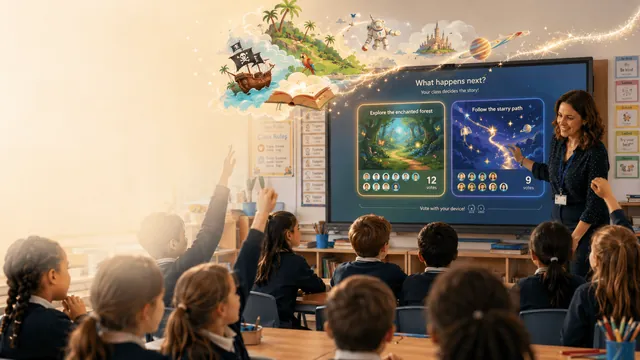
Both stories were written for this page by Litsee, from the unit’s own characters. The sea facts in them come from the Natural History Museum (see “Seaside safety and our sources” below). In the Litsee app, a class makes its own story from the unit’s brief and chooses what happens next.