Help us improve Litsee

Analytics cookies to improve Litsee? No ads.

With your permission, Google Analytics measures visits and Microsoft Clarity records clicks, scrolling and page interactions, with form inputs and page text masked. We use no advertising cookies.

Change it any time with Cookie settings. Privacy policy · Google privacy · Microsoft privacy

11+ creative writing prompts

Pick a picture, read its task, then plan in the box for that kind of writing.

22 picture prompts

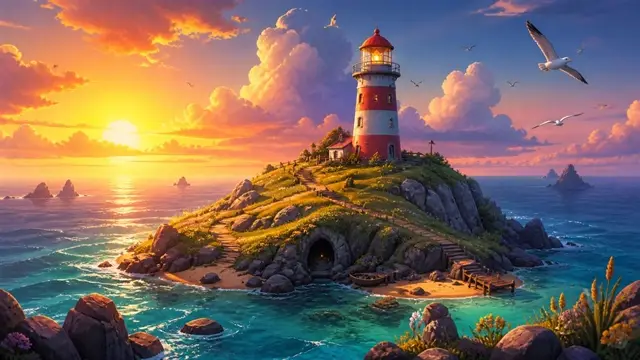
  1. A painted red and white lighthouse on a small green island at sunset, with steps down to a wooden jetty, a little boat, rocks and seagulls over a calm sea.

    1. Narrative

    The lamp at sunset

    The sun is going down and the lighthouse lamp has just come on. Write a story that begins on the steps down to the jetty, where a little boat is tied up that was not there this morning.

    Or try it as a diary entry: Write the lighthouse keeper’s diary for this evening.

    Plan it in the narrative plan box
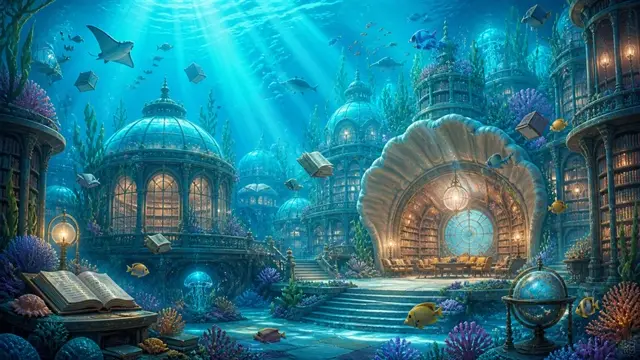
  2. A painted library under the sea: domed reading rooms with glowing windows, a giant shell-shaped hall full of shelves, books drifting in the water, fish, a globe and a big open book in the front.

    2. Descriptive

    The library under the sea

    Describe this library at the bottom of the sea as if you have just swum through its doors: the light falling through the water, the books drifting past and the great shell-shaped reading room.

    Or try it as a story: A book drifts down and lands open at your feet. Write what happens when you read its first line.

    Plan it in the descriptive plan box
  3. A painted city of tall towers and glass domes, with a yellow train on a raised track, flying drones and friendly round robots in the square, one carrying a parcel.

    3. Persuasive

    A robot on every street?

    In this city, friendly robots carry parcels, look after the plants and keep the trains running. Write a speech to your town council arguing for, or against, a robot helper on every street in your town.

    Or try it as a description: Describe the square from the point of view of the robot carrying the parcel.

    Plan it in the persuasive plan box
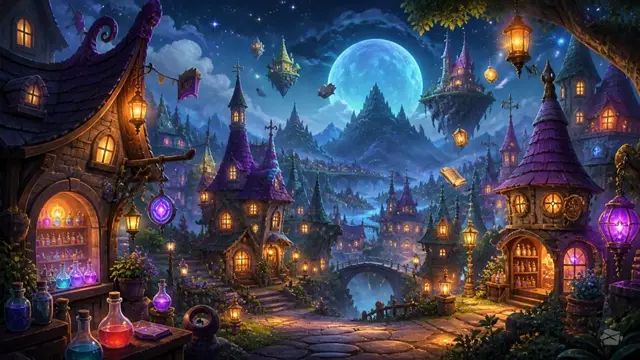
  4. A painted village at night of crooked cottages with pointed purple roofs, glowing lanterns, a potion shop with coloured bottles, a stone bridge, a big moon and little islands floating in the sky.

    4. Letter

    A week in Wizard Village

    You are spending a week in this village where everyone does magic. Write a letter home to a friend about the lanterns, the shop full of potions and the islands floating in the sky.

    Or try it as a description: Describe the cobbled street at night as the lanterns glow.

    Plan it in the letter plan box
  5. A painted green valley with a long-necked dinosaur by a turquoise pool, another drinking by a river, a plated dinosaur on the bank, steaming springs, waterfalls, tall rocky mountains and flying reptiles in the sky.

    5. Diary

    The valley where dinosaurs still roam

    You are a scientist who has found a valley where dinosaurs still roam. Write your diary for the first day: what you saw by the pool, what surprised you most and what you plan to do tomorrow.

    Or try it as an argument, speech or leaflet: Should the valley be kept a secret? Write an argument for one side.

    Plan it in the diary plan box
  6. A painted base on the Moon: glass domes with trees growing inside, joined by tunnels, a six-wheeled buggy, a landing pad, satellite dishes, a rocket in the starry sky and the Earth hanging above.

    6. Narrative

    First night on the Moon

    Write a story about a child’s first night living at this base on the Moon, where trees grow under glass domes and the Earth hangs in the sky outside the window.

    Or try it as a letter: Write a letter from the Moon base to someone you miss on Earth.

    Plan it in the narrative plan box
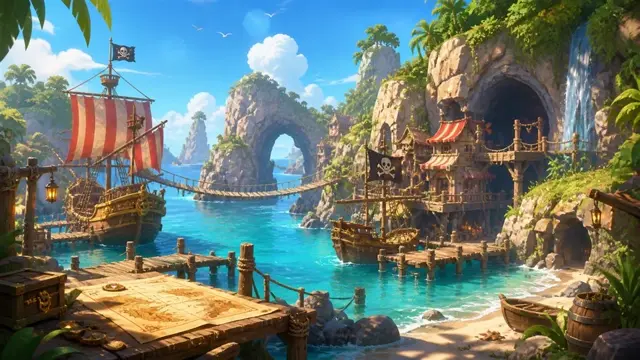
  7. A painted turquoise lagoon with a pirate ship with red and white striped sails, a rope bridge to a rock arch, wooden jetties, a waterfall by a cave, wooden huts built into the cliff and a map spread out on a table on the jetty.

    7. Descriptive

    Pirate Lagoon at noon

    Describe this lagoon at midday: the ship with striped sails, the rope bridge swinging out to the rock arch, the waterfall and the map spread out on the jetty. Use at least four of your five senses.

    Or try it as a story: Someone has left a map on the jetty. Write the story of the person who finds it.

    Plan it in the descriptive plan box
  8. A painted kingdom made of sweets: gingerbread houses with icing roofs, a castle with striped towers, a winding path like a ribbon, giant swirly lollipops and sweets scattered everywhere under a pink sky.

    8. Persuasive

    Should the sweet castle open its gates?

    The rulers of this kingdom made of sweets are deciding whether to open their striped castle to visitors. Write a leaflet to persuade them, choosing whichever side you believe in.

    Or try it as a diary entry: Write the diary of the castle cook on the busiest day of the year.

    Plan it in the persuasive plan box
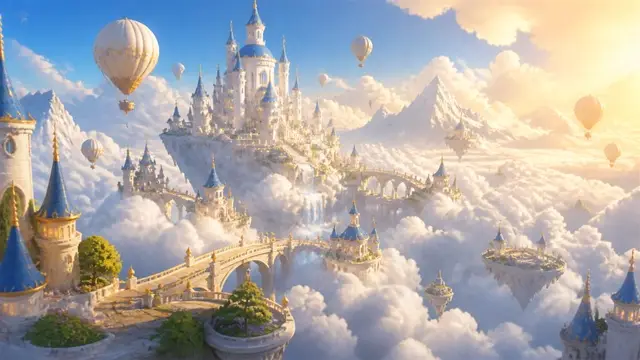
  9. A painted kingdom high above the clouds: white castles with blue pointed roofs on floating islands, stone bridges between them and hot-air balloons drifting in a golden sky.

    9. Diary

    By balloon to the Cloud Kingdom

    You arrived in this kingdom high in the clouds by hot-air balloon this morning. Write your diary entry for the day, from the first bridge you crossed to where you are sleeping tonight.

    Or try it as a description: Describe the view from the highest bridge.

    Plan it in the diary plan box
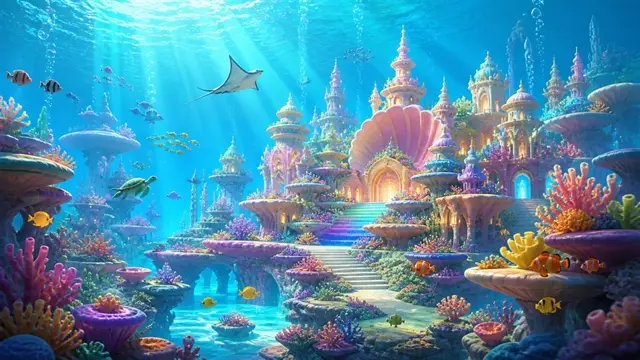
  10. A painted kingdom under the sea, with a shell-shaped palace, coral towers, glowing steps, a manta ray, a sea turtle and bright fish swimming among the corals.

    10. Letter

    A visit to the Coral Kingdom

    Write a letter to the ruler of this coral kingdom asking if you may visit. Say who you are, what you hope to see and how you will take care of the reef while you are there.

    Or try it as a description: Describe the palace steps as the sea turtle swims past.

    Plan it in the letter plan box
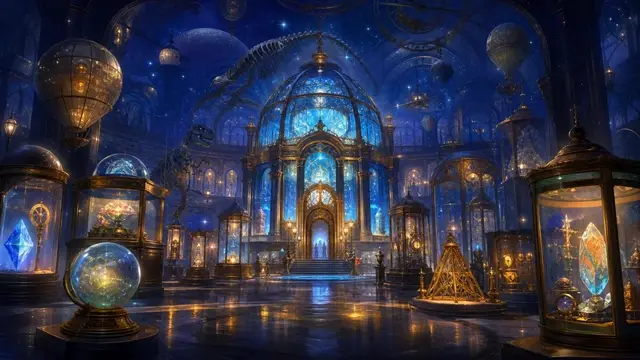
  11. A painted museum hall at night under a great glass dome, with glowing display cases holding crystals and a golden pyramid, a softly lit globe and old hot-air balloons hanging from the ceiling.

    11. Narrative

    The museum after closing time

    In this museum, the exhibits wake up when the last visitor has gone home. Write a story about the evening the museum’s youngest volunteer stays late to help and discovers the secret.

    Or try it as an argument, speech or leaflet: Should museums open at night? Write a speech for one side.

    Plan it in the narrative plan box
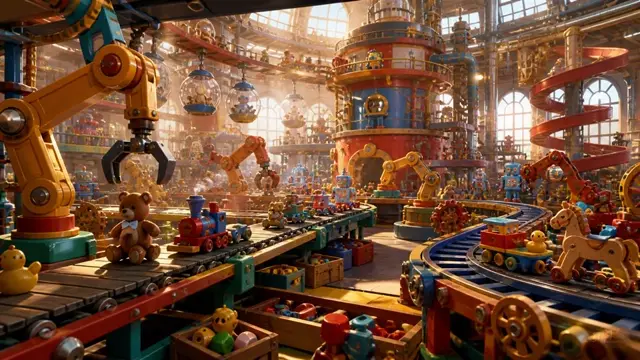
  12. A painted toy factory full of yellow robot arms, teddy bears, rubber ducks, rocking horses and toy trains on moving belts and tracks, with a red spiral slide and tall windows.

    12. Descriptive

    Inside the toy factory

    Describe this toy factory in full swing: the yellow robot arms, the teddy bears and toy trains riding the belts and the red spiral slide. Make the reader hear it as well as see it.

    Or try it as an argument, speech or leaflet: Write an advert for a brand-new toy made here.

    Plan it in the descriptive plan box
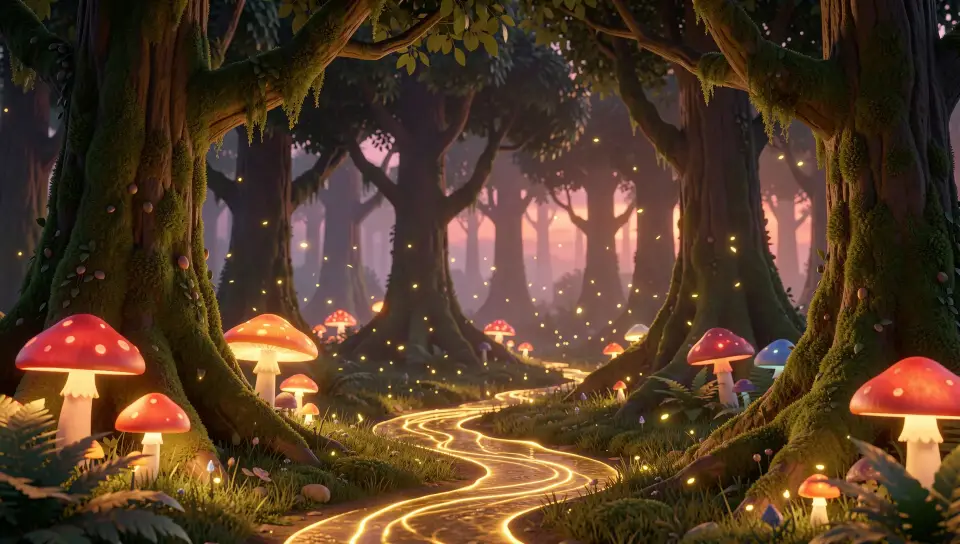
  13. A painted forest of tall mossy trees at dusk, with red and white toadstools, tiny floating lights and a glowing golden path winding away between the trees.

    13. Narrative

    The glowing path

    A path of light winds away between the glowing toadstools. Write a story that begins when someone decides to follow it, and ends somewhere they never expected.

    Or try it as a description: Describe the forest from the first bend in the path.

    Plan it in the narrative plan box
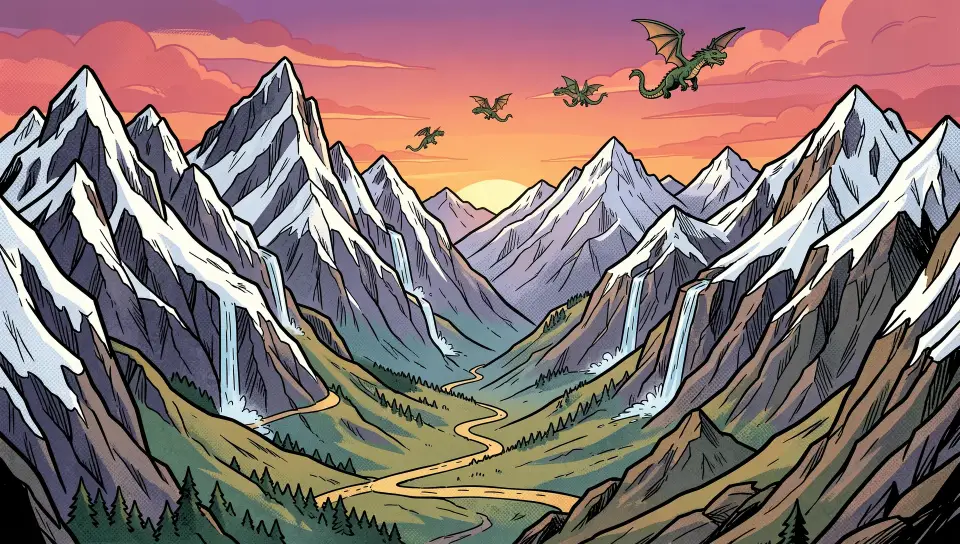
  14. A painted green valley between snowy mountains, with waterfalls, a winding golden river and green dragons flying across a pink and orange sky.

    14. Persuasive

    Visitors in the dragons’ valley?

    Some people want to build a viewing platform so visitors can watch the dragons fly over this valley. Write a speech arguing whether visitors should be allowed in.

    Or try it as a letter: Write a letter to a newspaper about the plan.

    Plan it in the persuasive plan box
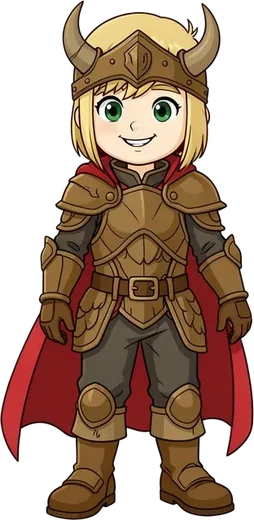
  15. A smiling young dragon rider in a horned helmet, bronze armour and a red cape, standing in a valley of snowy mountains where green dragons fly.

    15. Narrative

    The dragon rider’s first flight

    This dragon rider is about to take a first flight over the mountains. Write the story of that flight, from the moment of take-off to the moment the rider lands again.

    Or try it as a diary entry: Write the dragon rider’s diary on the evening after the flight.

    Plan it in the narrative plan box
  16. A smiling young astronaut in a white space suit, holding a helmet, standing on the Moon in front of glass domes, with the Earth in the sky.

    16. Diary

    An astronaut’s first week

    This astronaut has just moved to the Moon base. Write their diary for one day in their first week: the work, the view of Earth and the thing they did not expect.

    Or try it as a letter: Write the astronaut’s letter to their class back on Earth.

    Plan it in the diary plan box
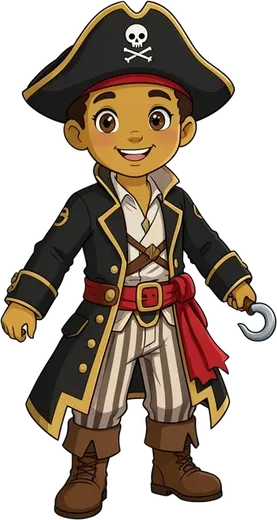
  17. A smiling young pirate captain in a black hat with a skull and crossbones, a long black coat and a red sash, in front of a turquoise lagoon with a striped-sailed ship.

    17. Letter

    A message in a bottle

    This pirate captain is about to throw a message in a bottle into the lagoon. Write the letter inside it: who it is for, what the captain wants to say and what they hope will happen next.

    Or try it as a story: Write the story of the person who finds the bottle.

    Plan it in the letter plan box
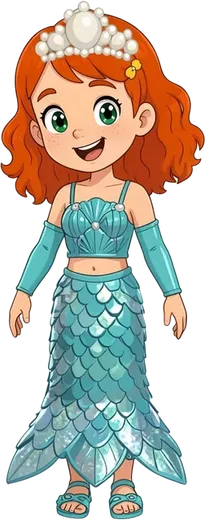
  18. A smiling young mermaid with red hair, a pearl crown and a shimmering blue-green scaly tail, in front of a coral palace under the sea.

    18. Descriptive

    Describe the mermaid

    Describe this character so clearly that someone could draw them from your words alone. Then show what kind of person they are through one thing they do.

    Or try it as a letter: Write a letter from the mermaid to a friend on land.

    Plan it in the descriptive plan box
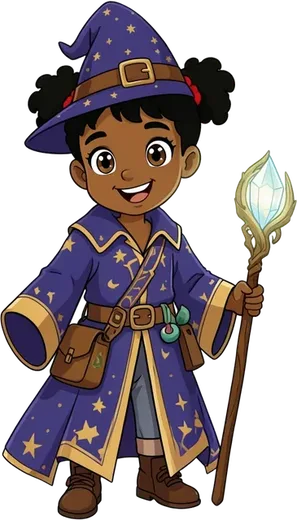
  19. A smiling young wizard in a purple robe and pointed hat covered in stars, holding a staff with a crystal at the top, standing in a village of glowing lanterns at night.

    19. Persuasive

    Magic lessons for everyone?

    This young wizard believes every child in the village should have magic lessons at school. Write the speech they give to the village council.

    Or try it as a diary entry: Write the wizard’s diary after their first lesson as a teacher.

    Plan it in the persuasive plan box
  20. A smiling young explorer in a brown hat with goggles, a scarf and a jacket with a star badge, in front of a green valley where long-necked dinosaurs drink at a pool.

    20. Descriptive

    The explorer arrives

    Describe the moment this explorer comes over the ridge and sees the valley for the first time. Describe the explorer as well as the view: what they wear, what they carry and how their face changes.

    Or try it as a diary entry: Write the explorer’s notebook entry for that evening.

    Plan it in the descriptive plan box
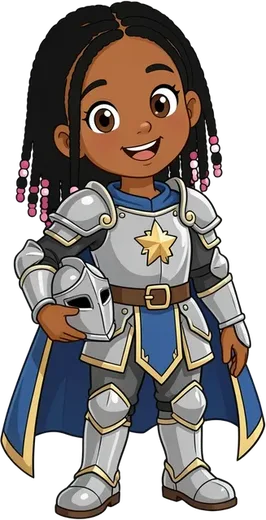
  21. A smiling young knight in silver armour with a gold star, a blue cape and a helmet under one arm, in front of castles on islands above the clouds, with hot-air balloons behind.

    21. Letter

    Welcome to the Cloud Kingdom

    This knight looks after the bridges of the Cloud Kingdom and has been asked to welcome a new young knight. Write the welcome letter: what the newcomer will see, what their jobs will be and one piece of advice.

    Or try it as a story: Write the story of the new knight’s first day on the bridges.

    Plan it in the letter plan box
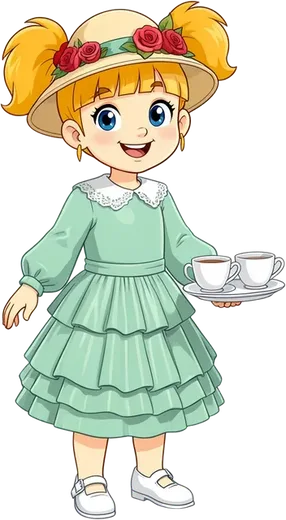
  22. A smiling young guest in a straw hat with roses and a frilly green dress, carrying two teacups on a saucer, standing in a kingdom of gingerbread houses, striped towers and giant lollipops.

    22. Diary

    Tea at the sweet castle

    This guest has been invited to tea at the castle in the kingdom made of sweets. Write their diary entry that evening: who was there, what was served and what went charmingly wrong.

    Or try it as a letter: Write the guest’s thank-you letter to the castle.

    Plan it in the diary plan box

The five task types, with a plan box for each

These times are Litsee’s suggestions for practice at home, not what any test sets. Follow your school’s own instructions.

A story

Narrative

A story with a beginning, a problem and an ending. It can start from the picture or simply be set there, and it is usually told in the past tense.

Litsee’s suggested practice time: about 40 minutes (5 to plan, 30 to write, 5 to check).

Narrative plan box

Who and where
Your main character, the place in the picture and the moment the story starts.
What changes
The thing that goes wrong, appears or surprises them.
The big moment
The point where your character has to choose or act.
How it ends
How it is sorted out, and how your character feels now.
Words to use
Three or four strong words you want to save for the right moment.
  • Decide the ending before you write the first line, so the story has somewhere to go.
  • Begin close to the action: one or two sentences of setting, then something happens.
  • Give the ending the same care as the opening; a rushed last paragraph is easy to spot.

A description

Descriptive

A piece that makes the reader see, hear and feel a place or a person. Little or nothing needs to happen; the writing is the journey through the picture.

Litsee’s suggested practice time: about 30 minutes (5 to plan, 20 to write, 5 to check).

Descriptive plan box

The wide view
One sentence for the whole scene, as if seen from far away.
Three close-ups
Three details you will zoom in on, one per paragraph.
Beyond seeing
A sound, a smell, a texture and a temperature.
The feeling
One mood the place should leave the reader with.
The last image
The detail you will end on.
  • Move through the picture in an order the reader can follow: far to near, left to right, or ground to sky.
  • Choose one precise word over two vague ones: “the lantern flickered” beats “the light was very bright and moving”.
  • Vary sentence length: a long, flowing sentence for the view, a short one for a detail that matters.

An argument, speech or leaflet

Persuasive

Writing that tries to change the reader’s mind or get them to act. Choose a side, give reasons, and answer the people who disagree.

Litsee’s suggested practice time: about 30 minutes (5 to plan, 20 to write, 5 to check).

Persuasive plan box

My side
One clear sentence: what you want the reader to think or do.
Best reason
Your strongest point, with an example from the picture.
Second reason
A different kind of point: about people, animals, money or the future.
They might say…
The best argument against you, and your answer to it.
Final push
What the reader should do next, in one memorable line.
  • Write to a real reader (a council, a ruler, a newspaper) and keep them in mind all the way through.
  • Use a question or a group of three once each, where they will land hardest, not in every paragraph.
  • Keep it polite. Answering the other side fairly is more convincing than making fun of it.

A letter

Letter

Writing to one particular reader for a reason: to invite, thank, ask, explain or tell news. Choose formal or informal to suit who is reading.

Litsee’s suggested practice time: about 30 minutes (5 to plan, 20 to write, 5 to check).

Letter plan box

To and from
Who is writing, who is reading, and how well they know each other.
Why I’m writing
The reason, in the first paragraph.
The details
Two or three paragraphs, each about one thing.
What next
What you hope the reader will do or reply.
Signing off
A sign-off that fits: “Yours sincerely” or “Love from”.
  • Set it out like a letter: the date, a greeting on its own line and a sign-off.
  • Match the voice to the reader: chatty for a friend, polite and clear for a ruler or a council.
  • Mention things only that reader would care about; it makes the letter feel real.

A diary entry

Diary

A private account of one day, in the first person, written in the evening by someone who was there. Feelings matter as much as events.

Litsee’s suggested practice time: about 25 minutes (5 to plan, 15 to write, 5 to check).

Diary plan box

Whose diary
Who is writing, and how they feel as they sit down to write.
The day so far
What happened, in order, as short notes.
The moment
The one part of the day they keep thinking about.
Second thoughts
What they understand now that they didn’t this morning.
Tomorrow
What they hope, plan or worry about next.
  • Write as “I”, mostly in the past tense, and switch to the present for how you feel now.
  • Let the writer talk to the diary a little: an aside, a question, a joke only they would get.
  • One moment told in detail is better than ten events listed one after another.
For grown-ups: a model opening, who sets the writing task, how to practise and questions

What your child practises: planning and writing in five forms for different readers: a story, a description, a persuasive piece, a letter and a diary entry. National Curriculum, Years 5 and 6, Writing – composition: “identifying the audience for and purpose of the writing, selecting the appropriate form and using other similar writing as models for their own”.

Here are 22 free picture prompts for 11 plus creative writing practice, made from Litsee’s painted worlds and heroes, each with a task to try: a story, a description, a persuasive piece, a letter or a diary entry. There is a plan box and a suggested practice time for each kind of writing, and a model opening with notes.

A model opening

Here is one way to open the lighthouse story. It was written by Litsee for this page to show some of the choices on the plan box above: it is not a real pupil’s work, and it is not a marked answer or a standard set by any school.

Prompt: The lamp at sunset (The sun is going down and the lighthouse lamp has just come on. Write a story that begins on the steps down to the jetty, where a little boat is tied up that was not there this morning.)

Example written by Litsee · Narrative

The lamp came on at seven minutes past six, the way it always did, and the whole island turned gold.

Isla was halfway down the stone steps when she saw the boat. It was tied to the jetty with a neat blue rope, and it had not been there at breakfast. She stopped, one hand on the warm rail, and counted the gulls circling the lighthouse: eleven, twelve, thirteen. Thirteen, Grandpa always said, meant visitors.

“Grandpa!” she called up. “Someone’s here!”

The only answer was the slow creak of the lamp turning above her and the hush of the waves on the rocks. Isla looked at the boat again. Painted on its side, in curling letters that had almost faded away, was a name she knew very well.

It was her own.

What is working

  • The first sentence gives the time, the place and the light at once, so the reader is on the island straight away.
  • Small, exact details (a neat blue rope, the warm rail, thirteen gulls) make the scene feel real without a long description.
  • One line of speech moves the story on: Isla wants help, and no one answers.
  • Sounds as well as sights: the creak of the lamp and the hush of the waves.
  • A one-line final paragraph ends the opening on a question the rest of the story has to answer.

Next step: In the plan box, decide who rowed the boat and why it carries Isla’s name, then plan an ending that answers both.

Who sets the 11+ writing task?

There is no single 11+ creative writing paper. Each grammar school, consortium or independent school decides what its own entrance test includes, so whether there is a writing task at all, how long it is and what kind of writing it asks for depend on the school. The school’s or local authority’s admissions pages are the place to check, for the year your child applies.

GL Assessment’s 11+ FAQ lists the subjects as English, maths, verbal reasoning and non-verbal reasoning, and says tests vary “because local authorities or individual schools decide which subjects to test”. It adds: “An authority or school may also choose to add their own questions to those from a test provider.” It does not mention a writing paper.

ISEB describes its Common Pre-Tests as “a series of four online, adaptive and shared entrance assessments” covering “mathematics, English (reading comprehension and grammar), verbal reasoning and non-verbal reasoning”; there is no writing task in that list. On 14 May 2026 ISEB also announced it would be “launching a Creative Writing Assessment for 11+ Admissions next year, designed for schools with a creative writing element incorporated into their admissions processes”. So the picture may change: check each school’s own information.

The prompts on this page are for practice and for the pleasure of writing. They don’t copy any school’s paper, and they come with no promise about results. Quotations checked on 5 November 2026.

Where it fits the curriculum

Two of the statutory requirements for writing in Years 5 and 6 that these tasks practise, quoted from the National Curriculum in England:

  • “in writing narratives, considering how authors have developed characters and settings in what pupils have read, listened to or seen performed”

    Years 5 and 6, Writing – composition (statutory)

  • “ensuring correct subject and verb agreement when using singular and plural, distinguishing between the language of speech and writing and choosing the appropriate register”

    Years 5 and 6, Writing – composition (statutory)

How to practise at home

Start with the picture, not the clock. Let your child choose a picture they like and talk about it for two or three minutes before any writing: what can they see, what might be just outside the frame, who might live there and what might happen next? Saying ideas out loud first makes the blank page much less daunting, and it is the quickest way to find out which ideas they are excited by.

Plan in notes, not sentences. The plan boxes ask for words and short phrases. The point of five minutes’ planning is to decide the ending before starting, so the writing has somewhere to go. If the plan changes halfway through, that is fine: crossing out is part of planning, and a plan is there to help, not to be marked.

Practise every kind of writing, not just stories. Every picture has a second task under it in a different form, so the same Moon base can become a story one week and a diary entry or a letter the next. Writing about one picture in two forms is a good way to feel how the voice changes: a diary is private and chatty, a speech to a council is polite and pointed.

Treat the timings as practice, not a target. The times on this page are Litsee’s suggestions for practising at home. They are not taken from any school’s paper, and your child’s school may give more or less time, or a different kind of task. Start untimed. If the school your child is applying to sets a timed task, build towards its timing slowly, and only once planning feels easy.

Read it back, then celebrate one thing. Leave a few minutes at the end for your child to read the piece aloud. Hearing it is the easiest way to catch a missing word or a sentence that runs on. Then pick out one thing that works and say exactly why: “The creak of the lamp made me hear the lighthouse” tells a child what to do again far better than “good description”.

Keep it a pleasure. Your child is the author here: the pictures are a way in, and what happens next is up to them. A piece they are proud of is worth more than several written against the clock. Reading widely helps too: when a book has an opening you both love, read it aloud together and talk about how the author did it.

Worked example: the plan behind the model opening

  • Who and where: Isla, at Grandpa’s lighthouse, on the steps at sunset.
  • What changes: a little boat at the jetty that wasn’t there at breakfast, with Isla’s name on it.
  • The big moment: under the boat’s seat, Isla finds a folded note in Grandpa’s handwriting.
  • How it ends: Grandpa has mended his old boat as a surprise for Isla, and they take it out together on the calm water.
  • Words to use: gold, creak, hush, curling, faded.

About this page

How it works · Sources

Sources

The test providers’ words in “Who sets the 11+ writing task?” are quoted from their own pages, opened on 5 November 2026. The curriculum quotations are copied word for word from the programme of study. The practice timings, prompts, plan boxes and model opening are Litsee’s own.

How it works

Every prompt, plan box and the model opening on this page was written by Litsee for it, and the pictures are the painted worlds and heroes from Litsee’s app. The task-type buttons and “Pick one for me” work in your browser; nothing your child chooses is saved or sent.

Last updated: .

Questions parents and teachers ask

What is the 11+ creative writing task?

It is a piece of writing that some schools include in their entrance test. It can be a story, a description, a letter, a diary entry or persuasive writing. There is no single 11+ writing paper: each school or consortium decides whether to set one and what it asks for, so check its admissions information.

Do GL Assessment and ISEB set a creative writing paper?

GL Assessment’s 11+ FAQ lists English, maths, verbal reasoning and non-verbal reasoning, says local authorities or individual schools decide which subjects to test, and does not mention a writing paper. ISEB’s Common Pre-Tests cover maths, English (reading comprehension and grammar), verbal and non-verbal reasoning. ISEB announced in May 2026 that it would launch a Creative Writing Assessment for 11+ admissions the following year. Checked 5 November 2026.

How long should a practice piece take?

Start untimed. Once planning feels easy, Litsee suggests about 40 minutes for a story, 30 for a description, a persuasive piece or a letter, and 25 for a diary entry, each with 5 minutes to plan and 5 to check. These are practice suggestions, not exam rules: follow the instructions of the school your child is applying to.

Can I print the picture prompts?

Yes. Press “Print the prompts” to print all the pictures with their tasks, then the five plan boxes. Choose a task type first to print only those prompts.

Who wrote the prompts and the model opening?

Litsee wrote every prompt, plan box and the model opening for this page, and the pictures are the painted story worlds and heroes from Litsee’s own app. The model opening is an example, not a real pupil’s work or a marked answer.

Turn a starter into an interactive story your child can steer.

In Litsee, your child creates the hero, picks the world and chooses what happens next in an illustrated story that is read aloud.

Start your free trial

7 days free. A card is needed to start, and nothing is charged if you cancel before the trial ends.

See plans and pricing · How Litsee works

Try it in LitseeYour child creates the hero, picks the world and chooses what happens next, in an illustrated story that is read aloud.Start your free trialUse it in classRead an illustrated, narrated story together on the whiteboard, and let the class choose what happens next.Start a free classroom trialSee Litsee for schools