
Year 5 story starters
- 1 Choose
- 2 Read
- 3 Make
- 4 Keep
Choose your story starter
For Year 5 (age 9–10)
For grown-ups: every starter, the full generator, the curriculum and questions
What your child practises: carrying a story on from its first line: choosing what happens next, what the character does and how it ends, then writing the next page. National Curriculum, Year 2, Writing – composition: “writing narratives about personal experiences and those of others (real and fictional)”.
Here are 20 story starters and story prompts for 9 and 10 year olds, written for Year 5 (US grade 4), with a generator, the Year 5 writing expectations and practice with relative clauses, modal verbs and parenthesis.
Reviewed by Joshua Younger, Education Lead, on .
Every starter: the full generator
Story starter generator
Only starters that come with three choices for what happens next.
Pick a world
 Moon Base
Example starter · Year 5
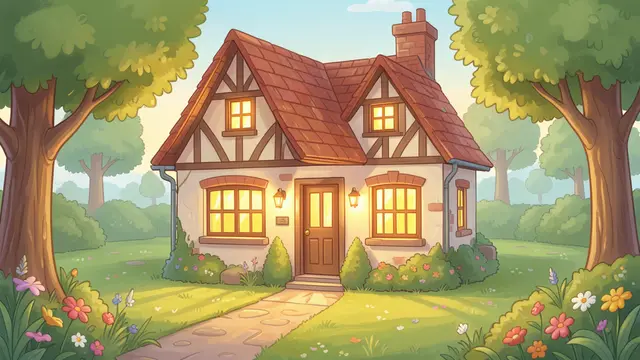
The house at the end of Bramble Lane, which had been empty for as long as anyone could remember, had its lights on.
Stuck? Say it out loud first. Who is in your story, and what do they want? What goes wrong? How does it end? It doesn’t have to be true.
“Print my story page” puts this starter on an illustrated A4 page, with its words, a checklist for the key stage and lines to carry on writing.
Prints every starter for the year group and theme chosen above.
Make this into a Litsee story
In Litsee your child turns a first line like this into an illustrated story read aloud: they create the hero and choose what happens next. 7-day free trial; a card is needed to start.
The generator picks from a fixed list in your browser. It doesn’t use AI, and nothing you choose is saved or sent anywhere.
20 Year 5 story starters
- 1.The house at the end of Bramble Lane, which had been empty for as long as anyone could remember, had its lights on.
- 2.Perhaps it was the thunder, or perhaps it was the dog barking, but something woke Leo at exactly three o’clock.
- 3.Mrs Abara – who had taught at the school for forty years and never once raised her voice – was standing on her desk.
- 4.The parcel, which was addressed to someone who had lived at their house a hundred years ago, began to purr.
- 5.There must be a reason, Hana thought, why the swans always flew towards the old quarry at dusk.
- 6.Jonah, whose inventions usually fell apart, had finally built something that worked. That was the problem.
- 7.The village where Ava’s mum grew up held a festival every year that nobody would explain to outsiders.
- 8.It might have been a cat. It could have been a fox. It definitely wasn’t a lion, and yet there it was, asleep on the trampoline.
- 9.The photograph, which had hung in the school hall since 1952, showed a pupil who looked exactly like Sami.
- 10.On the night of the eclipse (the first in a hundred years), the town’s animals began to gather in the square.
- 11.Ruby’s grandfather, who said very little and smiled even less, handed her a map and a single gold coin.
- 12.The ship that sailed into the harbour that morning was one the harbourmaster recognised from a painting in the museum.
- 13.Of all the things Kofi expected to find in the time capsule, a message addressed to him was not one.
- 14.The robot, whose battery should have run out years ago, opened its eyes and asked what year it was.
- 15.Nobody knew who had started the rumour that the woods behind the school would be turned into a car park, but by Monday everyone was talking about it.What happens next? A: Kai and his friends start a campaign to save the woods. B: Kai discovers the rumour was started to hide something else. C: An old map shows something in the woods that could change everyone’s plans.
- 16.The library, which had been closed for repairs all summer, reopened with one extra floor.
- 17.Somewhere in the city, a girl named Imani was about to receive the strangest letter of her life.
- 18.The weather forecast promised sunshine. It should have been right; it was always right. But that morning it snowed, and only on Grace’s house.
- 19.If the station clock was right, the train would arrive in four minutes. If Sami was right, it would never arrive at all.
- 20.The theatre’s understudy, who had never once been asked to go on stage, received a note ten minutes before curtain-up.What happens next? A: The lead actor has lost their voice, and the understudy must go on. B: The note is from someone in the audience who needs her help. C: The note contains a riddle that leads to a hidden part of the theatre.
Want a theme? Choose one in the generator above to mix in the Years 5–6 starters from that theme.
What Year 5 writing looks like
Some of the statutory requirements for writing in Year 5, quoted from the National Curriculum in England. The programme of study covers two years together; the grammar is from English Appendix 2 for this year.
“noting and developing initial ideas, drawing on reading and research where necessary”
Years 5 and 6, Writing – composition (statutory)
“selecting appropriate grammar and vocabulary, understanding how such choices can change and enhance meaning”
Years 5 and 6, Writing – composition (statutory)
“ensuring the consistent and correct use of tense throughout a piece of writing”
Years 5 and 6, Writing – composition (statutory)
“Relative clauses beginning with who, which, where, when, whose, that, or an omitted relative pronoun”
Year 5, Sentence (statutory)
“Indicating degrees of possibility using adverbs [for example, perhaps, surely] or modal verbs [for example, might, should, will, must]”
Year 5, Sentence (statutory)
“Brackets, dashes or commas to indicate parenthesis”
Year 5, Punctuation (statutory)
Grammar to practise in Year 5
Relative clauses, modal verbs for possibility, and parenthesis with brackets, dashes or commas
Year 5 grammar lets children pack more information into a sentence without losing the reader: a relative clause adds detail about a noun, modal verbs show how certain something is, and parenthesis adds an aside.
BeforeThe house was at the end of the lane. It had been empty for years. Its lights were on.
AfterThe house at the end of the lane, which had been empty for years, had its lights on.
Try it: Add a relative clause (who, which, where, whose) to a starter, then write a sentence that uses “might” or “perhaps” to show the hero is unsure.
How long should the sentences and story be?
Deliberately varied: short sentences for tension, longer sentences with relative clauses or parenthesis for description, and the odd one-word sentence for effect. A finished Year 5 story might be 5 to 8 paragraphs linked by time and place adverbials. This is Litsee’s rule of thumb, not a curriculum target.
Tips for Year 5 writers
- Spend five minutes noting ideas before choosing the best one.
- Use “which” or “who” to add detail without starting a new sentence.
- Use “might”, “could” or “perhaps” when a character is unsure.
- Link paragraphs with time and place adverbials: Later, Nearby, Meanwhile.
- Check the tense in the last paragraph matches the first.
How to use these with your child or class
By Year 5, most children can write a complete story. The challenge now is control: choosing words and sentence structures for their effect on the reader. The Years 5 and 6 programme asks pupils to select grammar and vocabulary, understanding how such choices change meaning, and to note and develop ideas before they write. Story starters at this level are deliberately rich, so children can study how they are built as well as continue them.
Take a starter apart before continuing it. Read “The house at the end of Bramble Lane, which had been empty for as long as anyone could remember, had its lights on” and ask what the middle part adds. Take it out, and the sentence still works but loses its mystery. That middle part is a relative clause, and it is the main new grammar in Year 5. Many of the starters here contain one, and children can borrow the structure for their own sentences.
Use uncertainty to build suspense. Modal verbs (might, could, must, should) and adverbs such as perhaps and surely show how sure a character is. They are part of the Year 5 grammar, and they are also a writer’s tool: “It might have been a cat. It could have been a fox.” A character who is unsure keeps the reader guessing. Ask your child to use them at the moment just before something is revealed.
Add asides with parenthesis. Brackets, dashes and pairs of commas let a writer slip in extra information: “Mrs Abara – who had taught at the school for forty years – was standing on her desk.” Children often overuse them once they learn them, so set a limit of two per story and ask, “Does this aside make the reader smile, wonder or understand?” If not, cut it.
Plan in notes, not sentences. Year 5 writers benefit from five minutes of rough notes: a list of possible problems, three possible endings, a few strong words. Then they choose. The choose-your-path starters on this page make this concrete: discuss all three options, decide which makes the best story, and explain why.
Check the tense. Long stories drift between past and present, especially in action scenes. The curriculum asks for consistent and correct tense throughout a piece of writing, so build a final read-through into the routine: read only the verbs and check they all belong to the same time. In class, this is a good job for a response partner, who reads the story aloud while the writer listens for slips.
Worked example: one sentence, three tools
- Starter: “Ruby’s grandfather, who said very little and smiled even less, handed her a map and a single gold coin.”
- Relative clause: The map showed the old pier, where Grandad had worked as a boy.
- Modal verb: It might be a game, Ruby thought, or it might be something much more important.
- Parenthesis: The coin (heavier than it looked) had a ship stamped on one side.
- Short sentence for effect: The ship was the one in the harbour.
About this page
Reviewed by Joshua Younger · How it works · Sources
Sources
The quotations in “What Year 5 writing looks like” are copied word for word from these documents, with the year and section each applies to. Sentence lengths are Litsee’s own rule of thumb.
How it works
Reviewed by Joshua Younger, Education Lead, on .
Every starter is written for a year group and shown on these pages, so you always know what your child will see. The generator runs in your browser, and nothing your child chooses is sent anywhere. A finished story is kept on this device only if they press “Keep it on my shelf”.
Questions parents and teachers ask
What grammar is taught in Year 5?
English Appendix 2 for Year 5 includes relative clauses beginning with who, which, where, when, whose or that; modal verbs and adverbs that show possibility; devices to build cohesion within and across paragraphs; brackets, dashes or commas for parenthesis; and verb prefixes and suffixes such as dis–, re– and –ify.
What is a relative clause?
A relative clause adds information about a noun, usually starting with who, which, where, when, whose or that: “The house, which had been empty for years, had its lights on.” Relative clauses are introduced in Year 5 in England.
How long should a Year 5 story be?
Five to eight paragraphs is a good target for an independent story. That is Litsee’s rule of thumb; well-chosen sentences matter more than length.
What is the US equivalent of Year 5?
Year 5 in England is for ages 9 to 10, roughly fourth grade in the United States.
Turn a starter into an interactive story your child can steer.
In Litsee, your child creates the hero, picks the world and chooses what happens next in an illustrated story that is read aloud.
Start your free trial7 days free. A card is needed to start, and nothing is charged if you cancel before the trial ends.