
The Clockmaker’s Apprentice: a free interactive story
Ages 8–10 · Reading age 9 · About 3 minutes · Questions to print · Clue game, pendulum test and sheets
- Read
- Choose
- Keep
 Choose the hero and the paint
Choose your hero
Paint it your way
Chapter 1One minute late

Clockwork City ran on gears: gears in the bridges, gears in the trains and, at its heart, the enormous gears of the great clock.
Amir had been the clockmaker’s apprentice for exactly one week when Master Ottilie came down to breakfast looking worried.
“The great clock is losing time,” she said, stirring her tea without drinking it. “One minute every single day, never more and never less.”
One minute did not sound like much. But after a week, the morning train was seven minutes late, the bakers’ bread was overdone and the airships were missing their moorings.
“I’ve checked every gear,” Master Ottilie sighed. “Fresh eyes might see what mine can’t. Where would you start?”
You choose what happens next
Where should Amir begin the investigation?
Solve the case, test a pendulum, then print it
Read the story first. Then try these. They work on a class whiteboard, a tablet or a phone, and nothing is kept or sent.
Solve the case
Clue 1 of 4
It happens at noon, when the sun shines in. A thermometer on the brass rod shows it is warm.
Read the clue. Which suspect does it point to? Tap a picture.
0 of 4 solved
Try the clockmaker’s test
A pendulum is a weight on a rod or a string. Pick a length and a weight, then time ten swings there and back. Change one thing at a time: that makes it a fair test.
0.0 s0 / 10
| Length | Weight | 10 swings |
|---|---|---|
| Your tries will show here. | ||
With real string and a stopwatch, your times will be close to these, not exact.
Three free sheets to print
Each sheet is one A4 page, in colour or black and white, with no sign-up. “Print” opens your printer’s window with that sheet; “PDF” saves the same sheet as a file.
Case file
The Clockmaker’s Apprentice
Name
The great clock loses one minute every day. Here are four suspects. For each one, write the clue, how you would test it, and the fix.
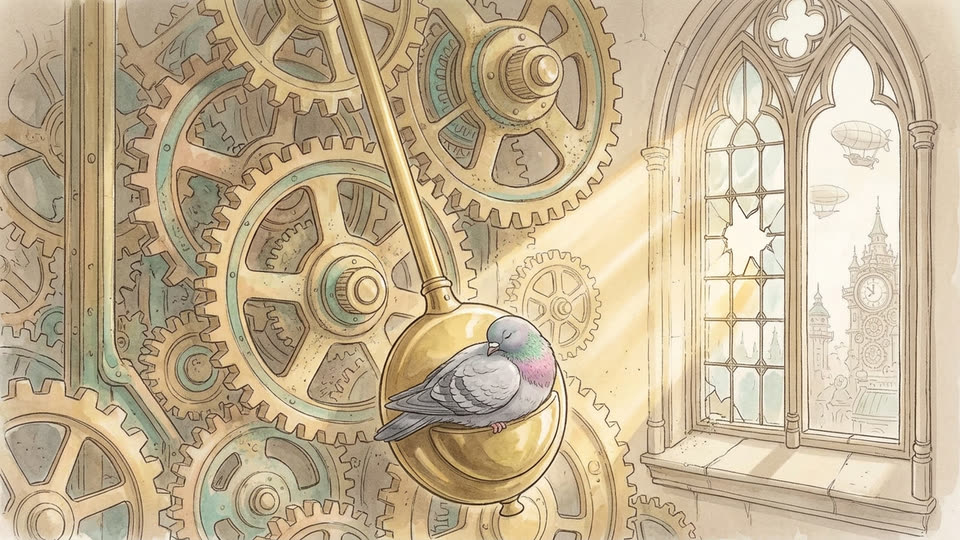
1A pigeon naps on the pendulum.
The clue
How I’d test it
The fix
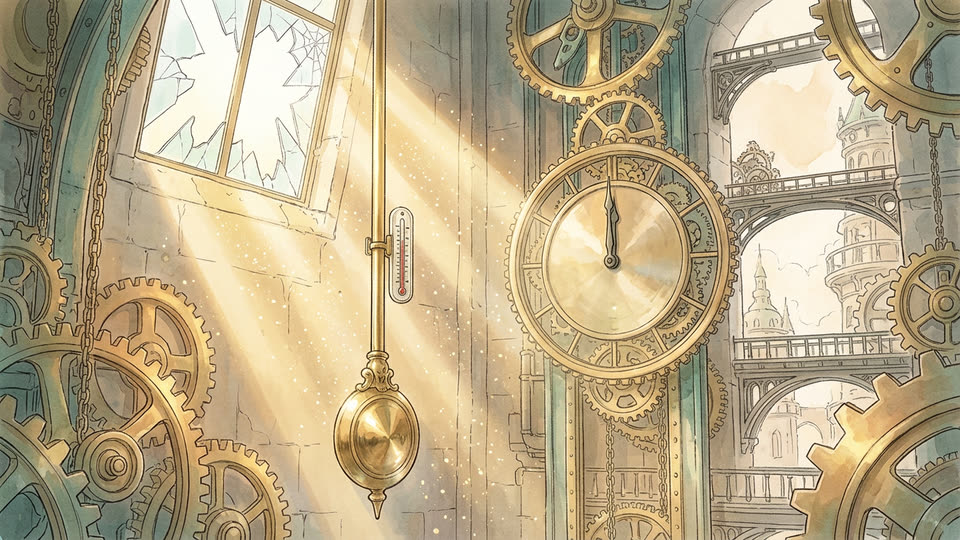
2Noon sunshine warms the brass.
The clue
How I’d test it
The fix
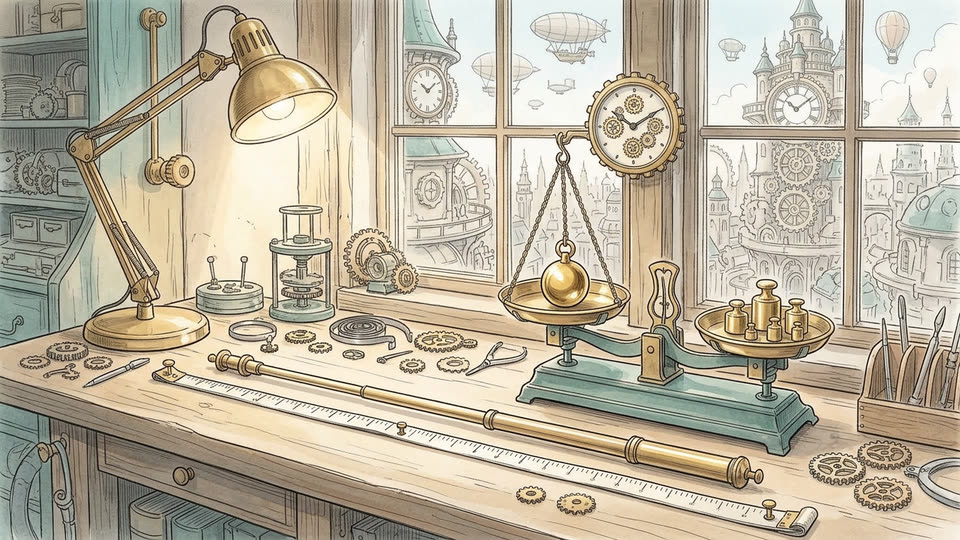
3The new, lighter weight is weighed and measured.
The clue
How I’d test it
The fix
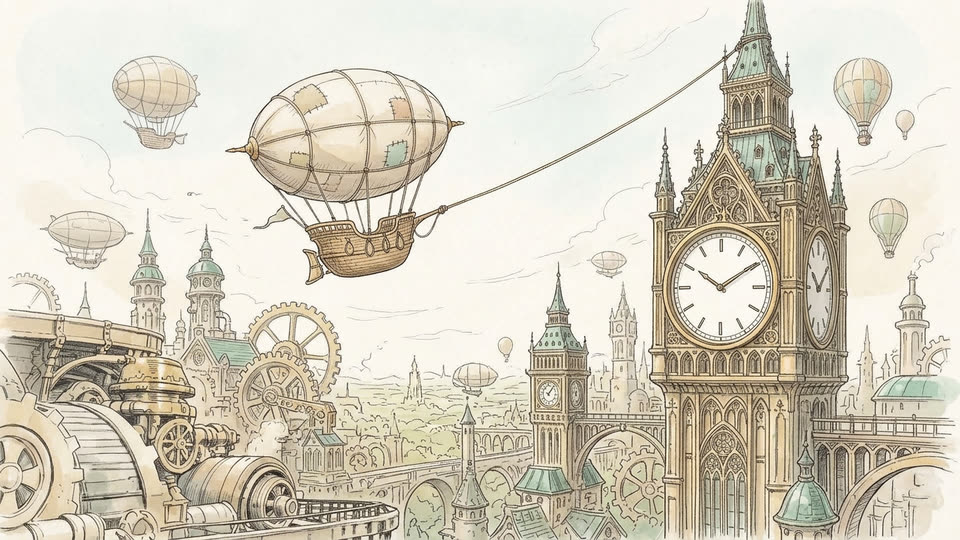
4An airship’s rope tugs the clock tower.
The clue
How I’d test it
The fix
Free from litsee.com/stories/the-clockmakers-apprentice
Case file
The four suspects. For each one, write the clue, how you would test it, and the fix.
A4 · Year 3 to Year 5
My pendulum test
The Clockmaker’s Apprentice
Name
You need: string, a small weight (a washer or a few keys), sticky tack and a stopwatch. Ask a grown-up to help you hang it.
- Tie the weight to the string.
- Hold it out to one side and let go.
- Time ten swings, there and back.
Length of string Light weight Heavy weight 25 cm seconds seconds 50 cm seconds seconds 1 metre seconds seconds I think the fastest will be
I found out that
To make it fair, I kept the same
Free from litsee.com/stories/the-clockmakers-apprentice
My pendulum test
Make a pendulum from string, time ten swings and fill in the table. Change one thing at a time.
A4 · Year 3 to Year 5
A fifth cause
The Clockmaker’s Apprentice
Name
Invent a new reason the great clock could lose one minute a day. How does the apprentice find it? How do they fix it?
Draw your cause.
The clock was slow because
Free from litsee.com/stories/the-clockmakers-apprentice
A fifth cause
Invent a new reason the great clock could lose a minute. Draw it, then write how it is found and fixed.
A4 · Year 3 to Year 5
How the story works: two choices, four endings
Every reader starts with the same chapter. The first choice picks where to look; the second picks which clue to test. Each ending finds a different cause.
Chapter 1
One minute late
Choice 1: Where should the apprentice begin the investigation?
A Climb the clock tower and watch the mechanism
Chapter 2
Inside the tower
Choice 2: Which clue should the apprentice test?
- Test whether the pigeon slows the pendulumEnding 1A guest on the pendulum
- Test whether the sunshine changes the brassEnding 2The warm brass
B Study the clock’s old repair records
Chapter 2
The repair book
Choice 2: Which entry should the apprentice follow up?
- The lighter pendulum weightEnding 3Too light
- The airship rope tied to the towerEnding 4The tug of the rope
Finding the clue that explains what happened, testing one thing at a time and inventing a new plot are in the National Curriculum at Key Stage 2: drawing inferences such as inferring characters’ feelings, thoughts and motives from their actions, and justifying inferences with evidence
(Years 3 and 4, reading); setting up simple practical enquiries, comparative and fair tests
(Years 3 and 4, working scientifically) and in narratives, creating settings, characters and plot
(Years 3 and 4, writing). Sources: The national curriculum in England: English programmes of study, key stages 1 and 2 (GOV.UK); National curriculum in England: science programmes of study (GOV.UK).
For grown-ups: about the story, questions to ask, new words and how to read it together
In Clockwork City, the great clock in the square loses exactly one minute every day, and the trains, bakers and airships are starting to run late. Our hero, the clockmaker’s new apprentice, makes two choices about how to investigate, and each path finds a different cause and a different fix.
Free interactive story · ages 8–10
- Reading age 9
- 2 short chapters, 2 choices and 4 endings
- About 3 minutes
- Invention and discovery
Questions for grown-ups to ask
Did you spot it?
- EasyHow much time did the great clock lose each day?Answer: Exactly one minute.
- MediumWhy did a small delay cause big problems?Answer: It added up: after a week the trains were seven minutes late, the bread was overdone and the airships missed their moorings.
- HarderIn “Too light”, why did the lighter weight slow the clock even though weight doesn’t matter much?Answer: It was fixed lower down, making the pendulum longer, and a longer pendulum swings more slowly.
Talk about it
- Which clue did you follow? Could more than one cause have been true at the same time?
- Master Ottilie says fresh eyes might see what hers can’t. When has someone new helped you notice something?
With lines to write on, and no answers.
Words to talk about
- apprentice
- Someone learning a skill by working with an expert.
- mechanism
- The working parts of a machine.
- pendulum
- A weight on a rod that swings to and fro, keeping a clock on time.
- hesitate
- To pause for a moment before doing something.
Reading it together
The Clockmaker’s Apprentice is written at Litsee’s reading level for age 9. Each path finds a different, real cause of a slow clock (a weight on the pendulum, heat making metal longer, the pendulum’s length, the tower moving), so the endings reward careful thinking.
Each part of the story has a real fact card about British inventors and railways from the Litsee app’s fact bank, with its source. Ada Lovelace and Tim Berners-Lee are good names to look up together afterwards.
Make a pendulum from string and a small weight and time ten swings. Then make the string longer and time it again. Your child will see for themselves why the length matters.
About this story
- Reading age
- 9 (ages 8–10). Written for Litsee’s reading level for age 9, where sentences are mostly 10–18 words long.
- Length
- 2 short chapters, 2 choices and 4 endings. Each way through is 298–314 words.
- Reading time
- About 3 minutes for a 9-year-old reading on their own, at Litsee’s pacing of 120 words a minute for that age. Reading aloud to your child is usually quicker.
- Book band
- Roughly Grey, if your child’s school uses book bands (schemes differ; see our book bands guide).
- Characters
- Master Ottilie, the clockmaker, Pim, a pigeon who lives in the clock tower, the airship captain
- Theme
- Invention and discovery
About this story
Written for litsee.com by the Litsee team, The Clockmaker’s Apprentice was drafted with AI help and checked against Litsee’s reading level for age 9. Its inventing facts quote the app’s fact bank word for word.
Pictures of the Clockwork City: from the Litsee app, painted with AI image tools and hand-picked by the Litsee team. “Read to me” plays an AI voice recorded in advance.
Last updated: .
Questions parents and teachers ask
Is the science in the story right?
Yes, in simple terms. A pendulum’s length sets how fast it swings, warm metal grows very slightly longer, and anything that moves the tower or the pendulum can put a clock out of time.
What age is it for?
Ages 8 to 10, at Litsee’s reading level for age 9. It suits children who like puzzles and machines.
Is this the book called The Clockmaker’s Apprentice?
No. This is Litsee’s own short story, written for this site and free to read here, with four endings. Several novels share the title, and Philip Pullman’s Clockwork has a clockmaker’s apprentice called Karl. Those are books by other authors.
Can my child choose who the story is about?
Yes. Amir leads The Clockmaker’s Apprentice unless your child picks another of the 15 heroes above it. That hero’s name then fills every page, and “Put them in the pictures” paints them into the Clockwork City. Nothing is typed, saved or sent.
Now let your child make a story of their own.
In Litsee, your child creates the hero, picks the world and chooses what happens next in an illustrated story that is read aloud.
Start your free trial7 days free. A card is needed to start, and nothing is charged if you cancel before the trial ends.