
Help us improve Litsee

Analytics cookies to improve Litsee? No ads.

With your permission, Google Analytics measures visits and Microsoft Clarity records clicks, scrolling and page interactions, with form inputs and page text masked. We use no advertising cookies.

Change it any time with Cookie settings. Privacy policy · Google privacy · Microsoft privacy

SchoolsStart your free trialStart a free classroom trial
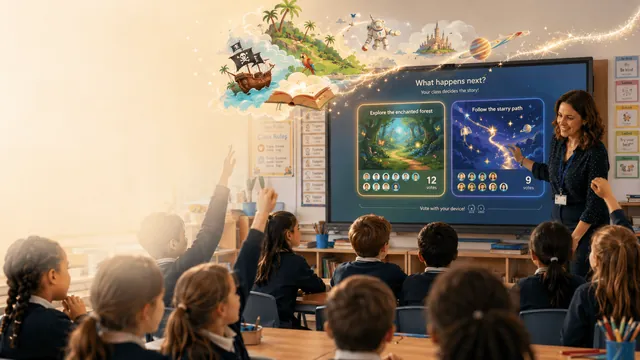
An illustration of a class reading a Litsee story on the whiteboard and voting on what happens next.

FREE TEACHER STORY UNIT · KS1 AND KS2

Hanukkah story lesson for KS1 and KS2

A gentle class story for the eight nights of Hanukkah, written with Jewish families in mind. KS1 count the candles with Noa’s family; KS2 hear why the lights are lit and write Noa’s invitation to the last night. Each key stage has an objective, talk questions, a writing task, a word bank and a one-page lesson sheet.

Reviewed by Joshua Younger, Education Lead, on .

KS1 (Reception to Year 2): Eight Little Lights

Learning objective

Describe how some Jewish families celebrate Hanukkah and count the eight nights of lights.

Talk questions

  1. How many candles were lit on the last night? How did Noa's family light them?
  2. Why do you think families put the menorah in the window?

Writing task

Draw a menorah with all its candles. Write one sentence about Hanukkah: 'At Hanukkah, Noa ___.'

Suggested story settings: Genre: Friendship · Length: 2 chapters · Time: 10–15 minutes

The story brief

What the class story is asked to do. “Our hero” is the character your class chooses.

A Hanukkah story for young readers, written with Jewish families in mind. Our hero visits their friend Noa's home during Hanukkah. Each evening Noa's family lights one more candle on the menorah in the window, using the helper candle. Our hero learns to spin a dreidel, helps make latkes with a grown-up and sees how the little lights shine out into the dark street for everyone to see. Count the candles together. Do not retell the battles of the Hanukkah story; focus on family, light, games and food. End with all eight lights glowing.

Word bank

Hanukkah
a Jewish festival of light that lasts for eight nights
menorah
a candle holder; the Hanukkah menorah has places for eight candles and one helper candle
candle
a stick of wax with a string in the middle that burns to give light
dreidel
a spinning top with four sides, used in a Hanukkah game
latkes
crispy fried potato pancakes that many families eat at Hanukkah

Text-type features: information report

Purpose: to tell the reader facts about a subject. Plan it with the free information report plan template.

Reception to Year 2

  • A title
  • Facts, not a story
  • Headings
  • Labelled pictures

National Curriculum statements

  • “drawing on what they already know or on background information and vocabulary provided by the teacher”

    Year 1, Reading – comprehension (statutory)

  • “discussing word meanings, linking new meanings to those already known”

    Year 1, Reading – comprehension (statutory)

  • “writing for different purposes”

    Year 2, Writing – composition (statutory)

Sample opening · KS1

A sample written for this page to show the brief in action. It is not the story Litsee writes for your class.

It was the first night of Hanukkah. Snow was falling softly on Noa’s street.

Noa’s family stood by the window. On the sill was the menorah. It had places for nine candles.

“This is the helper candle,” said Noa. “It is called the shamash. We use it to light the others.”

Noa’s dad lit the helper candle. Then he helped Noa light one more. One little light shone through the glass and out into the dark street.

Sam counted on his fingers. “One candle tonight. How many tomorrow?” “Two!” laughed Noa. “One more every night, until all eight are glowing.”

Model text (WAGOLL)

A model answer to the writing task, pitched at Year 2, written for this page. Read it with the class and find where it meets each success criterion.

At Hanukkah, Noa lights one more candle every night.

She uses the helper candle, called the shamash, to light the others.

On the last night, all eight candles glow in the window and the street looks bright.

What makes it good

  • At Hanukkah, Noa lights one more candle every night. Finishes the starter with an accurate fact from the story.
  • called the shamash Uses and explains a special word.

By year group

Reception

Grammar focus: Capital letters and full stops

It was the first night of Hanukkah.

Year 1

Grammar focus: Capital letters and full stops

Snow was falling softly on Noa’s street.

Year 2

Grammar focus: Expanded noun phrases

One little light shone through the glass and out into the dark street.

A week of lessons

  1. Lesson 1

    Hook

    • Draw a menorah with nine empty branches on the board. Ask: why might it have nine places? Light (colour in) the helper candle, then read the opening.
    • Talk: How many candles were lit on the last night? How did Noa's family light them?
  2. Lesson 2

    Plan

    • Talk: Why do you think families put the menorah in the window?
    • Words: Hanukkah, menorah, candle, dreidel, latkes.
  3. Lesson 3

    Draft

    • Write: Draw a menorah with all its candles. Write one sentence about Hanukkah: 'At Hanukkah, Noa ___.'
  4. Lesson 4

    Edit

    • Grammar focus. Capital letters and full stops: “Snow was falling softly on Noa’s street.”
  5. Lesson 5

    Publish

    • Build a class menorah display: each night of the unit, add one more paper candle carrying a child’s sentence.
The printed plan adds the planning frame and the full steps for each lesson.

Support, core and stretch sheets

Support

Draw a menorah and count its candles. Copy and finish: “At Hanukkah, Noa ___.”

Core

Draw a menorah with all its candles. Write one sentence about Hanukkah: 'At Hanukkah, Noa ___.'

Stretch

Write two sentences about Hanukkah, using two words from the word bank.

Vocabulary mat

One A4 page for every table: the word bank with its meanings, sentence stems, useful words and grammar words.

KS2 (Years 3 to 6): The Light in the Window

Learning objective

Explain how and why Hanukkah is celebrated, using respectful vocabulary.

Talk questions

  1. What did Noa explain about why her family lights the menorah?
  2. How did the friends share the festival with someone who was alone?

Writing task

Write a short invitation from Noa inviting a friend to the last night of Hanukkah, explaining what they will see and do.

Suggested story settings: Genre: Friendship · Length: 2 chapters · Time: 10–15 minutes

The story brief

What the class story is asked to do. “Our hero” is the character your class chooses.

A Hanukkah story for older primary readers, written with Jewish families in mind. On a wintry street, our hero's friend Noa is celebrating the eight nights of Hanukkah and invites friends to join. Through the evenings, Noa explains simply why her family lights the menorah, including that the festival remembers a time long ago when a small amount of oil was said to last for eight days, and why the lights are placed in the window. The friends play dreidel, share latkes and doughnuts, and help a neighbour who is alone. Do not describe battles or violence. Let Noa speak respectfully about what the festival means to her own family. End on the eighth night with every light glowing.

Word bank

festival
a special time when people celebrate something together
tradition
something a family or community has done in the same way for a long time
menorah
a candle holder; the one used at Hanukkah, also called a hanukkiah, has nine branches
miracle
an amazing event that people believe could not happen in an ordinary way
celebrate
to do something special and happy to mark an important day

Text-type features: letter to a character

Purpose: to tell someone about events and ask questions. Plan it with the free letter to a character plan template.

Years 3 to 6

  • Address and date
  • Greeting and sign-off
  • Paragraphs for each idea
  • Questions for the reader
  • A friendly voice

National Curriculum statements

  • “identifying the audience for and purpose of the writing, selecting the appropriate form and using other similar writing as models for their own”

    Years 5 and 6, Writing – composition (statutory)

  • “select and use appropriate registers for effective communication”

    Years 1 to 6, Spoken language (statutory)

  • “ask relevant questions to extend their understanding and knowledge”

    Years 1 to 6, Spoken language (statutory)

Sample opening · KS2

A sample written for this page to show the brief in action. It is not the story Litsee writes for your class.

On the fifth night of Hanukkah, Noa’s kitchen smelled of hot oil and onions. Her grandma was frying latkes, and the window was already bright with candles.

“Why five?” asked Jaz, counting them twice to be sure.

“One more each night,” Noa said. “My grandma says that long ago there was only enough oil to keep a lamp alight for one day, but the story says it lasted for eight. So we light the candles for eight nights, and we eat food cooked in oil to remember.”

“And why in the window?”

Noa smiled. “So the light shines out for everyone who walks past. It’s not just for us.”

Across the street, a curtain twitched. Mr Patel lived alone, and his window was dark. Noa looked at the plate of latkes, then at her friends, and had an idea.

Model text (WAGOLL)

A model answer to the writing task, pitched at Year 5, written for this page. Read it with the class and find where it meets each success criterion.

Dear Jaz,

You are invited to the last night of Hanukkah at my house! Please come at five o’clock on Saturday, just after it gets dark.

When you arrive, you will see our menorah in the front window. On the last night, all eight candles are lit, plus the shamash, which is the helper candle we use to light the others. In my family, we put the menorah in the window so the light can be seen by everyone who walks past.

After that, Grandma will be frying latkes (crispy potato pancakes, and they are the best thing you will ever eat), and we will play dreidel for chocolate coins.

Please bring a jumper because we might go out to look at the lights along the street.

Love from Noa

What makes it good

  • In my family, we put the menorah in the window Explains a tradition in Noa’s own words.
  • (crispy potato pancakes, and they are the best thing you will ever eat) Brackets give the reader extra information.
  • Please come at five o’clock on Saturday An invitation gives the time and day clearly.

By year group

Year 3

Grammar focus: Conjunctions to join clauses

Please come at five o’clock on Saturday, just after it gets dark.

Year 4

Grammar focus: Conjunctions to join clauses

Please bring a jumper because we might go out to look at the lights along the street.

Year 5

Grammar focus: Expanded noun phrases

Year 6

Grammar focus: Paragraphs and headings

A week of lessons

  1. Lesson 1

    Hook

    • Put a battery candle in the classroom window and ask: who might see this light from outside? Why might a family want their light to be seen?
    • Talk: What did Noa explain about why her family lights the menorah?
  2. Lesson 2

    Plan

    • Talk: How did the friends share the festival with someone who was alone?
    • Words: festival, tradition, menorah, miracle, celebrate.
  3. Lesson 3

    Draft

    • Write: Write a short invitation from Noa inviting a friend to the last night of Hanukkah, explaining what they will see and do.
  4. Lesson 4

    Edit

    • Grammar focus. Conjunctions to join clauses: “Please bring a jumper because we might go out to look at the lights along the street.”
  5. Lesson 5

    Publish

    • Fold the invitations into cards and display them in the window, with the class menorah drawing beside them.
The printed plan adds the planning frame and the full steps for each lesson.

Support, core and stretch sheets

Support

Write an invitation with three parts (who it is for, when, and one thing they will see), using the sentence stems.

Core

Write a short invitation from Noa inviting a friend to the last night of Hanukkah, explaining what they will see and do.

Stretch

Write the invitation so that it explains one tradition and why Noa’s family keeps it, using “in my family”.

Vocabulary mat

One A4 page for every table: the word bank with its meanings, sentence stems, useful words and grammar words.

When to use it
The days before and during Hanukkah.
Date
In 2026, Hanukkah begins at sundown on Friday 4 December, when the first candle is lit, and ends at nightfall on Saturday 12 December. Source
Story world
Hanukkah Lights Street
Subject focus
Religious Education · Festivals
Suggested story settings
Genre: Friendship · Length: 2 chapters · Time: 10–15 minutes

Story feel: Calm & cosy. Story shape: Character change.

About this unit

Hanukkah is the Jewish festival of lights. This unit shows it the way many families celebrate it at home: lighting one more candle each night on the menorah in the window, spinning the dreidel, cooking latkes and sharing the light with neighbours.

The stories focus on family, light, games and food, and they do not retell the battles in the history of the festival. In KS1, children count the eight nights and learn the words for what they see. In KS2, Noa explains in her own words what the festival means to her family, and children practise using respectful, accurate vocabulary.

Litsee’s notes for this pack ask for the story briefs to be checked with Jewish families or a Jewish educator, including the menorah’s nine branches and the decision not to retell the Maccabees’ battles. That check is planned and has not happened yet; we will say so here when it has.

Teaching notes

If you have Jewish pupils, talk to their families before you teach the unit: some will be glad to share how they celebrate, and others will prefer not to. Never ask a child to speak for all Jewish people. The stories use “some Jewish families” and let Noa speak about her own family, which is a good model for class talk.

Count the candles together every day of the unit. Draw the menorah on the board with nine branches, colour in one more candle each day and keep the helper candle in the middle or set apart, as many menorahs do. Children remember the eight nights far better from a picture they have built than from a fact sheet.

For KS2, read Noa’s explanation twice and list the respectful words she uses: “my family”, “the story says”, “we remember”. These phrases separate what a person believes or remembers from what the writer claims, which is the skill the objective is after.

Printable lesson sheet

One A4 page for each key stage, ready for your planning folder: the story title, objective, story settings, talk questions, writing task, word bank with meanings, success criteria, curriculum statements and the sample opening to read aloud. Printing this page prints only the two sheets.

About this page

Reviewed by Joshua Younger · How it works · Sources

Sources

The curriculum quotations are copied word for word from these documents. Dates were checked on 29 October 2026.

About this page

Reviewed by Joshua Younger, Education Lead, on .

Built from Litsee’s curriculum data. The story titles, briefs, objectives, talk questions, writing tasks, word lists and story settings come from the seasonal class-story packs in the Litsee app; the text-type features come from the app’s curriculum data; the National Curriculum quotations are quoted word for word from the Department for Education’s documents. The word meanings, sample openings and teaching notes were written for this page, and every date was checked against the source named beside it. Ideas or corrections? Email info@litsee.com.

Questions parents and teachers ask

When is Hanukkah in 2026?

Hanukkah 2026 begins at sundown on Friday 4 December and ends at nightfall on Saturday 12 December (dates from the Hebcal Jewish calendar).

Why does the menorah have nine candles?

There is one candle for each of the eight nights, plus a helper candle, the shamash, which is used to light the others.

Does the story retell the history of the Maccabees?

No. The briefs focus on family, light, games, food and sharing, which suit primary children and keep the unit gentle.

Is this unit suitable for RE?

It works as a story-led introduction to a Jewish festival in English or RE lessons. Check it against your school’s RE syllabus, which sets what your pupils learn about Judaism.

Run this as a live class story in Litsee

In Litsee, a seasonal brief like this becomes an illustrated, narrated class story. You preview the first chapter before reading it with your class, and the class chooses what happens next together.

Hanukkah story unit · KS1 (Reception to Year 2)

Eight Little Lights

Learning objective: Describe how some Jewish families celebrate Hanukkah and count the eight nights of lights.

Suggested story settings: Genre: Friendship · Length: 2 chapters · Time: 10–15 minutes · Story world: Hanukkah Lights Street

Talk questions

  1. How many candles were lit on the last night? How did Noa's family light them?
  2. Why do you think families put the menorah in the window?

Writing task

Draw a menorah with all its candles. Write one sentence about Hanukkah: 'At Hanukkah, Noa ___.'

Word bank

Hanukkah
a Jewish festival of light that lasts for eight nights
menorah
a candle holder; the Hanukkah menorah has places for eight candles and one helper candle
candle
a stick of wax with a string in the middle that burns to give light
dreidel
a spinning top with four sides, used in a Hanukkah game
latkes
crispy fried potato pancakes that many families eat at Hanukkah

Success criteria (information report)

Reception to Year 2: I can write facts. I can use a heading. I can label a picture.

National Curriculum statements

  • “drawing on what they already know or on background information and vocabulary provided by the teacher” (Year 1, Reading – comprehension (statutory))
  • “discussing word meanings, linking new meanings to those already known” (Year 1, Reading – comprehension (statutory))
  • “writing for different purposes” (Year 2, Writing – composition (statutory))

Sample opening (written for litsee.com, to read aloud)

It was the first night of Hanukkah. Snow was falling softly on Noa’s street.

Noa’s family stood by the window. On the sill was the menorah. It had places for nine candles.

“This is the helper candle,” said Noa. “It is called the shamash. We use it to light the others.”

Noa’s dad lit the helper candle. Then he helped Noa light one more. One little light shone through the glass and out into the dark street.

Sam counted on his fingers. “One candle tonight. How many tomorrow?” “Two!” laughed Noa. “One more every night, until all eight are glowing.”

Notes

Free from litsee.com/teachers/story-units/hanukkah

Hanukkah story unit · KS2 (Years 3 to 6)

The Light in the Window

Learning objective: Explain how and why Hanukkah is celebrated, using respectful vocabulary.

Suggested story settings: Genre: Friendship · Length: 2 chapters · Time: 10–15 minutes · Story world: Hanukkah Lights Street

Talk questions

  1. What did Noa explain about why her family lights the menorah?
  2. How did the friends share the festival with someone who was alone?

Writing task

Write a short invitation from Noa inviting a friend to the last night of Hanukkah, explaining what they will see and do.

Word bank

festival
a special time when people celebrate something together
tradition
something a family or community has done in the same way for a long time
menorah
a candle holder; the one used at Hanukkah, also called a hanukkiah, has nine branches
miracle
an amazing event that people believe could not happen in an ordinary way
celebrate
to do something special and happy to mark an important day

Success criteria (letter to a character)

Years 3 to 6: I can lay out a letter. I can use a paragraph for each idea. I can ask questions.

National Curriculum statements

  • “identifying the audience for and purpose of the writing, selecting the appropriate form and using other similar writing as models for their own” (Years 5 and 6, Writing – composition (statutory))
  • “select and use appropriate registers for effective communication” (Years 1 to 6, Spoken language (statutory))
  • “ask relevant questions to extend their understanding and knowledge” (Years 1 to 6, Spoken language (statutory))

Sample opening (written for litsee.com, to read aloud)

On the fifth night of Hanukkah, Noa’s kitchen smelled of hot oil and onions. Her grandma was frying latkes, and the window was already bright with candles.

“Why five?” asked Jaz, counting them twice to be sure.

“One more each night,” Noa said. “My grandma says that long ago there was only enough oil to keep a lamp alight for one day, but the story says it lasted for eight. So we light the candles for eight nights, and we eat food cooked in oil to remember.”

“And why in the window?”

Noa smiled. “So the light shines out for everyone who walks past. It’s not just for us.”

Across the street, a curtain twitched. Mr Patel lived alone, and his window was dark. Noa looked at the plate of latkes, then at her friends, and had an idea.

Notes

Free from litsee.com/teachers/story-units/hanukkah

Try it in LitseeYour child creates the hero, picks the world and chooses what happens next, in an illustrated story that is read aloud.Start your free trialUse it in classRead an illustrated, narrated story together on the whiteboard, and let the class choose what happens next.Start a free classroom trialSee Litsee for schools