Help us improve Litsee

Analytics cookies to improve Litsee? No ads.

With your permission, Google Analytics measures visits and Microsoft Clarity records clicks, scrolling and page interactions, with form inputs and page text masked. We use no advertising cookies.

Change it any time with Cookie settings. Privacy policy · Google privacy · Microsoft privacy

SchoolsStart your free trialStart a free classroom trial
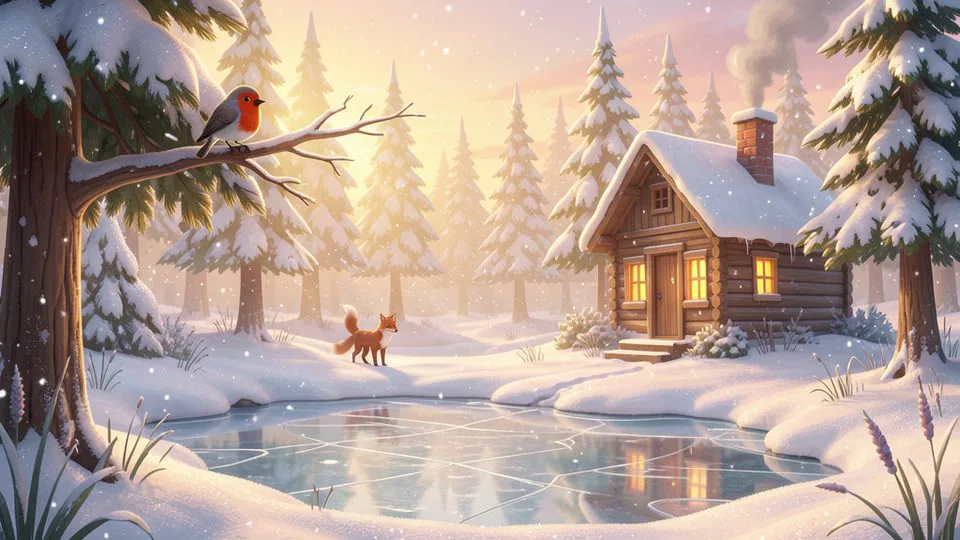
Snowy woods at sunrise: a robin on a branch, a fox by a frozen pond and a log cabin with lit windows.

FREE TEACHER STORY UNIT · KS1 AND KS2

Winter story writing for KS1 and KS2 – lesson plan

A snowy woodland class story for December or January that is not tied to any festival, so it suits every class. KS1 help a robin keep her friends warm and write with winter words; KS2 follow a frozen lantern trail and write a winter description with personification and a simile.

Reviewed by Joshua Younger, Education Lead, on .

KS1 (Reception to Year 2): Robin's Snowy Surprise

Learning objective

Describe a winter setting and recognise how kindness helps others in the cold.

Talk questions

  1. What did you notice in the snowy woods?
  2. How did Ruby help her friends keep warm? How can we help birds in winter?

Writing task

Draw a snowy picture. Write one sentence using a winter word: 'The snow is ___.'

Suggested story settings: Genre: Animal Story · Length: 2 chapters · Time: 10–15 minutes

The story brief

What the class story is asked to do. “Our hero” is the character your class chooses.

A winter story for young readers, not tied to any festival. In Winter Wonder Woods, the first snow has fallen. A little robin called Ruby is trying to make sure all her woodland friends are warm and fed for the cold nights. Our hero helps Ruby deliver seeds, mend a fox's den and find a lost mitten, discovering frosty footprints, icicles and a frozen pond along the way. Use simple, repeated phrases young children can join in with, such as 'Crunch, crunch, through the snow'. End with everyone cosy in the cabin with the glowing window.

Word bank

snow
soft white flakes of frozen water that fall from the sky when it is very cold
frosty
covered in frost, or very cold
icicle
a hanging spike of ice, made when dripping water freezes
robin
a small brown bird with an orange-red chest, often seen in gardens in winter
cosy
warm, comfortable and safe

Text-type features: poem

Purpose: to share a feeling or picture with the reader. Plan it with the free poem plan template.

Reception to Year 2

  • Lines, not sentences
  • Repeated lines
  • Describing words
  • Words that sound good together

National Curriculum statements

  • “recognising and joining in with predictable phrases”

    Year 1, Reading – comprehension (statutory)

  • “discussing their favourite words and phrases”

    Year 2, Reading – comprehension (statutory)

  • “expanded noun phrases to describe and specify [for example, the blue butterfly]”

    Year 2, Writing – vocabulary, grammar and punctuation (statutory)

Sample opening · KS1

A sample written for this page to show the brief in action. It is not the story Litsee writes for your class.

The first snow had fallen in Winter Wonder Woods. Everything was white and still.

Ruby the robin hopped along a branch. Her red chest was the brightest thing in the woods.

“My friends will be cold tonight,” said Ruby. “Will you help me?”

Mo nodded and pulled on his mittens. Crunch, crunch, through the snow! They carried a bag of seeds to the bird table. They found a long, shining icicle on the old gate. They saw tiny footprints going round and round the frozen pond.

“Who made those?” whispered Mo. Ruby fluffed up her feathers. “Let’s follow them and see,” she said.

Model text (WAGOLL)

A model answer to the writing task, pitched at Year 2, written for this page. Read it with the class and find where it meets each success criterion.

The snow is soft and sparkly.

It covers the garden like a white blanket.

The robin hops across it and leaves tiny footprints behind.

What makes it good

  • soft and sparkly Two describing words joined with “and”.
  • like a white blanket A simile helps the reader picture the snow.

By year group

Reception

Grammar focus: Capital letters and full stops

The first snow had fallen in Winter Wonder Woods.

Year 1

Grammar focus: Capital letters and full stops

Everything was white and still.

Year 2

Grammar focus: Expanded noun phrases

Her red chest was the brightest thing in the woods.

A week of lessons

  1. Lesson 1

    Hook

    • Put ice cubes, a woolly hat and a robin picture on a tray. Children pass the ice round and find words for how it feels before the reading.
    • Talk: What did you notice in the snowy woods?
  2. Lesson 2

    Plan

    • Talk: How did Ruby help her friends keep warm? How can we help birds in winter?
    • Words: snow, frosty, icicle, robin, cosy.
  3. Lesson 3

    Draft

    • Write: Draw a snowy picture. Write one sentence using a winter word: 'The snow is ___.'
  4. Lesson 4

    Edit

    • Grammar focus. Capital letters and full stops: “Everything was white and still.”
  5. Lesson 5

    Publish

    • Make a snowy window display: each snowflake carries one winter sentence.
The printed plan adds the planning frame and the full steps for each lesson.

Support, core and stretch sheets

Support

Draw a snowy picture. Choose a winter word from the mat and copy: “The snow is ___.”

Core

Draw a snowy picture. Write one sentence using a winter word: 'The snow is ___.'

Stretch

Write two winter sentences, using a describing word and “like” in one of them.

Vocabulary mat

One A4 page for every table: the word bank with its meanings, sentence stems, useful words and grammar words.

KS2 (Years 3 to 6): The Frozen Lantern Trail

Learning objective

Use description and accurate facts to bring a winter setting to life.

Talk questions

  1. Which winter facts did you notice in the story?
  2. When did the characters make a safe, sensible choice? Why did it matter?

Writing task

Write a description of a winter scene that uses personification (for example, 'the wind whispered') and at least one simile.

Suggested story settings: Genre: Animal Story · Length: 2 chapters · Time: 10–15 minutes

The story brief

What the class story is asked to do. “Our hero” is the character your class chooses.

A winter story for older primary readers, not tied to any festival. In Winter Wonder Woods on the longest night of the year, the lantern trail that guides travellers through the snow has frozen over. Our hero teams up with a curious fox and a careful robin to bring the light back, reading animal tracks, crossing a frozen pond safely the long way round and solving small puzzles. Weave in simple, accurate winter facts (how animals keep warm, why the nights are long in December). End with the trail glowing and everyone sharing warm drinks in the cabin.

Word bank

solstice
the shortest day and longest night of the year, which comes in late December
frost
a thin white layer of ice that forms on cold surfaces overnight
personification
describing a thing as if it were a person, for example “the wind whispered”
shimmering
shining with a soft light that seems to move
hibernation
a long, deep winter sleep that some animals, such as hedgehogs, use to save energy

Text-type features: poem

Purpose: to share a feeling or picture with the reader. Plan it with the free poem plan template.

Years 3 and 4

  • A clear shape: lines and verses
  • Repetition for effect
  • Similes
  • Sound: rhyme or alliteration
  • Precise verbs

Years 5 and 6

  • Form chosen on purpose
  • Imagery: similes, metaphors and personification
  • Sound devices
  • A turn or change at the end
  • Every word earning its place

National Curriculum statements

  • “discussing words and phrases that capture the reader’s interest and imagination”

    Years 3 and 4, Reading – comprehension (statutory)

  • “discuss and evaluate how authors use language, including figurative language, considering the impact on the reader”

    Years 5 and 6, Reading – comprehension (statutory)

  • “selecting appropriate grammar and vocabulary, understanding how such choices can change and enhance meaning”

    Years 5 and 6, Writing – composition (statutory)

Sample opening · KS2

A sample written for this page to show the brief in action. It is not the story Litsee writes for your class.

On the longest night of the year, the lanterns of Winter Wonder Woods went out one by one, as if the frost were strolling along the trail, blowing each one out like a birthday candle.

Priya held up her torch. Every lantern was coated in ice, thick as glass. Frost had crept over the path and up the tree trunks, and the wind breathed a thin, cold whistle through the branches.

“Without the trail, nobody can find the cabin,” said the fox, his breath hanging like smoke in the air.

The robin landed on Priya’s shoulder. “The quickest way is across the pond,” she said. “But the ice is new.”

Priya looked at the pond, shimmering silver under the moon, then at the long path around its edge. “Then we go the long way,” she said, “and we light the lanterns as we go.”

Model text (WAGOLL)

A model answer to the writing task, pitched at Year 5, written for this page. Read it with the class and find where it meets each success criterion.

By the time we reached the pond, the afternoon had already started to yawn. The sky was the colour of an old saucepan, and the wind wandered between the trees, tugging at our scarves as if it wanted us to follow.

The ice was as still as a held breath. Snow had settled along its edges in neat white cuffs, and the reeds stood stiff and silver, frozen mid-whisper.

Somewhere behind us, a branch let go of its snow with a soft sigh.

We didn’t speak. The whole wood seemed to be listening, waiting to see what we would do.

What makes it good

  • the afternoon had already started to yawn Personification: the afternoon behaves like a sleepy person.
  • The sky was the colour of an old saucepan An unexpected comparison that fits the cold, grey light.
  • a branch let go of its snow with a soft sigh Personification and a sound together.

By year group

Year 3

Grammar focus: Conjunctions to join clauses

Year 4

Grammar focus: Expanded noun phrases

Frost had crept over the path and up the tree trunks, and the wind breathed a thin, cold whistle through the branches.

Year 5

Grammar focus: Expanded noun phrases

Priya looked at the pond, shimmering silver under the moon, then at the long path around its edge.

Year 6

Grammar focus: Synonyms and antonyms

A week of lessons

  1. Lesson 1

    Hook

    • Show a photograph of a frozen pond at dusk. Ask: if the wind could talk, what would it say? Collect verbs that give the weather a personality.
    • Talk: Which winter facts did you notice in the story?
  2. Lesson 2

    Plan

    • Talk: When did the characters make a safe, sensible choice? Why did it matter?
    • Words: solstice, frost, personification, shimmering, hibernation.
  3. Lesson 3

    Draft

    • Write: Write a description of a winter scene that uses personification (for example, 'the wind whispered') and at least one simile.
  4. Lesson 4

    Edit

    • Grammar focus. Expanded noun phrases: “Frost had crept over the path and up the tree trunks, and the wind breathed a thin, cold whistle through the branches.”
  5. Lesson 5

    Publish

    • Read the descriptions aloud with a recording of wind behind them, and make a class bank of the best personification.
The printed plan adds the planning frame and the full steps for each lesson.

Support, core and stretch sheets

Support

Write three sentences about a winter scene, and make the wind or the snow do one thing a person would do.

Core

Write a description of a winter scene that uses personification (for example, 'the wind whispered') and at least one simile.

Stretch

Write a description in which the weather changes during the scene, using personification at least twice and ending with a simile.

Vocabulary mat

One A4 page for every table: the word bank with its meanings, sentence stems, useful words and grammar words.

When to use it
December and January: before the end of the autumn term or at the start of the spring term.
Story world
Winter Wonder Woods
Subject focus
English · Narrative writing
Suggested story settings
Genre: Animal Story · Length: 2 chapters · Time: 10–15 minutes

Story feel: Wonder & discovery. Story shape: Quest / journey.

About this unit

This unit is about the season, not a celebration. Winter Wonder Woods has frost, icicles, a frozen pond and animals getting ready for the cold, which makes it a good choice for the first weeks of January as well as for a class that would rather not do Christmas.

The KS1 story is full of sounds and textures to borrow for describing words. The KS2 story weaves in accurate winter facts, such as how animals keep warm and why December nights are long, and makes a careful, sensible choice at the frozen pond. That gives older children both a model for descriptive writing and a link to science.

Teaching notes

Go outside first if you can. Ten minutes in the playground on a frosty morning gives KS1 more describing words than any word mat: ask children what they can see, hear and feel, and write their words on the board when you come back in.

For KS1, build the sentence frame “The snow is ___.” into a class poem. Each child adds one line, and the class reads the poem aloud with the repeated line “Crunch, crunch, through the snow” between verses. Displaying the finished poem shows how small lines can make a whole piece.

For KS2, collect examples of personification and simile from the story on two sides of a working wall, then ask children to sort which ones make the woods feel calm and which ones make them feel tense. Writers choose figurative language for its effect, and children write better descriptions once they choose on purpose.

The story’s facts are a bridge to science. Hibernation and why nights are long in December are good questions for a short research task before writing, so that each description includes one accurate detail.

Printable lesson sheet

One A4 page for each key stage, ready for your planning folder: the story title, objective, story settings, talk questions, writing task, word bank with meanings, success criteria, curriculum statements and the sample opening to read aloud. Printing this page prints only the two sheets.

About this page

Reviewed by Joshua Younger · How it works · Sources

Sources

The curriculum quotations are copied word for word from these documents. Dates were checked on 29 October 2026.

About this page

Reviewed by Joshua Younger, Education Lead, on .

Built from Litsee’s curriculum data. The story titles, briefs, objectives, talk questions, writing tasks, word lists and story settings come from the seasonal class-story packs in the Litsee app; the text-type features come from the app’s curriculum data; the National Curriculum quotations are quoted word for word from the Department for Education’s documents. The word meanings, sample openings and teaching notes were written for this page, and every date was checked against the source named beside it. Ideas or corrections? Email info@litsee.com.

Questions parents and teachers ask

Is the winter unit tied to Christmas?

No. It is about the season only: snow, frost, animals and long nights. It suits classes that do not celebrate Christmas and works just as well in January.

Why is the KS2 writing task a description, not a story?

The pack’s task focuses on describing a winter scene with personification and a simile. A strong description is also the setting paragraph children will need in their next story.

Is the frozen pond scene safe for young children?

Yes. The characters choose the safe way round the pond rather than crossing the new ice, which gives you a natural moment to talk about winter safety without any peril.

Run this as a live class story in Litsee

In Litsee, a seasonal brief like this becomes an illustrated, narrated class story. You preview the first chapter before reading it with your class, and the class chooses what happens next together.

Winter story unit · KS1 (Reception to Year 2)

Robin's Snowy Surprise

Learning objective: Describe a winter setting and recognise how kindness helps others in the cold.

Suggested story settings: Genre: Animal Story · Length: 2 chapters · Time: 10–15 minutes · Story world: Winter Wonder Woods

Talk questions

  1. What did you notice in the snowy woods?
  2. How did Ruby help her friends keep warm? How can we help birds in winter?

Writing task

Draw a snowy picture. Write one sentence using a winter word: 'The snow is ___.'

Word bank

snow
soft white flakes of frozen water that fall from the sky when it is very cold
frosty
covered in frost, or very cold
icicle
a hanging spike of ice, made when dripping water freezes
robin
a small brown bird with an orange-red chest, often seen in gardens in winter
cosy
warm, comfortable and safe

Success criteria (poem)

Reception to Year 2: I can write in lines. I can repeat a line. I can use describing words.

National Curriculum statements

  • “recognising and joining in with predictable phrases” (Year 1, Reading – comprehension (statutory))
  • “discussing their favourite words and phrases” (Year 2, Reading – comprehension (statutory))
  • “expanded noun phrases to describe and specify [for example, the blue butterfly]” (Year 2, Writing – vocabulary, grammar and punctuation (statutory))

Sample opening (written for litsee.com, to read aloud)

The first snow had fallen in Winter Wonder Woods. Everything was white and still.

Ruby the robin hopped along a branch. Her red chest was the brightest thing in the woods.

“My friends will be cold tonight,” said Ruby. “Will you help me?”

Mo nodded and pulled on his mittens. Crunch, crunch, through the snow! They carried a bag of seeds to the bird table. They found a long, shining icicle on the old gate. They saw tiny footprints going round and round the frozen pond.

“Who made those?” whispered Mo. Ruby fluffed up her feathers. “Let’s follow them and see,” she said.

Notes

Free from litsee.com/teachers/story-units/winter

Winter story unit · KS2 (Years 3 to 6)

The Frozen Lantern Trail

Learning objective: Use description and accurate facts to bring a winter setting to life.

Suggested story settings: Genre: Animal Story · Length: 2 chapters · Time: 10–15 minutes · Story world: Winter Wonder Woods

Talk questions

  1. Which winter facts did you notice in the story?
  2. When did the characters make a safe, sensible choice? Why did it matter?

Writing task

Write a description of a winter scene that uses personification (for example, 'the wind whispered') and at least one simile.

Word bank

solstice
the shortest day and longest night of the year, which comes in late December
frost
a thin white layer of ice that forms on cold surfaces overnight
personification
describing a thing as if it were a person, for example “the wind whispered”
shimmering
shining with a soft light that seems to move
hibernation
a long, deep winter sleep that some animals, such as hedgehogs, use to save energy

Success criteria (poem)

Years 3 and 4: I can write in verses. I can use a simile. I can use repetition for effect.

Years 5 and 6: I can use imagery. I can choose my form on purpose. I can end with a turn.

National Curriculum statements

  • “discussing words and phrases that capture the reader’s interest and imagination” (Years 3 and 4, Reading – comprehension (statutory))
  • “discuss and evaluate how authors use language, including figurative language, considering the impact on the reader” (Years 5 and 6, Reading – comprehension (statutory))
  • “selecting appropriate grammar and vocabulary, understanding how such choices can change and enhance meaning” (Years 5 and 6, Writing – composition (statutory))

Sample opening (written for litsee.com, to read aloud)

On the longest night of the year, the lanterns of Winter Wonder Woods went out one by one, as if the frost were strolling along the trail, blowing each one out like a birthday candle.

Priya held up her torch. Every lantern was coated in ice, thick as glass. Frost had crept over the path and up the tree trunks, and the wind breathed a thin, cold whistle through the branches.

“Without the trail, nobody can find the cabin,” said the fox, his breath hanging like smoke in the air.

The robin landed on Priya’s shoulder. “The quickest way is across the pond,” she said. “But the ice is new.”

Priya looked at the pond, shimmering silver under the moon, then at the long path around its edge. “Then we go the long way,” she said, “and we light the lanterns as we go.”

Notes

Free from litsee.com/teachers/story-units/winter

Try it in LitseeYour child creates the hero, picks the world and chooses what happens next, in an illustrated story that is read aloud.Start your free trialUse it in classRead an illustrated, narrated story together on the whiteboard, and let the class choose what happens next.Start a free classroom trialSee Litsee for schools