
Help us improve Litsee

With your permission, Google Analytics measures visits and Microsoft Clarity records clicks, scrolling and page interactions, with form inputs and page text masked. We use no advertising cookies.

Change it any time with Cookie settings. Privacy policy · Google privacy · Microsoft privacy

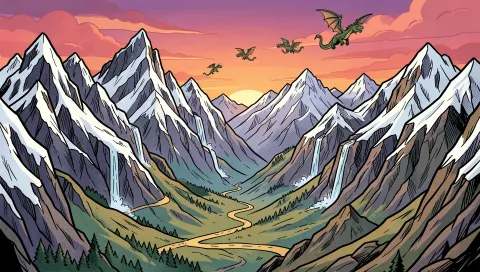
Painted snowy mountains with waterfalls, a winding path along the valley and dragons flying at sunset.

FREE MYTH TEMPLATE · KS1 AND KS2

Myth writing template for KS2: features of a myth and a plan

Plan a myth in five steps, from a world long ago to the change it explains. Fill in the template online with prompts for your child’s year group and print it, then check the features of a myth for KS1 and KS2.

Reviewed by Joshua Younger, Senior Educator, on .

Plan it online, then print it

Your plan is not saved. Nothing you type here is stored or sent anywhere. It stays on this page only until you close or refresh it, so print your plan when you have finished.

Written for myth writing. The prompts change with the year group.

  1. 1 Long ago

    Set the scene long ago, and show the world before the change your myth will explain.

  2. 2 Hero and powerful beings

    Introduce the hero and the god, spirit or creature with special powers. What is each one like?

  3. 3 The quest or challenge

    The challenge: a task to complete, a journey to make or a creature to outwit.

  4. 4 Help, trick or sacrifice

    How does the hero succeed: a gift, a trick or help from an unexpected friend?

  5. 5 How the world changed

    Explain what changed for ever: why the moon shines, why the sea is salty, why the robin sings.

Prints one A4 page with the myth plan and the prompts for Years 3–4. To keep a copy, choose “Save as PDF” in your browser’s print window.

Features of a myth

Purpose: To entertain and to explain: a myth tells how something in the world came to be, or shows a hero tested by powerful beings.

What children are usually taught to include at each stage. These lists are Litsee’s guidance, based on common UK primary practice; the curriculum quotations below are the statutory part.

KS1 (Years 1–2)

Ages 5–7

  • Set a very long time ago
  • A hero who is brave or kind
  • Gods, spirits or magical animals with special powers
  • Amazing events that could not happen in real life
  • Explains how something in nature came to be
  • Told out loud many times before it was written down

Years 3–4

Ages 7–9

  • An ancient setting described in detail
  • A hero with a special quality, tested by a quest or challenge
  • Powerful beings who help or get in the way
  • A problem that only the hero can solve
  • An explanation of something in the natural world, such as the seasons or the stars
  • A lesson about how to behave
  • Story language such as “long ago” and “in the time before…”

Years 5–6

Ages 9–11

  • A hero with a weakness as well as a strength
  • A quest that tests character, not only courage
  • Powerful beings with human feelings such as pride or jealousy
  • Consequences: choices have a cost
  • An explanation or lesson woven into the ending
  • Formal, timeless language and rich descriptions of setting
  • Comparison with myths from different cultures, such as Greek, Norse, Egyptian and Chinese myths

In the National Curriculum

  • “increasing their familiarity with a wide range of books, including fairy stories, myths and legends, and retelling some of these orally”

    Years 3 and 4, Reading – comprehension (statutory)

  • “in writing narratives, considering how authors have developed characters and settings in what pupils have read, listened to or seen performed”

    Years 5 and 6, Writing – composition (statutory)

Worked example: How the Hare Gave the Moon Its Silver

A worked example written for this page, at the level of Years 3–4: first the plan, then the piece written from it.

  1. 1. Long ago

    Long ago there was no moon. When the Sun went to sleep, the nights were so dark that animals could not find their way home.

  2. 2. Hero and powerful beings

    Hero: Hare, small, quick and kind. Powerful being: the Sun, proud of her golden light and unwilling to share it.

  3. 3. The quest or challenge

    Hare decides to ask the Sun for a little light. He must reach the top of the tallest mountain before she sets.

  4. 4. Help, trick or sacrifice

    The river spirit gives Hare a bowl of still water. He runs all day without resting, and at the top the bowl catches the Sun’s last light.

  5. 5. How the world changed

    Hare carries the glowing bowl into the sky. That is why the moon is silver, and why you can see a hare in it.

The finished piece: How the Hare Gave the Moon Its Silver

Long, long ago, before there was a moon, the nights were completely dark. When the Sun went to sleep, the animals bumped into trees and lost their way home.

The Sun was proud of her golden light. “It is mine,” she said, “and I will not share it.” But Hare, who was small and quick and kind, could not bear to see his friends lost in the dark.

“I will ask her myself,” said Hare. To reach the Sun before she set, he would have to run to the top of the tallest mountain in a single day.

On the way, the river spirit gave him a bowl of still, silver water. “Hold it high,” she whispered. Hare ran all day without stopping. At the top, as the Sun sank, he lifted the bowl, and it caught the very last of her light.

Hare carried the glowing bowl into the sky, and he holds it there still. That is why the moon shines silver at night, and why, if you look closely, you can see a hare in it.

How to use this plan at home or in class

Myths are among the oldest stories people tell. Most of them do one of two jobs: they explain something about the world (why the seasons change, where thunder comes from, why the moon has markings) or they test a hero against gods, spirits and impossible tasks. Many do both. The plan above is built around the first job, because a myth that explains something has an ending built in.

Start planning at the end. Ask your child to choose something in nature they find interesting and to finish the sentence “That is why…”. Then work backwards: what was the world like before, who changed it, and how? This is the quickest way to a myth with a satisfying shape, and it stops the story drifting into a list of battles.

In KS1, myths are best told aloud. Short “how” and “why” stories, such as how the zebra got its stripes or why the owl stays awake at night, suit young children well. Use the beginning, middle and end plan, draw the animal before and after the change, and tell the story to someone before writing a sentence for each picture.

In Years 3 and 4, the curriculum asks children to become familiar with myths and legends and to retell some of them orally. Many classes read Greek myths alongside the Ancient Greece history topic. Retell one first, then plan an original myth using the same ingredients: an ancient setting, a powerful being with a personality, a quest and a lasting change. Story language such as “long ago” and “in the time before” sets the tone. Keep the cast small: one hero, one powerful being and perhaps one helper is plenty.

In Years 5 and 6, give the hero a weakness and the gods some human feelings, such as pride, jealousy or kindness. The best myths show that choices have consequences. Comparing myths from different cultures is useful here: children notice that many cultures explain the same things, such as the sun, the sea and the stars, in very different ways.

Myths do not need to be violent to be exciting. Many famous myths include battles, but an original myth can be won with a trick, a riddle, patience or a sacrifice, as in the worked example above. At home, look at the night sky together and invent a myth for one star or cloud. In class, display the plan on the whiteboard and build a class myth together before pupils plan their own.

About this page

Reviewed by Joshua Younger · How it was made · Sources

Sources

The quotations in “In the National Curriculum” are copied word for word from these documents, with the year and section each applies to. The features lists, prompts, advice and worked example are Litsee’s guidance.

How this page was made

Reviewed by Joshua Younger, Senior Educator, on .

The plans, features lists and worked examples were drafted with AI help and checked against the National Curriculum by Litsee. Spotted something to improve? Email info@litsee.com.

The planner runs in your browser. Nothing you type is saved, stored or sent anywhere, and it disappears when you close or refresh the page.

Questions parents and teachers ask

What are the features of a myth?

A setting long ago, a hero tested by a quest or challenge, powerful beings such as gods, spirits or magical creatures, events that could not happen in real life, and an ending that explains something about the world or teaches a lesson.

What is the difference between a myth and a legend?

A myth is about gods, spirits and how the world came to be, and is not meant to be historical. A legend is usually based, at least loosely, on a real person or place, with the story exaggerated as it is retold.

What is a good idea for a Year 3 or Year 4 myth?

Choose something in nature and explain it: why the robin has a red chest, why rivers run to the sea, why the moon changes shape. Decide the ending first, then plan the hero, the powerful being and the challenge.

Do children have to write about Greek gods?

No. Reading Greek myths helps children learn the features, but an original myth with invented gods, spirits or animals is often more creative and easier to plan.

From plan to story: let your child steer an interactive story.

In Litsee, your child creates the hero, picks the world and chooses what happens next in an illustrated story that is read aloud.

Start your free trial

7 days free. A card is needed to start, and nothing is charged if you cancel before the trial ends.

See plans and pricing · How Litsee works

Try it in LitseeYour child creates the hero, picks the world and chooses what happens next, in an illustrated story that is read aloud.Start your free trialUse it in classRead an illustrated, narrated story together on the whiteboard, and let the class choose what happens next.Start a free classroom trialSee Litsee for schools