Help us improve Litsee

With your permission, Google Analytics measures visits and Microsoft Clarity records clicks, scrolling and page interactions, with form inputs and page text masked. We use no advertising cookies.

Change it any time with Cookie settings. Privacy policy · Google privacy · Microsoft privacy

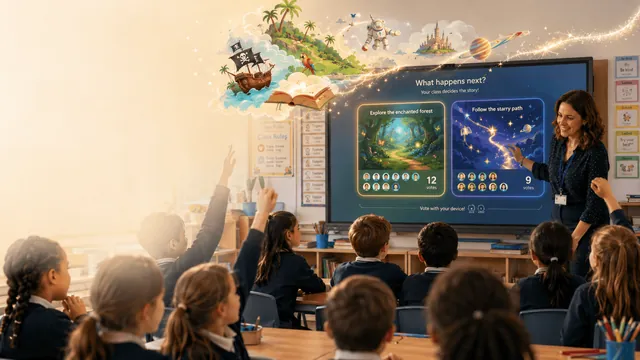
An illustration of a class reading a Litsee story on the whiteboard and voting on what happens next.

FREE TEACHER STORY UNIT · KS1 AND KS2

Remembrance Day lesson for KS1 and KS2: a gentle story

A quiet, optional class story for the week of Remembrance Day. KS1 plant poppy seeds with a grandparent and learn simply why people wear poppies; KS2 make a remembrance garden at school and write a poem or message of peace. Nothing in either story describes conflict or loss.

When to use it
The week of Remembrance Sunday and Armistice Day, in early November.
Date
Armistice Day is 11 November every year, with a two minutes’ silence at 11am; in 2026 that is Wednesday 11 November. Remembrance Sunday falls on the weekend before: check the date of your local service. Source
Story world
Sunny Meadow
Subject focus
History · Local history
Suggested story settings
Genre: Historical · Length: 2 chapters · Time: 10 minutes

Story feel: Calm & cosy. Story shape: Character change.

About this unit

Remembrance is a time when people across the UK remember those who served in the armed forces, and hope for peace. Armistice Day, 11 November, marks the day in 1918 when the First World War ended, but these stories never describe the war itself.

This unit is optional and quiet on purpose: there are no themed games and no detail about loss. In KS1, a grandparent explains very simply why people wear a red poppy, and the two of them plant poppy seeds together. In KS2, a local volunteer helps a class understand the poppy as a symbol and why the two minutes’ silence matters, and children write a poem or a message of peace.

KS1 (Reception to Year 2): The Quiet Poppy

Learning objective

Understand simply why people wear poppies and take part in a quiet moment of remembering.

Talk questions

  1. Why did the grandparent wear a poppy?
  2. What does peace mean to you?

Writing task

Draw a poppy. Write one word or sentence about peace.

Suggested story settings: Genre: Historical · Length: 2 chapters · Time: 10 minutes

The story brief

What the class story is asked to do. “Our hero” is the character your class chooses.

A gentle, calm story for young readers about remembering. Our hero visits a grandparent, who shows them a red poppy and explains, very simply and without any frightening detail, that in November people wear poppies to remember people who were brave long ago and to hope for peace. Together they plant flowers in the community garden and join a short, quiet moment of remembering at school. Keep it peaceful and warm. No battles, fighting, weapons or details about death.

Word bank

poppy
a bright red wild flower; in November many people wear a paper poppy to remember
remember
to keep someone or something in your mind and think about them
peace
when everyone can be safe, calm and kind together
quiet
making very little noise, or none at all
brave
ready to do something hard, even when you feel worried

Text-type features: poem

Purpose: to share a feeling or picture with the reader. Plan it with the free poem plan template.

Reception to Year 2

  • Lines, not sentences
  • Repeated lines
  • Describing words
  • Words that sound good together

National Curriculum statements

  • “learning to appreciate rhymes and poems, and to recite some by heart”

    Year 1, Reading – comprehension (statutory)

  • “writing poetry”

    Year 2, Writing – composition (statutory)

  • “being encouraged to link what they read or hear read to their own experiences”

    Year 1, Reading – comprehension (statutory)

Sample opening · KS1

A sample written for this page to show the brief in action. It is not the story Litsee writes for your class.

Grandpa Joe had a little red poppy pinned to his coat.

“Why are you wearing a flower?” asked Zara.

“In November, lots of people wear a poppy,” said Grandpa Joe. “It helps us remember people who were brave a long time ago. And it helps us hope for peace.”

“What is peace?” asked Zara.

Grandpa Joe thought for a moment. “Peace is when everyone can be safe and kind together.”

After lunch, they went to the community garden. Zara dug a little hole, and Grandpa Joe sprinkled in some poppy seeds. They patted the soil down, gently, gently.

“Now we wait,” said Grandpa Joe. “And we remember.”

Model text (WAGOLL)

A model answer to the writing task, pitched at Year 2, written for this page. Read it with the class and find where it meets each success criterion.

Peace is quiet, like a garden in the morning.

Peace is kind, like holding hands.

Peace is a red poppy, growing in the sun.

What makes it good

  • Peace is quiet, like a garden in the morning. Repeats the same opening for each line.
  • like holding hands A simile that makes an idea easy to picture.

By year group

Reception

Grammar focus: Capital letters and full stops

Grandpa Joe had a little red poppy pinned to his coat.

Year 1

Grammar focus: Capital letters and full stops

It helps us remember people who were brave a long time ago.

Year 2

Grammar focus: Expanded noun phrases

Zara dug a little hole, and Grandpa Joe sprinkled in some poppy seeds.

A week of lessons

  1. Lesson 1

    Hook

    • Pass round a paper poppy and some poppy seeds in a clear pot. Ask: how can something so small be important? Then read the opening quietly.
    • Talk: Why did the grandparent wear a poppy?
  2. Lesson 2

    Plan

    • Talk: What does peace mean to you?
    • Words: poppy, remember, peace, quiet, brave.
  3. Lesson 3

    Draft

    • Write: Draw a poppy. Write one word or sentence about peace.
  4. Lesson 4

    Edit

    • Grammar focus. Capital letters and full stops: “It helps us remember people who were brave a long time ago.”
  5. Lesson 5

    Publish

    • Plant the class poppy field display: each paper poppy carries a child’s word or sentence about peace.
The printed plan adds the planning frame and the full steps for each lesson.

Support, core and stretch sheets

Support

Draw a poppy. Choose one word about peace from the mat and write it in the middle of your flower.

Core

Draw a poppy. Write one word or sentence about peace.

Stretch

Write two lines about peace that start the same way: “Peace is…”.

Vocabulary mat

One A4 page for every table: the word bank with its meanings, sentence stems, useful words and grammar words.

KS2 (Years 3 to 6): The Garden of Remembering

Learning objective

Explain why Remembrance Day is marked and how symbols like the poppy help people remember.

Talk questions

  1. Why do you think people keep a silence to remember?
  2. What can each of us do to help keep peace in our school and community?

Writing task

Write a short, thoughtful poem or message of peace for the class remembrance display.

Suggested story settings: Genre: Historical · Length: 2 chapters · Time: 10 minutes

The story brief

What the class story is asked to do. “Our hero” is the character your class chooses.

A gentle, reflective story for older primary readers about remembering and peace. Our hero's class creates a small remembrance garden at school. While planting, our hero talks with a local volunteer who explains, calmly and without frightening detail, why people remember those who served in wars, why the poppy became a symbol, and why the two minutes' silence matters. Show different ways people remember and hope for peace. No battles, fighting, weapons or descriptions of death. End with the class's quiet, respectful moment in the garden.

Word bank

remembrance
remembering and honouring people from the past, especially those who served their country
silence
complete quiet, with no talking and no noise
symbol
an object or picture that stands for an idea, as a red poppy stands for remembering
peace
a time when people and countries live together calmly and safely
respect
showing that you think someone or something is important and worth caring about

Text-type features: poem

Purpose: to share a feeling or picture with the reader. Plan it with the free poem plan template.

Years 3 and 4

  • A clear shape: lines and verses
  • Repetition for effect
  • Similes
  • Sound: rhyme or alliteration
  • Precise verbs

Years 5 and 6

  • Form chosen on purpose
  • Imagery: similes, metaphors and personification
  • Sound devices
  • A turn or change at the end
  • Every word earning its place

National Curriculum statements

  • “preparing poems and plays to read aloud and to perform, showing understanding through intonation, tone and volume so that the meaning is clear to an audience”

    Years 5 and 6, Reading – comprehension (statutory)

  • “recognising some different forms of poetry [for example, free verse, narrative poetry]”

    Years 3 and 4, Reading – comprehension (statutory)

  • “selecting appropriate grammar and vocabulary, understanding how such choices can change and enhance meaning”

    Years 5 and 6, Writing – composition (statutory)

Sample opening · KS2

A sample written for this page to show the brief in action. It is not the story Litsee writes for your class.

The remembrance garden was only a square of soil by the school gate, but Class 5 had been planning it for a week.

Mr Hughes from the allotments knelt beside them with a tray of seedlings. He had a poppy on his jumper and soil on his knees.

“Why poppies?” asked Femi, pressing a seedling into place.

“More than a hundred years ago, poppies grew in the fields of France and Belgium where soldiers had served,” said Mr Hughes. “People noticed them, bright red after a long, hard time. A poet wrote about them, and soon the poppy became a way of saying: we remember.”

Ella sat back on her heels. “And the silence? Two whole minutes is a long time.”

“That’s the point,” said Mr Hughes. “Two minutes when the whole country stops. No phones, no shopping, no rushing. Just thinking.”

Femi looked at the little row of plants and wondered what he would think about.

Model text (WAGOLL)

A model answer to the writing task, pitched at Year 5, written for this page. Read it with the class and find where it meets each success criterion.

A Seed of Peace

We pressed small seeds into the soil, as quiet as a held breath.

We did not talk. We did not rush.

We remembered people we never met, who were brave a long time ago, far from home.

Now the garden waits, like we do, for something red and gentle to push up into the light.

Two minutes. One hope.

Peace.

What makes it good

  • as quiet as a held breath A simile that matches the calm, respectful tone.
  • We did not talk. We did not rush. Short, repeated sentences slow the reader down.
  • Peace. Ends on one word, so the last line is the strongest.

By year group

Year 3

Grammar focus: Conjunctions to join clauses

Two minutes when the whole country stops.

Year 4

Grammar focus: Expanded noun phrases

Two whole minutes is a long time.

Year 5

Grammar focus: Expanded noun phrases

Femi looked at the little row of plants and wondered what he would think about.

Year 6

Grammar focus: Synonyms and antonyms

A week of lessons

  1. Lesson 1

    Hook

    • Show a photograph of a field of poppies and a photograph of a remembrance garden. Sit in silence for thirty seconds and ask: what did you notice in the quiet?
    • Talk: Why do you think people keep a silence to remember?
  2. Lesson 2

    Plan

    • Talk: What can each of us do to help keep peace in our school and community?
    • Words: remembrance, silence, symbol, peace, respect.
  3. Lesson 3

    Draft

    • Write: Write a short, thoughtful poem or message of peace for the class remembrance display.
  4. Lesson 4

    Edit

    • Grammar focus. Expanded noun phrases: “Two whole minutes is a long time.”
  5. Lesson 5

    Publish

    • Display the poems in the remembrance garden or the hall, and read a few aloud slowly before the two minutes’ silence.
The printed plan adds the planning frame and the full steps for each lesson.

Support, core and stretch sheets

Support

Write a four-line poem about peace, starting each line with “Peace is…”.

Core

Write a short, thoughtful poem or message of peace for the class remembrance display.

Stretch

Write a poem that moves from a small, quiet image (a seed, a silence) to a bigger hope, and ends on one short line.

Vocabulary mat

One A4 page for every table: the word bank with its meanings, sentence stems, useful words and grammar words.

Teaching notes

Check the unit against your school’s own Remembrance plans before you use it. Many schools lead Remembrance through an assembly and the two minutes’ silence, and this story is meant to sit quietly alongside that, not to replace it.

Some children have family in the armed forces, and some have families who came to the UK from places affected by conflict. Keep the talk on remembering and on peace, and let children share only what they choose to.

For KS1, make a class poppy field: each child adds a paper poppy with one word or a short sentence about peace, as the writing task asks. Practise a short, calm silence together first, so the real one feels familiar rather than strange.

For KS2, read two short, gentle poems of remembrance aloud before writing and talk about how the poets use repetition and quiet images. Children can then draft a poem or message of peace with the word bank beside them, and read it aloud slowly for the display.

Printable lesson sheet

One A4 page for each key stage, ready for your planning folder: the story title, objective, story settings, talk questions, writing task, word bank with meanings, success criteria, curriculum statements and the sample opening to read aloud. Printing this page prints only the two sheets.

About this page

How it works · Sources

Sources

The curriculum quotations are copied word for word from these documents. Dates were checked on 29 October 2026.

About this page

Built from Litsee’s curriculum data. The story titles, briefs, objectives, talk questions, writing tasks, word lists and story settings come from the seasonal class-story packs in the Litsee app; the text-type features come from the app’s curriculum data; the National Curriculum quotations are quoted word for word from the Department for Education’s documents. The word meanings, sample openings and teaching notes were written for this page, and every date was checked against the source named beside it. Ideas or corrections? Email info@litsee.com.

Last updated: .

Questions parents and teachers ask

When is Remembrance Day 2026?

Armistice Day is Wednesday 11 November 2026, with a two minutes’ silence at 11am. Remembrance Sunday falls on the weekend before; check the date of your local service.

Is this unit suitable for Reception and KS1?

Yes. The KS1 story only says, very simply, that people wear poppies to remember people who were brave long ago and to hope for peace. It has no detail about conflict.

Why is this unit optional?

Schools mark Remembrance in their own ways, often through an assembly. Use the unit only if it fits your school’s plans, and adapt it to what your pupils need.

Run this as a live class story in Litsee

In Litsee, a seasonal brief like this becomes an illustrated, narrated class story. You preview the first chapter before reading it with your class, and the class chooses what happens next together.

Remembrance story unit · KS1 (Reception to Year 2)

The Quiet Poppy

Learning objective: Understand simply why people wear poppies and take part in a quiet moment of remembering.

Suggested story settings: Genre: Historical · Length: 2 chapters · Time: 10 minutes · Story world: Sunny Meadow

Talk questions

  1. Why did the grandparent wear a poppy?
  2. What does peace mean to you?

Writing task

Draw a poppy. Write one word or sentence about peace.

Word bank

poppy
a bright red wild flower; in November many people wear a paper poppy to remember
remember
to keep someone or something in your mind and think about them
peace
when everyone can be safe, calm and kind together
quiet
making very little noise, or none at all
brave
ready to do something hard, even when you feel worried

Success criteria (poem)

Reception to Year 2: I can write in lines. I can repeat a line. I can use describing words.

National Curriculum statements

  • “learning to appreciate rhymes and poems, and to recite some by heart” (Year 1, Reading – comprehension (statutory))
  • “writing poetry” (Year 2, Writing – composition (statutory))
  • “being encouraged to link what they read or hear read to their own experiences” (Year 1, Reading – comprehension (statutory))

Sample opening (written for litsee.com, to read aloud)

Grandpa Joe had a little red poppy pinned to his coat.

“Why are you wearing a flower?” asked Zara.

“In November, lots of people wear a poppy,” said Grandpa Joe. “It helps us remember people who were brave a long time ago. And it helps us hope for peace.”

“What is peace?” asked Zara.

Grandpa Joe thought for a moment. “Peace is when everyone can be safe and kind together.”

After lunch, they went to the community garden. Zara dug a little hole, and Grandpa Joe sprinkled in some poppy seeds. They patted the soil down, gently, gently.

“Now we wait,” said Grandpa Joe. “And we remember.”

Notes

Free from litsee.com/teachers/story-units/remembrance

Remembrance story unit · KS2 (Years 3 to 6)

The Garden of Remembering

Learning objective: Explain why Remembrance Day is marked and how symbols like the poppy help people remember.

Suggested story settings: Genre: Historical · Length: 2 chapters · Time: 10 minutes · Story world: Sunny Meadow

Talk questions

  1. Why do you think people keep a silence to remember?
  2. What can each of us do to help keep peace in our school and community?

Writing task

Write a short, thoughtful poem or message of peace for the class remembrance display.

Word bank

remembrance
remembering and honouring people from the past, especially those who served their country
silence
complete quiet, with no talking and no noise
symbol
an object or picture that stands for an idea, as a red poppy stands for remembering
peace
a time when people and countries live together calmly and safely
respect
showing that you think someone or something is important and worth caring about

Success criteria (poem)

Years 3 and 4: I can write in verses. I can use a simile. I can use repetition for effect.

Years 5 and 6: I can use imagery. I can choose my form on purpose. I can end with a turn.

National Curriculum statements

  • “preparing poems and plays to read aloud and to perform, showing understanding through intonation, tone and volume so that the meaning is clear to an audience” (Years 5 and 6, Reading – comprehension (statutory))
  • “recognising some different forms of poetry [for example, free verse, narrative poetry]” (Years 3 and 4, Reading – comprehension (statutory))
  • “selecting appropriate grammar and vocabulary, understanding how such choices can change and enhance meaning” (Years 5 and 6, Writing – composition (statutory))

Sample opening (written for litsee.com, to read aloud)

The remembrance garden was only a square of soil by the school gate, but Class 5 had been planning it for a week.

Mr Hughes from the allotments knelt beside them with a tray of seedlings. He had a poppy on his jumper and soil on his knees.

“Why poppies?” asked Femi, pressing a seedling into place.

“More than a hundred years ago, poppies grew in the fields of France and Belgium where soldiers had served,” said Mr Hughes. “People noticed them, bright red after a long, hard time. A poet wrote about them, and soon the poppy became a way of saying: we remember.”

Ella sat back on her heels. “And the silence? Two whole minutes is a long time.”

“That’s the point,” said Mr Hughes. “Two minutes when the whole country stops. No phones, no shopping, no rushing. Just thinking.”

Femi looked at the little row of plants and wondered what he would think about.

Notes

Free from litsee.com/teachers/story-units/remembrance

Try it in LitseeYour child creates the hero, picks the world and chooses what happens next, in an illustrated story that is read aloud.Start your free trialUse it in classRead an illustrated, narrated story together on the whiteboard, and let the class choose what happens next.Start a free classroom trialSee Litsee for schools