Help us improve Litsee

Analytics cookies to improve Litsee? No ads.

With your permission, Google Analytics measures visits and Microsoft Clarity records clicks, scrolling and page interactions, with form inputs and page text masked. We use no advertising cookies.

Change it any time with Cookie settings. Privacy policy · Google privacy · Microsoft privacy

SchoolsStart your free trialStart a free classroom trial
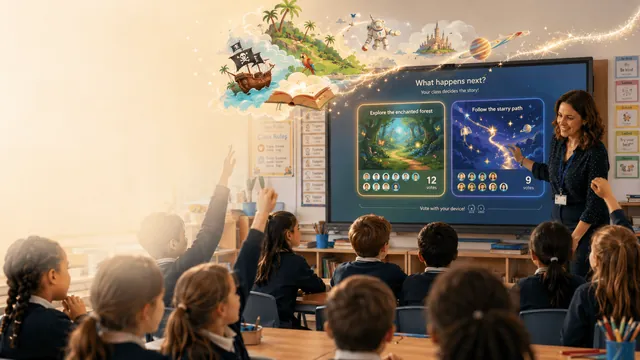
An illustration of a class reading a Litsee story on the whiteboard and voting on what happens next.

FREE TEACHER STORY UNIT · KS1 AND KS2

Anti-Bullying Week story lesson for KS1 and KS2

Two gentle Anti-Bullying Week stories for KS1 and KS2, to read on the board, in one free lesson about kindness and telling a trusted grown-up. At the big moment the class votes on what the character could do, and every choice is a kind one. KS1 meet Bo the beetle, left out at playtime; KS2 follow two friends who include a new pupil. With a sorting activity and six A4 sheets.

The stories, a sorting activity and printables

Read the whole story on the board and stop at the big moment: what could the character do? The class votes, and every choice is a kind one. Then sort kind and unkind moments (KS1) or telling to keep someone safe (KS2), and print six A4 sheets. Free, with no sign-up.

Story for:
Odd Socks and Kind Words

Page 1 of 5

In the Fairy Garden, the tiny creatures went to school under a big red mushroom.

Bo the beetle was new. Bo had a shiny green shell, and Bo wore odd socks: one spotty sock and one stripy sock.

Everyone: Spotty or stripy, we all belong!Point to your socks as you say it.

Page 1 of 5.

Read both stories as text (every choice)

Odd Socks and Kind Words · KS1 (Reception to Year 2)

The class joins in: “Spotty or stripy, we all belong!”

In the Fairy Garden, the tiny creatures went to school under a big red mushroom.

Bo the beetle was new. Bo had a shiny green shell, and Bo wore odd socks: one spotty sock and one stripy sock.

At playtime, the ladybirds played hop-and-skip. The ants played chase. But Bo sat on a pebble, all alone.

“You can’t play,” said a ladybird. “You’re too slow and too shiny.”

Bo looked down at the ground. Sam the bee saw it all, and Sam’s tummy felt wobbly.

Sam wanted to help. But what could Sam do?

What could Sam do?

Hands on heads: Ask Bo to play

Sam took a big breath and buzzed over to the pebble. “Do you want to play with me?”

Bo’s face lit up. “Yes, please!” Slow and shiny, Bo was brilliant at hop-and-skip.

After playtime, Sam went to find Miss Wren, the kind teacher, and told her what had happened. “Thank you for telling me, Sam,” said Miss Wren.

Hands on shoulders: Tell Miss Wren

Sam buzzed straight to Miss Wren, the kind teacher. “Can I tell you something? Bo is all alone, and someone said Bo can’t play.”

Miss Wren listened to every word. “Thank you for telling me, Sam. That was brave.”

Miss Wren and Sam went over to the pebble together, and soon Bo was playing hop-and-skip.

Hands on knees: Say, “That’s not kind”

Sam stood next to Bo. “That’s not kind,” said Sam, in a calm, clear voice. “Bo can play with us.”

The ladybird looked at her feet. “Sorry, Bo,” she said. “You can have the next go.”

After playtime, Sam went to find Miss Wren, the kind teacher, and told her what had happened. “Thank you for telling me, Sam,” said Miss Wren.

The next day, Miss Wren had an idea. “Let’s all wear odd socks!” Spotty socks, stripy socks, socks with stars and socks with moons.

“Everybody is different,” said Miss Wren. “And everybody can play.” That playtime, the ladybird asked Bo to play hop-and-skip, and Bo said yes.

The Day We Broke the Silence · KS2 (Years 3 to 6)

The class joins in: “One kind voice can break the silence.”

The new girl’s name was Hana, and by Wednesday nobody had sat next to her at lunch.

Jayden noticed. So did his best friend, Amira. They noticed the folded notes too, passed from hand to hand behind the reading corner, and the way the giggling stopped whenever Hana walked past.

“We should say something,” Amira whispered.

“And make it worse?” Jayden whispered back.

That night Jayden lay awake, thinking about Hana sitting on her own with her lunchbox, and how it would feel if it were him.

On Thursday, Jayden picked up his tray. His heart was thumping. He looked at Amira, and Amira looked back at him.

Staying quiet would be easy. But was it right? What could they do?

What could Jayden and Amira do?

Hands on heads: Sit with Hana at lunch

Jayden carried his tray straight past his usual seat and sat down opposite Hana. A moment later, Amira sat down too.

“Hi,” said Jayden. “Do you like football?” Hana blinked. Then, slowly, she smiled. It turned out she liked drawing dragons even more.

After lunch, Jayden and Amira knocked on Mr Bell’s door and told him about the notes, because being kind at lunch was not enough to stop them.

Hands on shoulders: Tell Mr Bell

After lunch, Jayden and Amira stood outside Mr Bell’s classroom. Jayden’s heart was thumping. Amira squeezed his arm, and they knocked.

They told him about the empty seat and the folded notes. Mr Bell listened carefully. “Thank you for telling me,” he said. “You’re not in trouble, and you’ve done the right thing. Leave it with me.”

On the way out, Amira said, “Let’s sit with Hana tomorrow, too.”

Hands on knees: Ask Hana to join a game

At break, Amira walked over to the bench where Hana was sitting. “We need one more for our team,” she said. “Do you want to play?”

Hana hesitated, then nodded. She was quick, and she scored the first goal.

Before the bell went, Jayden and Amira found Mr Bell on the playground and told him about the notes, because a game at break was not enough to stop them.

Mr Bell spoke to the people passing the notes, calmly and fairly, and the notes stopped. By the next week, Hana’s table was the noisiest in the hall.

“I’m glad we said something,” said Amira. “Me too,” said Jayden. “Telling wasn’t telling tales. It was looking out for someone.”

Both stories were written for this page by Litsee, from the unit’s own characters. In the Litsee app, a class makes its own story from the unit’s brief and chooses what happens next.

Keeping the lesson safe: the guidance behind it
  • What bullying is.

    “Bullying is behaviour by an individual or group, repeated over time, that intentionally hurts another individual or group either physically or emotionally.”

    Department for Education: Preventing and tackling bullying (July 2017), on GOV.UK

    So one unkind moment, like the ladybird’s, is not always bullying, but it is always worth putting right. The stories stay with small, mild moments.

  • Why the stories are about the children who see it. The DfE says successful schools involve pupils, so that:

    “All pupils understand the school’s approach and are clear about the part they can play to prevent bullying, including when they find themselves as bystanders”

    Department for Education: Preventing and tackling bullying (July 2017), on GOV.UK

    Sam, Jayden and Amira are bystanders who choose to act. The vote lets the class practise what they could do.

  • Who children can tell.

    “That could be yourself, a teacher they trust or Childline.”

    NSPCC: Bullying and cyberbullying

    Every choice in the vote ends with a child telling a trusted grown-up. Childline is free on 0800 1111.

Keep the talk on the characters, not on children in the class. If a child tells you something, follow your school’s safeguarding procedures and speak to your designated safeguarding lead.

KS1 (Reception to Year 2): Odd Socks and Kind Words

Learning objective

Recognise unkind behaviour and know to tell a trusted grown-up when something is wrong.

Talk questions

  1. How did Bo feel when nobody would play? What did our hero do that was brave?
  2. Who are the grown-ups you could talk to if something unkind happened?

Writing task

Draw your odd socks. Write one kind thing you could say to a friend.

Suggested story settings: Genre: Friendship · Length: 2 chapters · Time: 10–15 minutes

The story brief

What the class story is asked to do. “Our hero” is the character your class chooses.

A kindness story for young readers for Anti-Bullying Week. In a garden where tiny creatures go to school, a little beetle called Bo is left out of games because Bo is different. Our hero notices, feels unsure what to do, and then chooses to be brave: they invite Bo to play and tell a kind grown-up what has been happening. The others learn that being different is something to celebrate, and everyone wears odd socks to show it. Keep unkindness mild, brief and fully resolved. Show clearly that telling a trusted grown-up is a brave and good thing to do.

Word bank

kind
caring about how other people feel, and doing things to help them
different
not the same as someone or something else
brave
doing the right thing even when it feels hard or a bit wobbly
tell
to say to someone what has happened, so that they know
friend
someone you like being with, who is kind to you and who you are kind to

Text-type features: letter to a character

Purpose: to tell someone about events and ask questions. Plan it with the free letter to a character plan template.

Reception to Year 2

  • Dear… at the start
  • Telling news
  • A question
  • From… at the end

National Curriculum statements

  • “making inferences on the basis of what is being said and done”

    Year 1, Reading – comprehension (statutory)

  • “listen and respond appropriately to adults and their peers”

    Years 1 to 6, Spoken language (statutory)

  • “composing a sentence orally before writing it”

    Year 1, Writing – composition (statutory)

Sample opening · KS1

A sample written for this page to show the brief in action. It is not the story Litsee writes for your class.

In the Fairy Garden, the tiny creatures went to school under a big mushroom.

At playtime, the ladybirds played hop-and-skip. The ants played chase. But Bo the beetle sat on a pebble, all alone.

“You can’t play,” said a ladybird. “You’re too slow and too shiny.”

Bo looked down at the ground. Sam saw it all, and Sam’s tummy felt wobbly. What should Sam do?

Sam took a big breath and walked over. “Do you want to play with me?”

Bo’s face lit up. “Yes, please!”

After playtime, Sam went to find Miss Wren, the kind teacher. “Can I tell you something?” said Sam.

Model text (WAGOLL)

A model answer to the writing task, pitched at Year 2, written for this page. Read it with the class and find where it meets each success criterion.

Dear Bo,

Do you want to play hop-and-skip with me at playtime?

I like you because you are funny and your shell is shiny like a button.

From Sam

What makes it good

  • Do you want to play hop-and-skip with me at playtime? A question that invites someone in, with a question mark.
  • because you are funny Gives a reason with “because”.

By year group

Reception

Grammar focus: Capital letters and full stops

At playtime, the ladybirds played hop-and-skip.

Year 1

Grammar focus: Question marks and exclamation marks

What should Sam do?

Year 2

Grammar focus: Statements, questions, exclamations and commands

“Do you want to play with me?”

A week of lessons

  1. Lesson 1

    Hook

    • Arrive wearing odd socks and say nothing about them. Wait for the class to notice, then ask: is it all right to be different? Then read the opening.
    • Talk: How did Bo feel when nobody would play? What did our hero do that was brave?
  2. Lesson 2

    Plan

    • Talk: Who are the grown-ups you could talk to if something unkind happened?
    • Words: kind, different, brave, tell, friend.
  3. Lesson 3

    Draft

    • Write: Draw your odd socks. Write one kind thing you could say to a friend.
  4. Lesson 4

    Edit

    • Grammar focus. Question marks and exclamation marks: “What should Sam do?”
  5. Lesson 5

    Publish

    • Peg the odd socks and kind words on a class washing line for Odd Socks Day, and read them aloud together.
The printed plan adds the planning frame and the full steps for each lesson.

Support, core and stretch sheets

Support

Draw your odd socks. Copy a kind sentence from the mat and add a friend’s name.

Core

Draw your odd socks. Write one kind thing you could say to a friend.

Stretch

Write two kind sentences to a friend, and say why you like them with “because”.

Vocabulary mat

One A4 page for every table: the word bank with its meanings, sentence stems, useful words and grammar words.

KS2 (Years 3 to 6): The Day We Broke the Silence

Learning objective

Explain how bystanders can help stop bullying and how to ask a trusted adult for help.

Talk questions

  1. What made it hard for our hero to speak up? What helped them do it?
  2. What is the difference between telling to get someone into trouble and telling to keep someone safe?

Writing task

Write a short note of encouragement to someone who has been left out, or a class promise about speaking up.

Suggested story settings: Genre: Friendship · Length: 2 chapters · Time: 10–15 minutes

The story brief

What the class story is asked to do. “Our hero” is the character your class chooses.

A kindness and speaking-up story for older primary readers for Anti-Bullying Week. In the Fairy Garden school, our hero notices that a new pupil keeps being left out and that unkind messages are being passed around. Our hero and a friend are worried about making things worse, but they decide to speak up: first by including the new pupil, then by telling a trusted grown-up, who helps put things right calmly and fairly. Show that bystanders can make a big difference, that telling is not 'telling tales', and that the people who were unkind can change. Keep the unkindness mild and brief, with no physical harm, and resolve it fully and warmly.

Word bank

bystander
someone who sees something happen but is not the person doing it or the person it happens to
include
to make someone part of a group or a game
courage
being able to do something hard or worrying because you know it is right
trusted
describes someone you know will listen, believe you and help
respect
treating other people the way they deserve, with care and fairness

Text-type features: letter to a character

Purpose: to tell someone about events and ask questions. Plan it with the free letter to a character plan template.

Years 3 to 6

  • Address and date
  • Greeting and sign-off
  • Paragraphs for each idea
  • Questions for the reader
  • A friendly voice

National Curriculum statements

  • “drawing inferences such as inferring characters’ feelings, thoughts and motives from their actions, and justifying inferences with evidence”

    Years 3 and 4, Reading – comprehension (statutory)

  • “consider and evaluate different viewpoints, attending to and building on the contributions of others”

    Years 1 to 6, Spoken language (statutory)

  • “identifying the audience for and purpose of the writing, selecting the appropriate form and using other similar writing as models for their own”

    Years 5 and 6, Writing – composition (statutory)

Sample opening · KS2

A sample written for this page to show the brief in action. It is not the story Litsee writes for your class.

The new girl’s name was Hana, and by Wednesday nobody had sat next to her at lunch.

Jayden noticed. So did his best friend, Amira. They noticed the folded notes too, passed from hand to hand behind the reading corner, and the way the giggling stopped whenever Hana walked past.

“We should say something,” Amira whispered.

“And make it worse?” Jayden whispered back.

That night Jayden lay awake, thinking about Hana sitting on her own with her lunchbox, and how it would feel if it were him.

On Thursday he carried his tray straight past his usual seat and sat down opposite her. A moment later, Amira sat down too.

“Hi,” said Jayden. “Do you like football?”

Hana blinked. Then, slowly, she smiled.

After lunch, Jayden and Amira stood outside Mr Bell’s classroom. Jayden’s heart was thumping. Amira squeezed his arm, and they knocked.

Model text (WAGOLL)

A model answer to the writing task, pitched at Year 5, written for this page. Read it with the class and find where it meets each success criterion.

Dear Hana,

I’m sorry it has taken me so long to write this. I noticed you sitting on your own at lunch, and I should have said something sooner.

I wanted to tell you that I think you’re really good at drawing (I saw the dragon on your reading folder and it’s brilliant). Would you like to sit with Amira and me tomorrow? We usually talk about football, but we’d love to talk about drawing too.

If anyone is unkind to you, please tell a grown-up you trust. Mr Bell listened to us, and he helped. You don’t have to keep it to yourself.

See you tomorrow,

Jayden

What makes it good

  • I should have said something sooner Honest about the bystander’s feelings, which makes the note believable.
  • Would you like to sit with Amira and me tomorrow? A clear, friendly invitation.
  • please tell a grown-up you trust Points to a trusted adult, as the unit teaches.

By year group

Year 3

Grammar focus: Conjunctions to join clauses

Year 4

Grammar focus: Conjunctions to join clauses

That night Jayden lay awake, thinking about Hana sitting on her own with her lunchbox, and how it would feel if it were him.

Year 5

Grammar focus: Expanded noun phrases

The new girl’s name was Hana, and by Wednesday nobody had sat next to her at lunch.

Year 6

Grammar focus: Paragraphs and headings

A week of lessons

  1. Lesson 1

    Hook

    • Show two empty speech bubbles and a thought bubble. Ask: what might someone think but not say when they see a person being left out?
    • Talk: What made it hard for our hero to speak up? What helped them do it?
  2. Lesson 2

    Plan

    • Talk: What is the difference between telling to get someone into trouble and telling to keep someone safe?
    • Words: bystander, include, courage, trusted, respect.
  3. Lesson 3

    Draft

    • Write: Write a short note of encouragement to someone who has been left out, or a class promise about speaking up.
  4. Lesson 4

    Edit

    • Grammar focus. Conjunctions to join clauses: “That night Jayden lay awake, thinking about Hana sitting on her own with her lunchbox, and how it would feel if it were him.”
  5. Lesson 5

    Publish

    • Gather the notes and promises into a class “Break the Silence” book that lives in the reading corner.
The printed plan adds the planning frame and the full steps for each lesson.

Support, core and stretch sheets

Support

Write a three-sentence note: hello, one thing you like about the person, and an invitation to join in.

Core

Write a short note of encouragement to someone who has been left out, or a class promise about speaking up.

Stretch

Write a class promise with three parts: what we will notice, what we will do, and who we will tell, each with a reason.

Vocabulary mat

One A4 page for every table: the word bank with its meanings, sentence stems, useful words and grammar words.

When to use it
Anti-Bullying Week in November, or any PSHE or kindness lesson in the year when a class needs a story about including people and telling.
Date
Anti-Bullying Week 2026 ran from Monday 16 to Friday 20 November, starting with Odd Socks Day on Monday 16 November, and the theme was Break the Silence. The Anti-Bullying Alliance announces each year’s dates and theme on its website, ahead of the week. Sources: National Children’s Bureau, Anti-Bullying Alliance
Story world
Fairy Garden
Subject focus
PSHE · Friendship
Suggested story settings
Genre: Friendship · Length: 2 chapters · Time: 10–15 minutes

Story feel: Friendship & teamwork. Story shape: Character change.

About this unit

This unit is about kindness, including people and speaking up. Both stories show that telling a trusted grown-up is a brave and good thing to do, which is the heart of the 2026 Anti-Bullying Week theme, Break the Silence. The unkindness in the stories is mild and brief, nobody is hurt, and everything is put right warmly.

In KS1, Bo the beetle is left out at playtime for being different, and our hero chooses to invite Bo to play and to tell a kind teacher. The class learns that being different is something to celebrate, and everyone wears odd socks to show it. In KS2, two friends worry that speaking up will make things worse for a new pupil, then decide to include her and to tell a trusted adult, who helps put things right calmly and fairly.

Teaching notes

Check the stories’ “tell a trusted grown-up” line against your school’s safeguarding route before you teach, and name the real people children can go to: their teacher, a teaching assistant, a lunchtime supervisor or the head. For KS2 you can add Childline (0800 1111), which children can call for free.

For KS1, make the first day an odd socks day, as the story does. Children design a pair of odd socks and write one kind thing they could say to a friend on them, then peg them on a class washing line.

For KS2, freeze the story when Jayden says “And make it worse?” and ask pairs to give him advice. Then sort some short examples into “telling to get someone into trouble” and “telling to keep someone safe”, which is the second talk question, before children write their notes of encouragement.

Keep the talk on the characters in the story, not on children in the class. If a child tells you something during the unit, follow your school’s safeguarding procedures and speak to your designated safeguarding lead.

Printable lesson sheet

One A4 page for each key stage, ready for your planning folder: the story title, objective, story settings, talk questions, writing task, word bank with meanings, success criteria, curriculum statements and the sample opening to read aloud. Printing this page prints only the two sheets.

About this page

How it works · Sources

About this page

Built from Litsee’s curriculum data. The story titles, briefs, objectives, talk questions, writing tasks, word lists and story settings come from the seasonal class-story packs in the Litsee app; the text-type features come from the app’s curriculum data; the National Curriculum quotations are quoted word for word from the Department for Education’s documents. The word meanings, sample openings and teaching notes were written for this page, and every date was checked against the source named beside it. Ideas or corrections? Email info@litsee.com.

Last updated: .

Questions parents and teachers ask

When is Anti-Bullying Week?

Every November. In 2026 it ran from Monday 16 to Friday 20 November, starting with Odd Socks Day, and the theme was Break the Silence. The Anti-Bullying Alliance coordinates it in England, Wales and Northern Ireland and announces each year’s dates and theme on its website. This lesson works at any time of year.

Is Litsee part of Anti-Bullying Week?

No. Litsee is not connected with the Anti-Bullying Alliance. This is a free, independent story lesson that fits the week’s theme of telling someone.

What if a child tells me something during the lesson?

Follow your school’s safeguarding procedures and speak to your designated safeguarding lead. The stories teach that telling a trusted grown-up is brave and right, so children may take that message to heart.

Do the stories show physical bullying?

No. The unkindness is mild and brief, with no physical harm, and it is fully resolved by the end of each story.

What Anti-Bullying Week activities are in this lesson for KS1 and KS2?

Both key stages read the whole story on the board and vote on what the character could do. In KS1, children sort kind and unkind moments, design odd socks with one kind thing to say to a friend and can write a short letter inviting Bo to play. In KS2, pairs sort telling to keep someone safe from telling to get someone into trouble, then write a note of encouragement to Hana and a class promise. There are six A4 activity sheets and a lesson sheet for each key stage.

Run this as a live class story in Litsee

In Litsee, a seasonal brief like this becomes an illustrated, narrated class story. You preview the first chapter before reading it with your class, and the class chooses what happens next together.

Anti-Bullying Week story unit · KS1 (Reception to Year 2)

Odd Socks and Kind Words

Learning objective: Recognise unkind behaviour and know to tell a trusted grown-up when something is wrong.

Suggested story settings: Genre: Friendship · Length: 2 chapters · Time: 10–15 minutes · Story world: Fairy Garden

Talk questions

  1. How did Bo feel when nobody would play? What did our hero do that was brave?
  2. Who are the grown-ups you could talk to if something unkind happened?

Writing task

Draw your odd socks. Write one kind thing you could say to a friend.

Word bank

kind
caring about how other people feel, and doing things to help them
different
not the same as someone or something else
brave
doing the right thing even when it feels hard or a bit wobbly
tell
to say to someone what has happened, so that they know
friend
someone you like being with, who is kind to you and who you are kind to

Success criteria (letter to a character)

Reception to Year 2: I can start with 'Dear'. I can ask a question. I can end with 'From'.

National Curriculum statements

  • “making inferences on the basis of what is being said and done” (Year 1, Reading – comprehension (statutory))
  • “listen and respond appropriately to adults and their peers” (Years 1 to 6, Spoken language (statutory))
  • “composing a sentence orally before writing it” (Year 1, Writing – composition (statutory))

Sample opening (written for litsee.com, to read aloud)

In the Fairy Garden, the tiny creatures went to school under a big mushroom.

At playtime, the ladybirds played hop-and-skip. The ants played chase. But Bo the beetle sat on a pebble, all alone.

“You can’t play,” said a ladybird. “You’re too slow and too shiny.”

Bo looked down at the ground. Sam saw it all, and Sam’s tummy felt wobbly. What should Sam do?

Sam took a big breath and walked over. “Do you want to play with me?”

Bo’s face lit up. “Yes, please!”

After playtime, Sam went to find Miss Wren, the kind teacher. “Can I tell you something?” said Sam.

Notes

Free from litsee.com/teachers/story-units/anti-bullying-week

Anti-Bullying Week story unit · KS2 (Years 3 to 6)

The Day We Broke the Silence

Learning objective: Explain how bystanders can help stop bullying and how to ask a trusted adult for help.

Suggested story settings: Genre: Friendship · Length: 2 chapters · Time: 10–15 minutes · Story world: Fairy Garden

Talk questions

  1. What made it hard for our hero to speak up? What helped them do it?
  2. What is the difference between telling to get someone into trouble and telling to keep someone safe?

Writing task

Write a short note of encouragement to someone who has been left out, or a class promise about speaking up.

Word bank

bystander
someone who sees something happen but is not the person doing it or the person it happens to
include
to make someone part of a group or a game
courage
being able to do something hard or worrying because you know it is right
trusted
describes someone you know will listen, believe you and help
respect
treating other people the way they deserve, with care and fairness

Success criteria (letter to a character)

Years 3 to 6: I can lay out a letter. I can use a paragraph for each idea. I can ask questions.

National Curriculum statements

  • “drawing inferences such as inferring characters’ feelings, thoughts and motives from their actions, and justifying inferences with evidence” (Years 3 and 4, Reading – comprehension (statutory))
  • “consider and evaluate different viewpoints, attending to and building on the contributions of others” (Years 1 to 6, Spoken language (statutory))
  • “identifying the audience for and purpose of the writing, selecting the appropriate form and using other similar writing as models for their own” (Years 5 and 6, Writing – composition (statutory))

Sample opening (written for litsee.com, to read aloud)

The new girl’s name was Hana, and by Wednesday nobody had sat next to her at lunch.

Jayden noticed. So did his best friend, Amira. They noticed the folded notes too, passed from hand to hand behind the reading corner, and the way the giggling stopped whenever Hana walked past.

“We should say something,” Amira whispered.

“And make it worse?” Jayden whispered back.

That night Jayden lay awake, thinking about Hana sitting on her own with her lunchbox, and how it would feel if it were him.

On Thursday he carried his tray straight past his usual seat and sat down opposite her. A moment later, Amira sat down too.

“Hi,” said Jayden. “Do you like football?”

Hana blinked. Then, slowly, she smiled.

After lunch, Jayden and Amira stood outside Mr Bell’s classroom. Jayden’s heart was thumping. Amira squeezed his arm, and they knocked.

Notes

Free from litsee.com/teachers/story-units/anti-bullying-week

Try it in LitseeYour child creates the hero, picks the world and chooses what happens next, in an illustrated story that is read aloud.Start your free trialUse it in classRead an illustrated, narrated story together on the whiteboard, and let the class choose what happens next.Start a free classroom trialSee Litsee for schools