
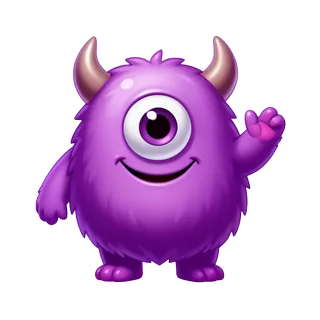
Wuffle
A soft, muffled sound, like a monster yawning into a big pillow.
- Secret power
- ?
- Scared of
- ?
- Always says
- ?
Analytics cookies to improve Litsee? No ads.
With your permission, Google Analytics measures visits and Microsoft Clarity records clicks, scrolling and page interactions, with form inputs and page text masked. We use no advertising cookies.
Change it any time with Cookie settings. Privacy policy · Google privacy · Microsoft privacy
A soft, muffled sound, like a monster yawning into a big pillow.
Make your own hero and they join every card as a friend.
What your child practises: making up a character (a name, a power, a worry and what they say), then writing their first adventure. National Curriculum, Years 3 and 4, Writing – composition: “in narratives, creating settings, characters and plot”.
Press the button for a friendly monster name and what it means. Choose fluffy, huggable monsters, big gentle giants or silly, squelchy swamp creatures, or build your own from soft, bouncy word parts. Every name is hand-picked to be child-safe and bedtime-friendly, with KS1 and KS2 writing tips and a sample story opening.
Reviewed by Joshua Younger, Education Lead, on .
Soft, cosy names full of m, w and oo sounds, for small furry monsters who love a cuddle.
Slow, rumbly names that sound like hills and old villages, for huge monsters with kind hearts.
Splashy, sploshy, giggly names for swamp creatures and muddle-makers who leave little puddles everywhere.
Press Big screen above the card to make one character together on the board: the class votes A, B or C for the power, the worry and the catchphrase. Then print the class set below: eight names with their meanings, with the rest left blank for each child to finish and draw.
A finished card is a small character plan. The worry gives the story its problem, the power gives the way out, and the catchphrase is the first line of dialogue. The printed card comes with a page to write the character’s first adventure.
Goes after the name
Join one from each list
The fun of a friendly monster story is the surprise. Children expect a monster to be the thing to hide from, then they meet one who lives under the bed because it is scared of the dark, or who cries when it treads on a daisy. The name is the first place to set up that surprise. A monster called Wuffle or Mallowmoo cannot be frightening, because the name has already told the reader to relax. For a child who worries at bedtime, a soft name turns the creature into a friend before page one.
Sounds carry feelings, and children can hear this when you say names aloud. Sounds made with the lips pressed together, such as b, p, m and w, feel round and bouncy, like bubbles: Nubbin, Moffle, Woolybob. Long oo and l sounds slow a name down and make it cosy, as in Lolloby. Short, clipped sounds such as k and g next to an r feel sharper and spikier. Try drawing a soft, blobby shape and a prickly one, then ask which is called Murmle. Children usually pick the blob straight away and can explain why.
Many of the best friendly monsters carry a secret worry, and the name can hint at it or play against it. A shy monster called Murmle who speaks in a whisper fits its worry neatly. A huge giant called Thumpkin who is frightened of ladybirds gets a laugh from the contrast. Decide on the worry first, then choose the name. The worry also gives you a plot, because the child in the story can help the monster face it.
A few mistakes are easy to avoid. Steer clear of names that sound like real fears, such as anything about shadows or the dark, and of names that make fun of how someone looks or smells: silly is fine, unkind is not. Avoid famous monsters from books, films and television, because readers will picture that character instead of yours. For Year 1 and Year 2, keep names short enough to sound out, and give each monster in a story a different first sound so they do not blur together.
At home, press the button together at bedtime and let your child choose a name for the monster under their own bed, then talk about what it might be scared of and how they could help. In class, children can make a lost monster poster with the name, a drawing, a favourite snack, a secret worry and how to say hello. Build mode lets them join two soft parts into a brand new name. The fantasy story starters are a good next step.
Finally, let the name do some work in the plot. Sloshbucket might be desperate to stay clean for a party and fail in the funniest ways. Hummock, whose name means a grassy mound, could be mistaken for a hill by a family having a picnic, until the hill sneezes. A long name like Bramblethorpe can be shortened to Bram as the friendship grows, which shows the reader that the monster and the child have become close.
Written for this page, at the level of KS1 (Years 1–2)
Under Ava’s bed lived a monster called Moffle. Moffle was small and fluffy and the colour of blueberry jam.
Every night, when the big light went off, Moffle shivered. “It is very dark under here,” Moffle whispered.
Ava peeped over the side of the bed. “Are you scared of the dark?” she asked.
“A tiny bit,” said Moffle. “Well, a big bit.”
Ava had an idea. She fetched her star torch. Then she called her other monster friends. Thistledown floated out of the toy box. Rumbleton climbed out of the wardrobe. He was so big that only his nose fitted under the bed.
They all lay in a row and watched the torch make stars on the ceiling.
“Oh,” said Moffle, with a happy wiggle. “The dark is not so dark when you have friends.”
“using a capital letter for names of people, places, the days of the week, and the personal pronoun ‘I’”
Year 1, Writing – vocabulary, grammar and punctuation (statutory)
“expanded noun phrases to describe and specify [for example, the blue butterfly]”
Year 2, Writing – vocabulary, grammar and punctuation (statutory)
“in narratives, creating settings, characters and plot”
Years 3 and 4, Writing – composition (statutory)
“in narratives, describing settings, characters and atmosphere and integrating dialogue to convey character and advance the action”
Years 5 and 6, Writing – composition (statutory)
The quotations above are copied word for word from this document, with the year and section each applies to. The names, meanings, tips and story opening are Litsee’s own.
Reviewed by Joshua Younger, Education Lead, on .
Every name comes with its meaning and is shown on this page, so you always know what your child will see. The generator runs in your browser, and nothing your child chooses is sent anywhere. A card is kept on this device only if they press “Keep it”.
Friendly monsters suit soft, bouncy names that are fun to say, such as Wuffle, Moffle or Snoozle. Names built from cosy words work well too: Teacosy, Mittenby and Thistledown all sound gentle before the reader meets the character. For a huge but kind monster, try a slow, rumbly name like Rumbleton or Ambledown.
Use round sounds such as b, m, w and a long oo, and add a small ending like -kin, -le or -boo. Pairing a monster with an everyday cosy word also helps, as in Mallowmoo or Puddleplop. Avoid hard, spiky clusters and any words linked to fear, and read the name aloud in a gentle voice to test it.
Choose a name together that makes your child giggle, such as Hushaboo, Snugwell or Pillowby, then decide what the monster is scared of and how your child could help it. Giving the monster its own worry turns it into someone to look after, which can make the space under the bed feel friendlier at night.
Short names with familiar letter patterns are easiest to sound out, such as Nubbin, Moffle, Dollop and Splodge. Longer names made from two words children already know, like Moss-whistle or Puddle-plop, can be read in chunks. Grander names such as Bramblethorpe suit confident Key Stage 2 readers.
In Litsee, your child creates the hero, picks the world and chooses what happens next in an illustrated story that is read aloud.
Start your free trial7 days free. A card is needed to start, and nothing is charged if you cancel before the trial ends.