

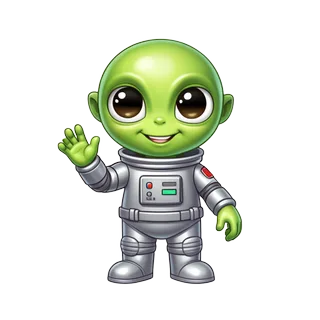
Zibbo
A bouncy, easy name with a buzzy z, just right for a cheerful first visitor.
- Secret power
- ?
- Scared of
- ?
- Always says
- ?
Analytics cookies to improve Litsee? No ads.
With your permission, Google Analytics measures visits and Microsoft Clarity records clicks, scrolling and page interactions, with form inputs and page text masked. We use no advertising cookies.
Change it any time with Cookie settings. Privacy policy · Google privacy · Microsoft privacy
A bouncy, easy name with a buzzy z, just right for a cheerful first visitor.
Make your own hero and they join every card as a friend.
What your child practises: making up a character (a name, a power, a worry and what they say), then writing their first adventure. National Curriculum, Years 3 and 4, Writing – composition: “in narratives, creating settings, characters and plot”.
Press the button for an alien name and what it means. Choose friendly visitors, starry space travellers or silly, bleepy aliens, or build your own from alien-sounding parts. Every name is hand-picked and child-safe, with naming tips for KS1 and KS2 space stories and a sample story opening.
Reviewed by Joshua Younger, Education Lead, on .
Soft, easy names for kind aliens who land in peace and want to make friends.
Grand, starry names built from real space words, for captains, explorers and wise elders.
Squelchy, poppy, giggly names for aliens who cause happy mix-ups wherever they land.
Press Big screen above the card to make one character together on the board: the class votes A, B or C for the power, the worry and the catchphrase. Then print the class set below: eight names with their meanings, with the rest left blank for each child to finish and draw.
A finished card is a small character plan. The worry gives the story its problem, the power gives the way out, and the catchphrase is the first line of dialogue. The printed card comes with a page to write the character’s first adventure.
Goes after the name
Join one from each list
A good alien name does two jobs at once: it sounds as if it comes from somewhere far away, and a child can still read it aloud. The easiest way to get that balance is to use one or two letters that are rare in English names, such as z, x, q or v, and keep the rest simple. Zibbo and Tovix feel out of this world, yet a Year 1 reader can sound out every part. A jumble like Xqrtz looks alien but stops young readers in their tracks, so they skip it and the character loses its voice.
Decide what the alien is like before you choose its name, because sounds carry feelings. Soft, round sounds such as m, l and a long oo make a visitor seem gentle: Moopa, Nooma, Yoolu. Short, sharp sounds such as z, k and x make it quick and buzzy. Longer names built from space words feel grand and wise, which suits a captain or an elder. Silly aliens can borrow noises: a pop, a bleep, a squelch. Children enjoy sorting names into groups and explaining their choice.
Many of the starry names here come from words scientists really use. Comet comes from a Greek word meaning long-haired, because a comet’s tail streams out like hair. Planet comes from the Greek for wanderer, and galaxy from the Greek for milk. Sharing these roots turns a naming game into a word study, and older children can invent names from the space vocabulary they meet in science lessons.
An alien’s name can also carry its home. Some writers name aliens after their planet, or give them a very long name that Earth people shorten. A character who says, “In my language, my name means the one who listens,” gives the reader a glimpse of a whole culture in one line. Keep aliens different without turning them into a joke about real people: avoid borrowing real languages, accents or nationalities, and let the strangeness come from the alien’s world, not ours.
At home, press for a few names, read them aloud together and keep the one that makes everyone smile, or switch to build mode to join two alien-sounding parts into something new. In class, give each table a different name and ask them to fill in an alien passport: name, home planet, what the name means and one thing the alien hopes to find on Earth. The space story starters make a good next step.
Finally, let the name do some work in the plot. A visitor called Hullo can cause a funny mix-up when everyone thinks it is simply being polite. A name that is only translated in the last chapter can reveal a secret: perhaps Ionara, the traveller who is always on the move, has finally found somewhere to stay. Steer clear of names that echo aliens from films, and do not give every alien a z, or the whole crew will blur together.
Written for this page, at the level of Years 3–4
At ten past four, a spaceship the size of a garden shed landed on the school field. It was round and silver, and it hummed like a fridge. A small green alien climbed down a ladder, waved all six of its hands and said, “Hullo!”
“That is my name as well,” it added helpfully. “Hullo, from Planet Giggle. This is Zibbo, our pilot, and that is Captain Nebulix, who is very wise and only a little bit lost.”
Maya looked at the three visitors. Then she looked at the packet of custard creams in her hand. Captain Nebulix’s eyes grew as wide as dinner plates. “Is that,” the captain whispered, “a biscuit?”
“using a capital letter for names of people, places, the days of the week, and the personal pronoun ‘I’”
Year 1, Writing – vocabulary, grammar and punctuation (statutory)
“expanded noun phrases to describe and specify [for example, the blue butterfly]”
Year 2, Writing – vocabulary, grammar and punctuation (statutory)
“in narratives, creating settings, characters and plot”
Years 3 and 4, Writing – composition (statutory)
“in narratives, describing settings, characters and atmosphere and integrating dialogue to convey character and advance the action”
Years 5 and 6, Writing – composition (statutory)
The quotations above are copied word for word from this document, with the year and section each applies to. The names, meanings, tips and story opening are Litsee’s own.
Reviewed by Joshua Younger, Education Lead, on .
Every name comes with its meaning and is shown on this page, so you always know what your child will see. The generator runs in your browser, and nothing your child chooses is sent anywhere. A card is kept on this device only if they press “Keep it”.
Friendly aliens suit soft, easy names with round sounds, such as Moopa, Zibbo or Yoolu. You can also pick a name with a kind meaning: Amiko is the Esperanto word for friend, and Hullo suits a visitor whose first Earth word was a greeting. Short names work best for younger readers.
Start with one unusual letter such as z, x, q or v, add a simple syllable, then say it aloud to check it works. Keep it short enough to sound out. You can also borrow a real space word, like nebula or comet, and change its ending. Build mode on this page joins two alien-sounding parts for you.
Funny alien names often copy a noise or a habit. Blorp sounds like a bubble popping, Splorg sounds like a squelchy landing and Zorbleflop ends with a flop. Long, bouncy names such as Zazzlepop and Tootleblip are fun to say aloud, which makes them good for comic stories, class plays and assemblies.
Made-up words make children blend each sound rather than recognise a word they already know, and the Year 1 phonics screening check in England includes made-up words. Short alien names like Ploob, Zibbo and Tibbix use common letter sounds, so they make cheerful blending practice in Year 1 and Year 2.
In Litsee, your child creates the hero, picks the world and chooses what happens next in an illustrated story that is read aloud.
Start your free trial7 days free. A card is needed to start, and nothing is charged if you cancel before the trial ends.