
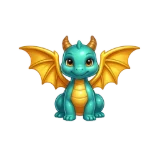
Emberwing
A wing that glows warm like the last coals of a fire.
- Secret power
- ?
- Scared of
- ?
- Always says
- ?
Analytics cookies to improve Litsee? No ads.
With your permission, Google Analytics measures visits and Microsoft Clarity records clicks, scrolling and page interactions, with form inputs and page text masked. We use no advertising cookies.
Change it any time with Cookie settings. Privacy policy · Google privacy · Microsoft privacy
A wing that glows warm like the last coals of a fire.
Make your own hero and they join every card as a friend.
What your child practises: making up a character (a name, a power, a worry and what they say), then writing their first adventure. National Curriculum, Years 3 and 4, Writing – composition: “in narratives, creating settings, characters and plot”.
Press the button for a dragon name and what it means. Pick gentle dragons, grand and ancient dragons or funny ones, or join two word parts to build your own. Every name is hand-picked and child-safe, with dragon naming tips for KS1 and KS2 and a sample story opening.
Reviewed by Joshua Younger, Education Lead, on .
Warm, soft names for kind dragons who toast, hum and look after their friends.
Big, old-sounding names for wise and mighty dragons who rule mountains and skies.
Silly, cosy names for dragons who sneeze, snore and love a crumpet.
Press Big screen above the card to make one character together on the board: the class votes A, B or C for the power, the worry and the catchphrase. Then print the class set below: eight names with their meanings, with the rest left blank for each child to finish and draw.
A finished card is a small character plan. The worry gives the story its problem, the power gives the way out, and the catchphrase is the first line of dialogue. The printed card comes with a page to write the character’s first adventure.
Goes after the name
Join one from each list
Before you pick a dragon name, decide what kind of dragon you are writing about. A dragon who guards a mountain, one who toasts crumpets and one who is still learning to fly need very different names. This generator sorts names into gentle, grand and funny, because those three moods cover most dragons in children’s stories, and the right mood helps a reader picture the dragon before it has said a word.
The easiest dragon names for young writers are compound words: two ordinary words pushed together. Pair something warm or wild, such as ember, moss or storm, with a dragon body part, such as wing, tail or snout. Emberwing and Fernsnout are easy for a Year 1 child to read because each half is a word they can already decode, yet together they sound like a real creature. Build mode on this page works in exactly this way.
Grand dragons suit older-sounding names. Draco is Latin for dragon, and in Old English a dragon could be called a wyrm or a draca. Drake, an old word for a dragon, comes from the same root. In Wales, the red dragon on the national flag is Y Ddraig Goch. In Chinese tradition, dragons are wise, lucky creatures linked with water and rain, a good reminder that a dragon does not have to breathe fire at all.
Sound matters as much as meaning. Long names with heavy sounds, like Thunderhelm or Basaltor, feel slow and powerful. Short names with soft s, f and w sounds feel small and kind. Funny names often borrow everyday British things, such as crumpets, teapots and hotpots, because the gap between a mighty dragon and a teacosy is what makes children laugh.
A name can also set up the plot. A dragon called Thunderhelm who is frightened of thunder already has a problem to solve. Many stories give dragons a secret true name alongside their everyday one, and a child could write about the day a friend learns it. Avoid names that belong to famous film and book dragons, and steer away from names about burning things down: a dragon story is more interesting when the fire is used to help.
At home, press the button a few times and read each name in a dragon voice, deep and rumbling or squeaky and small. In class, give pairs a name card and ask them to design a dragon to match: colour, size, home and one surprising habit. Then swap cards and compare, and talk about which designs fit the name best and why. Older children can add a short fact file explaining what each part of the name means. The dragon story starters page has openings ready for any of these names.
Written for this page, at the level of KS1 (Years 1–2)
Toastie was a small red dragon. He lived in a cave at the top of a green hill. Every morning, he made toast for the whole village.
One cold day, Toastie gave a big sneeze. Out came bubbles, not fire! “Oh no!” said Toastie. “How will I make the toast now?”
His friend Mossflicker flew down from the trees. Then old Peakwarden came too, slow and kind, with a lantern hanging from his tail. “Do not worry,” said Peakwarden. “Every dragon loses its spark sometimes. Let’s find yours together.”
“using a capital letter for names of people, places, the days of the week, and the personal pronoun ‘I’”
Year 1, Writing – vocabulary, grammar and punctuation (statutory)
“expanded noun phrases to describe and specify [for example, the blue butterfly]”
Year 2, Writing – vocabulary, grammar and punctuation (statutory)
“in narratives, creating settings, characters and plot”
Years 3 and 4, Writing – composition (statutory)
“in narratives, describing settings, characters and atmosphere and integrating dialogue to convey character and advance the action”
Years 5 and 6, Writing – composition (statutory)
The quotations above are copied word for word from this document, with the year and section each applies to. The names, meanings, tips and story opening are Litsee’s own.
Reviewed by Joshua Younger, Education Lead, on .
Every name comes with its meaning and is shown on this page, so you always know what your child will see. The generator runs in your browser, and nothing your child chooses is sent anywhere. A card is kept on this device only if they press “Keep it”.
Friendly dragons suit warm, soft names made from cosy things, such as Emberwing, Hushflame, Honeyscale or Glowmallow. Try joining a gentle word, like moss, honey or lantern, to a dragon body part, like wing or tail. Short, easy names also help younger children read the story on their own.
Start with what your dragon is like, then choose a word that matches: storm for a powerful dragon, crumpet for a funny one. Add a dragon word such as wing, scale or wyrm, the Old English word for a dragon. Say the name aloud in a dragon voice to check it sounds right.
Funny dragon names usually pair a mighty dragon with something small and everyday. Toastie, Cosyspout, Pikelet and Sockflame work because nobody expects a dragon to be named after a snack or a sock. Names that describe a habit, like Sneezelot or Snorington, are funny too, and they give the story a ready-made joke.
The red dragon on the flag of Wales is called Y Ddraig Goch, which means the red dragon. Draig is the Welsh word for dragon, and goch is a form of coch, the Welsh word for red. Welsh words make good dragon names too, such as Tanwen, which joins tân, fire, with gwen, white or blessed.
In Litsee, your child creates the hero, picks the world and chooses what happens next in an illustrated story that is read aloud.
Start your free trial7 days free. A card is needed to start, and nothing is charged if you cancel before the trial ends.