
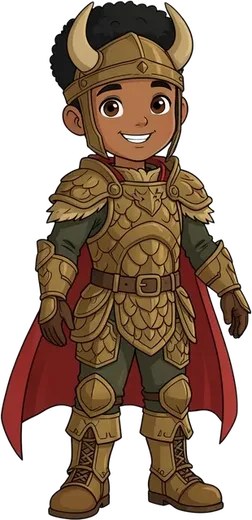
Gustwing
Calls up a friendly gust of wind and glides on it to reach anyone stuck up high.
- Secret power
- ?
- Scared of
- ?
- Always says
- ?
Analytics cookies to improve Litsee? No ads.
With your permission, Google Analytics measures visits and Microsoft Clarity records clicks, scrolling and page interactions, with form inputs and page text masked. We use no advertising cookies.
Change it any time with Cookie settings. Privacy policy · Google privacy · Microsoft privacy
Calls up a friendly gust of wind and glides on it to reach anyone stuck up high.
Make your own hero and they join every card as a friend.
What your child practises: making up a character (a name, a power, a worry and what they say), then writing their first adventure. National Curriculum, Years 3 and 4, Writing – composition: “in narratives, creating settings, characters and plot”.
Press the button for a superhero name and what it means. Choose power names, kind rescuers or silly heroes, or build your own from a hero title and an everyday word. Every name is made up, hand-picked and child-safe, with tips for KS1 and KS2 hero stories and a sample story opening.
Reviewed by Joshua Younger, Education Lead, on .
Bold names built from what the hero can do, from riding the wind to pausing time.
Warm, gentle names for heroes whose greatest power is helping, comforting and rescuing.
Giggly, over-the-top names for heroes whose powers are small, strange or very specific.
Press Big screen above the card to make one character together on the board: the class votes A, B or C for the power, the worry and the catchphrase. Then print the class set below: eight names with their meanings, with the rest left blank for each child to finish and draw.
A finished card is a small character plan. The worry gives the story its problem, the power gives the way out, and the catchphrase is the first line of dialogue. The printed card comes with a page to write the character’s first adventure.
Goes after the name
Join one from each list
Most superhero names start with the power. Ask your child what their hero can actually do, then hunt for a word or two that sums it up: a hero who walks on water might be Wavewalker, and one who can pause time might be Stillclock. Joining two everyday words like this makes a name that sounds bold but stays easy to read. It also makes a promise to the reader, because a hero called Featherfloat had better float at some point in the story.
The secret everyday identity is half the fun. Before settling on a hero name, decide who the hero is on an ordinary Tuesday: a librarian, a baker, a school cook, a child in Year 4. The gap between the two names creates both comedy and suspense, and readers love knowing that the quiet baker is really Morningbright when nobody else in the story does. Give the everyday self an ordinary name, keep the hero name for moments of action, and the reader will feel the switch happen.
Listen to the rhythm. Two or three strong beats suit action heroes, as in Swift-stride or Sky-hop-per, and alliteration makes a name stick: Captain Cardigan, Doctor Doughnut, Welly Whizz. Titles such as Captain, Lady, Professor and Mighty instantly signal a hero, but one titled name per team is usually plenty. Silly names suit heroes with tiny or very specific powers, and they are a gentle way to show that every kind of help matters.
The most common mistake is borrowing. Children often reach for a hero from a film or comic, or add man or girl to a power word, and end up with a name that already belongs to someone else. Ask whether the name reminds anyone of a character they know, and if it does, swap one word. It also helps to steer powers towards rescuing and helping rather than fighting: a hero who builds bridges of light or calms a gale gives a story plenty of drama without anyone getting hurt.
At home, press the button a few times and read each name in your best film-trailer voice, then draw the costume, with a badge that shows the power. Build mode pairs a title with an everyday word, such as Mighty Acorn or Doctor Raindrop, which often sparks an unexpected power. In class, try a hero card: hero name, everyday name, power, one weakness and one good deed. The adventure story starters give the new hero somewhere to go.
Finally, link the name to the plot. A name can become a problem to solve: what does Frostwhistle do in a heatwave when her whistle stops working? It can also be earned. Some stories begin with an ordinary child and end with the whole town giving them a hero name, which turns the name itself into the reward. However your hero gets their name, let readers see why it fits by the final page.
Written for this page, at the level of Years 3–4
Every Saturday, Mrs Okafor ran the café on Puddle Lane. She poured tea, buttered toast and never, ever mentioned the bright red cape folded under the counter.
At eleven o’clock, a shout went up outside. A little boy’s kite had blown all the way to the top of the clock tower, and the wind was tugging its string loose.
Mrs Okafor wiped her hands on her apron and slipped into the back room. Ten seconds later, Captain Cuppa strode out, cape flying.
“Gustwing!” she called to the sky. “I need a breeze, please!”
A soft wind swirled round the tower. Then, with a springy boing, Trampolina came bouncing over the rooftops to help.
“using a capital letter for names of people, places, the days of the week, and the personal pronoun ‘I’”
Year 1, Writing – vocabulary, grammar and punctuation (statutory)
“expanded noun phrases to describe and specify [for example, the blue butterfly]”
Year 2, Writing – vocabulary, grammar and punctuation (statutory)
“in narratives, creating settings, characters and plot”
Years 3 and 4, Writing – composition (statutory)
“in narratives, describing settings, characters and atmosphere and integrating dialogue to convey character and advance the action”
Years 5 and 6, Writing – composition (statutory)
The quotations above are copied word for word from this document, with the year and section each applies to. The names, meanings, tips and story opening are Litsee’s own.
Reviewed by Joshua Younger, Education Lead, on .
Every name comes with its meaning and is shown on this page, so you always know what your child will see. The generator runs in your browser, and nothing your child chooses is sent anywhere. A card is kept on this device only if they press “Keep it”.
Start with the hero’s power, then find one or two words that describe it, such as Featherfloat for floating or Swiftstride for speed. Add a title like Captain or Lady if you want extra sparkle. Say the name aloud, and check it does not already belong to a famous hero.
Good superhero names for children are easy to say and show what the hero does: Gustwing, Longreach and Glowburst for powers, Heartshine and Safeharbour for kind rescuers, and Captain Custard or Supersonic Snail for comic stories. Choose the style that suits the story you want to tell.
Writing about a favourite hero at home is fun practice. For their own characters, though, an original name works better: children get to invent the powers, costume and backstory, and the hero belongs to them. Writing competitions often ask for original characters, so an invented name is the safer choice there.
A secret identity is the everyday name and life a hero keeps hidden, such as a baker or a teacher who quietly changes into a costume when help is needed. It adds suspense, because readers know something other characters do not, and it lets the hero have friends, jobs and problems like anyone else.
In Litsee, your child creates the hero, picks the world and chooses what happens next in an illustrated story that is read aloud.
Start your free trial7 days free. A card is needed to start, and nothing is charged if you cancel before the trial ends.