Adventure story starters for kids
- 1 Choose
- 2 Read
- 3 Make
- 4 Keep
Choose your story starter
About Adventure
For grown-ups: every starter, the full generator, the curriculum and questions
What your child practises: carrying a story on from its first line: choosing what happens next, what the character does and how it ends, then writing the next page. National Curriculum, Year 2, Writing – composition: “writing narratives about personal experiences and those of others (real and fictional)”.
Here are 24 adventure story starters for ages 5 to 11, with a generator, a simple quest plan and choose-your-path choices that let your child decide what happens next.
Reviewed by Joshua Younger, Education Lead, on .
Every starter: the full generator
Story starter generator
Only starters that come with three choices for what happens next.
Pick a world
 Lighthouse Island
Example starter · Adventure · Years 1–2
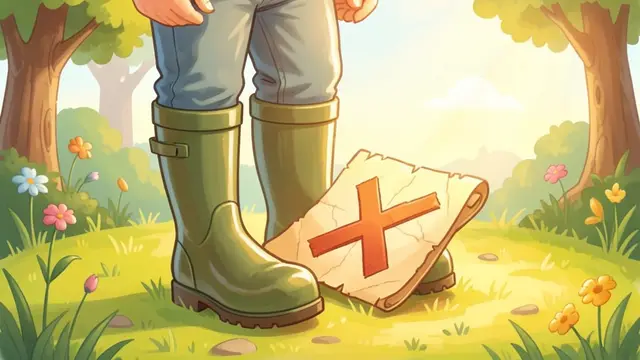
Kai found a map in his wellies. There was a big X on it.
Stuck? Say it out loud first. Who is in your story, and what do they want? What goes wrong? How does it end? It doesn’t have to be true.
“Print my story page” puts this starter on an illustrated A4 page, with its words, a checklist for the key stage and lines to carry on writing.
Prints every starter for the year group and theme chosen above, with the adventure word bank.
Make this into a Litsee story
In Litsee your child turns a first line like this into an illustrated story read aloud: they create the hero and choose what happens next. 7-day free trial; a card is needed to start.
The generator picks from a fixed list in your browser. It doesn’t use AI, and nothing you choose is saved or sent anywhere.
All 24 adventure story starters
KS1 (Years 1–2) · ages 5–7
- 1.Kai found a map in his wellies. There was a big X on it.
- 2.The kite pulled Ella up, up, up into the clouds.
- 3.There was a tiny door at the bottom of the tree. Raj knocked.Has three “What happens next?” choices
- 4.The boat had a sail made of a blanket. Lucy and her dog set off.
- 5.At the top of the hill, there was a gate. It had not been there yesterday.
- 6.Gran gave Omar a bag. “Only open it when you are lost,” she said.
- 7.The puddle was deep, very deep. Zoe could see a different sky in it.
- 8.Three friends, one bike and a long road to the sea.
Years 3–4 · ages 7–9
- 9.The map was drawn on the back of a cereal box, but the mountains on it were real.
- 10.Bella had five hours to get across the island before the tide came in and the path disappeared.
- 11.The wardrobe at Aunt Ivy’s house led to a forest where it was always autumn.Has three “What happens next?” choices
- 12.“You’ll need a compass, a rope and the courage of a lion,” said the old sailor. Ethan had a compass and a rope.
- 13.The hot-air balloon was only meant to rise ten metres for the fair. Then someone untied the rope.
- 14.Deep in the jungle, Lina found a stone bridge covered in carvings of children who looked exactly like her and her brother.
- 15.The letter said: “Come to the top of Grey Peak by midnight on Friday. Bring a torch and tell no one.”
- 16.Hamza’s bike had been his grandad’s, and it still had a bell that, if you rang it three times, could take you anywhere.
Years 5–6 · ages 9–11
- 17.The expedition had planned for snow, wind and ice. Nobody had planned for the mountain to move.
- 18.Seren was eleven when she inherited a lighthouse, a boat with no engine and a map with one island crossed out.
- 19.At the edge of every map in the old atlas was the same tiny drawing: a door in a cliff.Has three “What happens next?” choices
- 20.The river had carried the raft for three days, and it showed no sign of slowing down.
- 21.When the bridge collapsed behind them, Theo and Amara had two choices: go forward into the desert or wait for help that might never come.
- 22.Nobody in the village had crossed the Whispering Marsh and come back with a story to tell, so Felix decided to be the first.
- 23.The compass did not point north. It pointed, steadily and stubbornly, to whatever its owner needed most.
- 24.Halfway up the waterfall, with the spray in her eyes and the rope burning her hands, Juno remembered that she had never actually liked heights.
What happens next? Three choose-your-path starters
Read the starter, read the three choices aloud and let your child pick one, then write that part of the story.
Years 1–2
There was a tiny door at the bottom of the tree. Raj knocked.
- A mouse in a hat opens the door and invites him in.
- The door swings open onto a long, twisty slide.
- A voice says, “Bring me three shiny things and I will let you in.”
Years 3–4
The wardrobe at Aunt Ivy’s house led to a forest where it was always autumn.
- A fox asks Bella to help find the Queen of Seasons, who has been missing for years.
- The path splits in two, and each way has a sign written in a language she half understands.
- She meets a boy who came through the same wardrobe fifty years ago.
Years 5–6
At the edge of every map in the old atlas was the same tiny drawing: a door in a cliff.
- Seren decides to find the door on the coast near her home.
- Her teacher sees the atlas and turns pale, and then tells her a secret.
- She discovers that the door appears on modern maps too, if you know where to look.
A adventure story recipe
Adventure stories are quests: someone sets out to get something, and the journey changes them.
- 1
The call
Something sends the hero on a journey: a map, a message, a door that was never there before.
- 2
The goal
Make the goal clear and concrete: find the key, return the lost egg, reach the top before sunset.
- 3
Three obstacles
Each obstacle is harder than the last: a river, a riddle, a storm. Each needs a different skill.
- 4
The helper and the choice
Someone helps along the way, and the hero must make one hard choice.
- 5
The return
The hero reaches the goal and goes home, braver or wiser than when they left.
Want to plan it on paper? Use the free story mountain template, fill in the five boxes online and print it.
Adventure words
Twelve words to use in a adventure story, with meanings a child can understand.
- quest
- a long journey to find or do something important
- expedition
- a journey made by a group for a special purpose
- obstacle
- something in the way that makes the journey harder
- courage
- being brave even when you feel afraid
- compass
- a tool with a needle that always points north
- peril
- serious danger
- summit
- the very top of a mountain
- navigate
- to find the way from one place to another
- determined
- not giving up, even when things are hard
- treacherous
- dangerous and difficult to cross, like a path on a cliff
- destination
- the place you are trying to reach
- trek
- a long, hard walk
Curriculum links
Where a adventure story fits the National Curriculum in England:
“in narratives, creating settings, characters and plot”
Years 3 and 4, Writing – composition (statutory)
“organising paragraphs around a theme”
Years 3 and 4, Writing – composition (statutory)
How to use these with your child or class
Adventure is the most popular genre for primary story writing because it has a built-in shape: a goal, a journey and a return. That shape is also why adventure stories go wrong. Children list event after event (“and then a bear came, and then they found a cave, and then…”) and never reach an ending. The fix is to plan the obstacles before writing and to stop at three.
Try an obstacle ladder. Draw three rungs on a piece of paper. On the bottom rung, write the easiest obstacle; on the top, the hardest. Next to each, write the skill or object the hero uses to get past it. If the same skill solves all three, change one. This one planning step gives a Year 3 adventure the middle it needs, and a Year 6 writer can use it to build tension towards the climax.
Paragraphs map neatly onto an adventure. In Years 3 and 4, the curriculum asks children to organise paragraphs around a theme, and an adventure gives them one paragraph per stage: setting off, each obstacle, the goal, the return. Show children how a new paragraph starts when the hero reaches a new place or a new problem, and use time and place openers (“By sunset,” “On the far side of the river,”) to move between them.
Let the hero make a choice. The most memorable adventures include one moment where the hero must decide between two things they want: help a stranger or keep going, take the short dangerous path or the long safe one. This is exactly what Litsee’s “What happens next?” choices do, and the three choose-your-path starters on this page practise it. Ask your child which option they would choose and why, then write that one.
At home, an adventure can start in your own house. Draw a quick map of the garden or the walk to school, read a starter, and turn real places into story places: the shed becomes a mountain hut, the puddle becomes a lake. Younger children can act the journey out before telling it.
In class, give groups the same starter and ask each to choose a different option from the choices, then compare how one decision changed the whole story. It is a quick way to show that writers make choices and that every choice has consequences for the plot.
Worked example obstacle ladder (Years 3–4)
- Starter: “Bella had five hours to get across the island before the tide came in and the path disappeared.”
- Rung 1: a gate with a rusty lock. Bella uses her hairclip.
- Rung 2: a stream too wide to jump. She builds stepping stones from driftwood.
- Rung 3: fog rolls in, and she can’t see the path. She follows the sound of the foghorn.
- Ending: she reaches the harbour as the water covers the path, holding the message she was sent to deliver.
About this page
Reviewed by Joshua Younger · How it works · Sources
Sources
The curriculum links on this page are copied word for word from these documents, with the year and section each applies to.
How it works
Reviewed by Joshua Younger, Education Lead, on .
Every starter is written for a year group and shown on these pages, so you always know what your child will see. The generator runs in your browser, and nothing your child chooses is sent anywhere. A finished story is kept on this device only if they press “Keep it on my shelf”.
Questions parents and teachers ask
What are the features of an adventure story for KS2?
A hero with a clear goal, a journey through vivid settings, a series of obstacles that get harder, a moment of choice or danger, and a satisfying return. Paragraphs usually follow the stages of the journey.
How do I stop my child writing “and then… and then…”?
Plan three obstacles in order before writing, and show how time and place openers such as “By sunset,” or “On the far side of the river,” can start each new part instead of “and then”.
What is a portal story?
A portal story is an adventure where the hero passes through a doorway, wardrobe, puddle or picture into another world. Several starters on this page, including the tiny door in the tree, are portal stories.
Can children choose what happens next?
Yes. Turn on “What happens next?” mode in the generator to see starters that come with three choices. Children pick one and continue the story from there.
Turn a starter into an interactive story your child can steer.
In Litsee, your child creates the hero, picks the world and chooses what happens next in an illustrated story that is read aloud.
Start your free trial7 days free. A card is needed to start, and nothing is charged if you cancel before the trial ends.